
(Tentative)
| Function | Reference Model | Input/Output Data |
| SubAIMs | JSON Metadata | Profiles |
1. Function
Domain Access AIM (PGM‑DAC)
Receives
- DA Action Directive: from A‑User Control (PGM‑AUC).
- Audio and Visual Descriptors: Preliminary Audio and Visual Scene Descriptors – from Audio (PGM-ASR) and Visual Spatial Reasoning (PGM-VSR) AIMs – Audio Scene Descriptor (ASD1) and Visual Scene Descriptor (VSD1).
- DA Prompt: the response from Prompt Creation’s Prompt from Basic Knowledge (PGM‑BKN).
Performs
- Validates and enriches multimodal descriptors with domain knowledge.
- Resolves ambiguities – If preliminary descriptors (ASD1/VSD1) contain vague or conflicting interpretations (e.g., object identity uncertain), DAC uses domain knowledge to disambiguate.
- Applies constraints – Enforces domain-specific rules (e.g., “in this domain, object X cannot coexist with Y” or “depth must be within range Z”).
- Constructs domain‑aligned execution context – Builds a coherent representation of the scene and interaction that respects domain semantics.
- Creates User Context Guide by combining refined scene descriptors with User-related constraints (from User State and domain rules).
- Creates Personality Context Guide by extracting style and intent cues from the domain context and DA Prompt (e.g., “Formal tone required for this domain).
- Creates second prompt to Basic Knowledge by accessing domain knowledge.
Provides
- Enriched Descriptors (ASD2/VSD2) to Spatial Reasoning AIMs for refined reasoning.
- User Context Guide to User State Refinement AIM (PGM‑USR) for improved User State tracking.
- Personality Context Guide to Personality Alignment AIM (PGM‑PAL) for Personality adoption.
- DA‑Prompt to Basic Knowledge for improved response to User’s Context .
- Domain Access Status to A‑User Control (PGM‑AUC), capturing compliance to directive and coverage of response.
The resulting outputs enable A‑User Control, Personality Alignment, User State Refinement, and Prompt Creation AIMs to operate with full awareness of validated domain constraints and enriched scene context, supporting directive compliance, goal‑driven orchestration, and context‑sensitive execution.
2. Reference Model
Figure 1 gives the Reference Model of Domain Access (PGM-DAC) AIM.
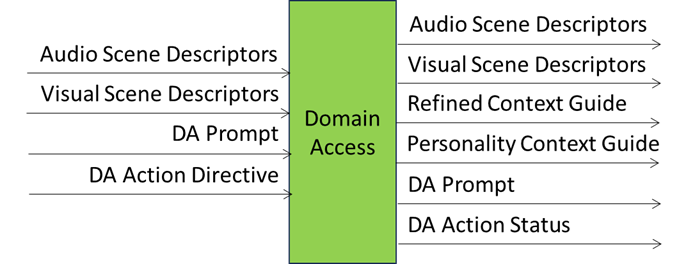
Figure 1 – The Reference Model of Domain Access AIM
3. Input/Output Data
Table 17 gives Input and Output Data of Domain Access (PGM-DAC).
Table 17 – Input and Output Data of Domain Access (PGM-DAC)
| Input | Description |
| Audio Scene Descriptors | A Data Type providing spatial relationships, referent resolutions, and interaction constraints to Domain Access (DA) to support reasoning about physical feasibility, visibility, and referential clarity within a visual scene. |
| Visual Scene Descriptors | A Data Type providing localised, annotated and salience-ranked Audio Objects to Domain Access (DAC) and encapsulates spatial, temporal, and semantic interpretations of audio-emitting Items. |
| Initial Response | Basic Knowledge’s response to PC-Prompt. |
| DA Action Directive | Request for domain execution from PGM-AUC. |
| Output | Description |
| Audio Scene Descriptors | Revised Audio Scene Descriptors providing referential cues, User Intent, and contextual constraints to enable Audio Spatial Reasoning (ASR) to resolve ambiguous entities and assess auditory relevance. |
| Visual Scene Descriptors | Revised Visual Scene Descriptors providing referential cues, User Intent, and contextual constraints to enable Spatial Reasoning to resolve ambiguous entities and evaluate spatial feasibility. |
| User Context Guide | Domain-specific semantic interpretation of the User Intent, interaction context, and contextual constraints sent to User State Refinement. |
| Personality Context Guide | Validated User Intent, contextual constraints, and referent semantics to inform Personality Alignment (PA) of the behavioural framing, domain-specific context, and semantic scaffolding necessary to adapt A-User’s Personality responses to the User State. |
| DA-Prompt | Prompt produced by Domain Access. |
| DA Action Status | Action feasibility and constraint validation reports to PGM-AUC. |
4. SubAIMs
The Domain Access AIM transforms its inputs through a unified process that supports multiple outputs. The workflow consists of shared activities followed by output-specific refinements:
Shared Activities
- Validate and Enrich Multimodal Descriptors
- Check preliminary audio and visual descriptors against domain knowledge.
- Resolve ambiguities and apply domain constraints.
- Ensure multimodal consistency between audio and visual elements.
- Construct Domain-Aligned Execution Context
- Merge enriched descriptors, DA Action Directive, and DA Prompt.
- Integrate operational rules.
- Annotate with interaction goals and domain semantics.
Output-Specific Refinements
- Enriched Descriptors (ASD2/VSD2)
- Derived from validated descriptors with added semantic tags and domain-specific attributes.
- Used by Spatial Reasoning AIMs for refined reasoning.
- User Context Guide
- Built from execution context and user-related constraints (comfort, intent).
- Guides User State Refinement AIM to improve tracking and adaptation.
- Personality Context Guide
- Extracted from DA Prompt and domain rules for tone, style, and intent.
- Guides Personality Alignment AIM to ensure domain-compliant interaction style.
- DA-Prompt
- Generated by combining domain knowledge, enriched descriptors, and execution context.
- Converted into natural language for Basic Knowledge AIM to produce improved responses.
5. JSON Metadata
https://schemas.mpai.community/PGM1/V1.0/AIMs/DomainAccess.json
6. Profiles
No Profiles.