
(Tentative)
| Function | Reference Model | Input/Output Data |
| SubAIMs | JSON Metadata | Profiles |
Function
The User State Refinement AIM (PGM-USR) receives evolving signals related to User Engagement, Personal Status, and contextual cues. Its primary function is to translate these raw indicators into actionable semantic and expressive guidance that informs Personality-aware orchestration.
PGM-USR may perform the following internal operations:
- Signal Aggregation: Collects multimodal indicators of User activity, Personal Status, and interaction cadence.
- Engagement Estimation: Evaluates User attentiveness, responsiveness, and interaction continuity to infer engagement level.
- Personal Status Inference: Interprets expressive cues, interaction history, and contextual metadata to estimate the User’s Personal Status and underlying drive, intent, or disposition.
- State Representation: Transforms heterogeneous signals into a unified semantic snapshot suitable for downstream orchestration.
- Expressive Guidance Construction: Generates modulation hints and alignment parameters to guide Personality Alignment and A-User Rendering.
- Output Dispatch: Produces a User State Snapshot for A-User Control, enabling adaptive behaviour aligned with the estimated User Personal Status.
The resulting outputs ensure that A-User behaviour remains sensitive to the User’s evolving state, supporting emotionally aligned interaction, expressive coherence, and context-aware orchestration across AIMs.
Reference Model
Figure 9 gives the Reference Model of the User State Refinement (PGM-USR) AIM.
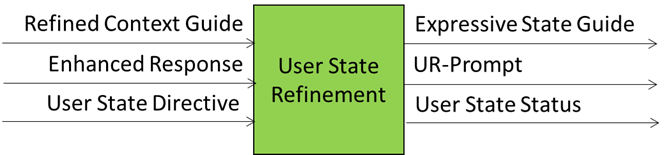
Figure 9 – Reference Model of User State Refinement (PGM-USR) AIM
A-User Control can have two modes of operation
| Mode | Description | Trigger Conditions | Capabilities |
| Overseer Mode | Observes AIM outputs, monitors system state, and issues high-level UserStateDirective | Default mode; stable system; low urgency | – Issues symbolic directives – Logs AIM performance – Adjusts priorities |
| Micromanager Mode | Actively intervenes in AIM execution, overrides modulation parameters, or redirects AIM flow | Triggered by urgency, failure, ambiguity, or user override | – Injects refined control parameters – Overrides AIM sequencing – Forces re-evaluation or rollback |
The A-User Control operation can be performed through the following steps (the From column gives the AIM that produces the Input Data:
| # | Sub-AIM | Input Data Type | From | Output Data Type |
| 1 | Context Capture | AudioStream, VisualStream, TextStream, 3DModelStream | CXC | UserState |
| 2 | Interaction Rhythm Extraction | UserState, InteractionHistory |
CXC, SMM |
InteractionRhythm |
| 3 | Engagement Estimation | UserState, InteractionRhythm |
CXC, IRE |
Engagement |
| 4 | Personal Status Extraction | UserState, InteractionHistory |
CXC, SMM |
PersonalStatus, Motivation |
| 5 | User State Update | Engagement, PersonalStatus, Motivation, Trace |
ENE, PSE, USS, SLT |
UserState |
| 6 | Runtime Context Evaluation | SystemStateDescriptor, Modulation |
SMM, AUC |
ContextAdjustment, Modulation |
| 7 | Execution Strategy Resolution | Modulation, SystemStateDescriptor, UrgencyLevel, UserState |
AUC, SMM, AUC, USU |
ExecutionPlan |
| 8 | Expressive Guidance Construction | UserState, ExecutionStrategyPlan |
USU, ESR |
ExpressiveStateGuide |
| 9 | Feedback Routing | UserStateDirective, ExecutionStrategyPlan |
AUC, ESR |
FeedbackHooks |
| 10 | Execution Context Return | ExecutionPlan, ExpressiveStateGuide, FeedbackHooks |
ESR, EGC, FBR |
ExecutionContext |
| 11 | Output Dispatch | UserState, ExecutionContext |
USU, ECR |
UserStateStatus, ExpressiveStateGuide |
| 12 | Status Logging & Trace | All intermediate outputs, ExecutionContext | — ECR |
RefinementLogEntry, TraceBundle |
AIM & Data Type Registry
| Acronym | AIM Name | Input(s) | Output(s) | Description |
| CXC | Context Capture | AudioStream, VisualStream, TextStream, 3DModelStream | UserState | Captures multimodal input and builds initial user state snapshot |
| IRE | Interaction Rhythm Extraction | UserState, InteractionHistory | InteractionRhythm | Extracts timing and flow patterns from user-agent exchanges |
| ENE | Engagement Estimation | UserState, InteractionRhythm | Engagement | Estimates user engagement level based on rhythm and state |
| PSE | Personal Status Extraction | UserState, InteractionHistory | PersonalStatus, Motivation | Infers emotional and motivational state from user context |
| USU | User State Update | Engagement, PersonalStatus, Motivation, Trace | UserState | Updates and refines the user state snapshot |
| RCE | Runtime Context Evaluation | SystemStateDescriptor, Modulation | ContextAdjustment, Modulation | Adjusts modulation based on system constraints |
| ESR | Execution Strategy Resolution | Modulation, SystemStateDescriptor, UrgencyLevel, UserState | ExecutionStrategyPlan | Resolves execution strategy and urgency into a unified plan |
| EGC | Expressive Guidance Construction | UserState, ExecutionStrategyPlan | ExpressiveStateGuide | Builds expressive modulation guide for personality alignment |
| FBR | Feedback Routing | UserStateDirective, ExecutionStrategyPlan | FeedbackHooks | Routes feedback and monitoring logic |
| ECR | Execution Context Return | ExecutionStrategyPlan, ExpressiveStateGuide, FeedbackHooks | ExecutionContext | Bundles final execution payload |
| DAC | Output Dispatch | UserState, ExecutionContext | UserStateStatus, ExpressiveStateGuide | Dispatches outputs and updates user-facing state |
| SLT | Status Logging & Trace | All intermediate outputs, ExecutionContext | RefinementLogEntry, TraceBundle | Logs decisions and builds traceable execution history |
| AUC | A-User Control | UserState, Trace, InteractionHistory | UserStateDirective, UrgencyLevel, Modulation | Issues directives and control parameters in overseer or micromanager mode |
| SMM | System Monitor Module | — | SystemStateDescriptor, InteractionHistory | Observes system performance and provides runtime metrics |
Data Type Definitions
| Data Type | Description | Produced By |
| AudioStream | Raw audio input from user/environment | External Input |
| VisualStream | Raw visual input (camera, screen, gesture) | External Input |
| TextStream | Raw textual input (typed, transcribed, extracted) | External Input |
| 3DModelStream | Spatial input (pose, depth, avatar geometry) | External Input |
| UserState | Unified multimodal snapshot of user state | CXC, updated by USU |
| InteractionHistory | Chronological log of prior exchanges | SMM |
| InteractionRhythm | Temporal dynamics of interaction flow | IRE |
| Engagement | Quantified user engagement level | ENE |
| PersonalStatus | Inferred emotional, cognitive, attentional state | PSE |
| Motivation | Inferred user intent or goal orientation | PSE |
| Trace | Metadata for logging and traceability | SLT |
| UserStateDirective | Symbolic user/system intent | AUC |
| UrgencyLevel | Priority or time-sensitivity of directive | AUC |
| Modulation | Structured control settings (tone, modality, precision, adaptivity) | AUC |
| SystemStateDescriptor | Snapshot of system performance and constraints | SMM |
| ContextAdjustment | Flags indicating runtime context shifts | RCE |
| ExecutionStrategyPlan | Unified strategy and urgency-calibrated execution bundle | ESR |
| ExpressiveStateGuide | Expressive modulation guide for personality alignment | EGC |
| FeedbackHooks | Routing instructions for feedback and monitoring | FBR |
| ExecutionContext | Final context bundle for execution | ECR |
| UserStateStatus | Updated user-facing state | DAC |
| RefinementLogEntry | Logged entry of refinement decisions | SLT |
| TraceBundle | Complete trace of execution and transitions | SLT |
User State Refinement may perform the following functions:
| # | Function | Description |
| 1 | Directive Parsing | Parses the Execution Directive from DAC, extracting Behaviour metadata and modulation parameters. |
| 2 | Runtime Context Evaluation | Assesses system state to determine if the execution parameters (timing, pacing, feedback) need refinement. |
| 3 | Execution Mode Resolution | Adjusts execution timing (e.g. defer, loop) based on Execution Mode and system load. |
| 4 | Urgency Calibration | Modifies pacing or priority based on Urgency Level. |
| 5 | Feedback Routing | Prepares hooks for post-execution feedback if required. |
| 6 | Execution Context Return | Returns an Execution Context to DAC, containing modulation-refined parameters. |
| 7 | Status Logging & Trace | Logs all adaptation decisions for audit and traceability. |
Input/Output Data
Table 18 gives Input and Output Data of User State Refinement (PGM-USR) AIM.
Table 18 – Input and Output Data of User State Refinement (PGM-USR) AIM
| Input | Description |
| Refined Context Guide | DAC input to help User State Refinement |
| Enhanced Response | First output from Basic Knowledge |
| User State Directive | Data to refine User State based on interaction feedback. |
| Output | Description |
| Expressive State Guide | USR output to PAL to communicate User State |
| SA-Prompt | Second Prompt to Basic Knowledge |
| User State Status | Current engagement, affective tone, and override flags. |
SubAIMs
No SubAIMs.
JSON Metadata
https://schemas.mpai.community/PGM1/V1.0/AIMs/UserStateRefinement.json
Profiles
No Profiles.