
<-AI Workflows Go to ToC Data Types->
| Function | Ref. Model | I/O Data | SubAIMs | JSON MData | Profiles | Ref. Software | Conformance | Performance |
1. Function
The 6DF Decompression (CAE-6DC) AIM AIM linearly interpolates the selected time-domain Diffuse Field using the Interpolation Parameters and performs a parametric interpolation in the frequency domain on the Selected Dominant Plane Wave Parameters. It produces the interpolated time-domain Diffuse Field and the Time-Domain Interpolated Direct Field.
| Receives | Interpolation Parameters | |
| Selected Time Domain Diffuse Field | ||
| Selected Dominant Plane Wave Parameters | ||
| Produces | Time Domain Interpolated Diffuse Sound Field | |
| Time Domain Interpolated Direct Sound Field |
2. Reference Model
Figure 1 depicts the Reference Model of the 6DF Interpolation (CAE-6DI) AIM.
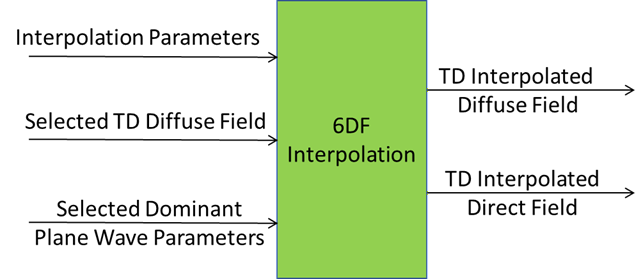
Figure 1 – Reference Model of the 6DF Interpolation (CAE-6DI) AIM
3. Input/Output Data
Table 1 – Input/Output Data of 6DF Decompression (CAE-6DC) AIM
| Input | Description |
| Interpolation Parameters | Spatial and temporal weighting coefficients which are calculated dynamically based on the listener’s real-time position relative to the physical microphone arrays. |
| Selected Time Domain Diffuse Field | Multi-channel, non-directional ambient audio signal extracted from the physical microphone arrays. |
| Selected Dominant Plane Wave Parameters | These parameters consist of the estimated directions of arrival (DoAs), amplitudes, and distances of the primary, highly directional sound sources extracted from the active spherical microphone arrays. |
| Output | Description |
| TD Interpolated Diffuse Sound Field | The multi-channel, time-domain audio output representing the reconstructed ambient acoustics of the environment at the user’s virtual coordinates, generated by applying proximity-based linear interpolation weights directly to the time-domain diffuse signals extracted from the neighboring physical microphone arrays. |
| TD Interpolation Direct Sound Field | The multi-channel, time-domain audio output representing the localized, direct-path sound waves at the user’s virtual coordinates, synthesized from the interpolated plane-wave parameters (DoA and amplitude) and converted back into the time domain via the Inverse Short-Time Fourier Transform (ISTFT). |
4. SubAIMs
4.1 Reference Model
Figure 1 depicts the Reference Model of the 6DF Interpolation (CAE-6DI) Composite AIM.
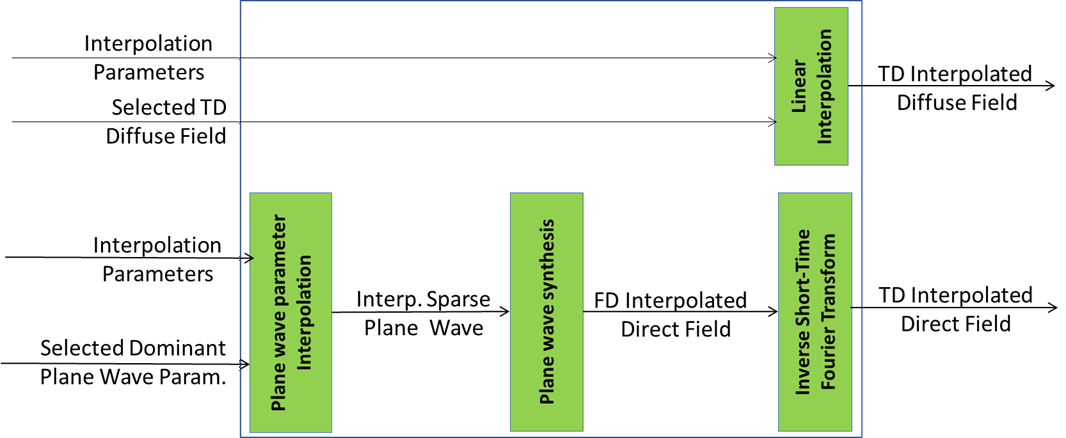
Figure 2 – Reference Model of the 6DF Interpolation (CAE-6DI) Composite AIM
4.2 Operation
4.3 Functions of AI Modules
Table 2 specifies the Function of the AI Modules.
Table 2 – Functions of Health Back End AI Modules
| AI Module | Description |
| Plane Wave Parameter Interpolation | The PWI module performs spatial interpolation on parametric representations of a sound field, such as estimated Directions of Arrival (DoAs), source distances, and amplitudes, estimated at discrete, static physical microphone array positions by operating directly on these spatial metadata parameters rather than raw audio waveforms. This module enables the calculation of a spatially coherent, localized sound field representation at any arbitrary virtual listening coordinate within a 6DF environment. |
| Plane Wave Synthesis | The PWS AIM reconstructs a continuous physical sound field at the user’s virtual coordinates by synthesizing discrete directional plane waves from the interpolated parameters provided by the PWI. These synthesized plane waves are mathematically projected onto target rendering formats |
| Linear Interpolation | The LIP AIM calculates proximity-based weighting coefficients to blend diffuse field acoustic parameters between adjacent physical recording nodes. |
| Inverse Short-Time Fourier Transform | The ISTFT AIM the reconstructs the spatial audio channels from the time-frequency domain back into continuous time-domain waveforms. Utilizing an overlap-add (OLA) synthesis method. |
4.4 I/O Data of AI Modules
Table 3 specifies the Input and Output Data of the AI Modules.
Table 3 – Input and Output Data of the AI Modules
| AI Module | Receives | Produces |
| Plane Wave Parameter Interpolation | Interpolation Parameters | Interpolated Sparse Plane Wave |
| Selected Dominant Plane Wave Parameters | ||
| Plane Wave Synthesis | Interpolated Sparse Plane Wave | FD Interpolated Direct Sound Field |
| Linear Interpolation | Interpolation Parameters | TD Interpolated Diffuse Sound Field |
| Selected TD Diffuded Field | ||
| Inverse Short-Time Fourier Transform | FD Interpolated Direct Sound Field | TD Interpolated Direct Sound Field |
4.5 AIMs and JSON Metadata
Table 4 provides the links to the AIW and AIM specifications and to the JSON schemas. AIMs/1 indicates that the column contains Composite AIMs and AIM2 indicates that the column contains their SubAIMs.
Table 4 – AIMs and JSON Metadata
| AIM1 | AIM2 | Name | JSON |
| CAE-6DF | 6DF Interpolation | File | |
| CAE-PWI | Plane Wave Parameter Interpolation | File | |
| CAE-PWS | Plane Wave Synthesis | File | |
| CAE-LIP | Linear Interpolation | File | |
| CAE-ISF | Inverse Short-Time Fourier Transform | File |
5. JSON Metadata
https://schemas.mpai.community/CAE2/V1.1/AIMs/6DFInterpolation.json
6. Profiles
No Profiles
7. Reference Software
8. Conformance Testing
Table 2 – Conformance Testing Method for CAE-AAT AIM
| Receives | Compressed Diffuse Dominant | Shall validate against the Audio Object schema. The Qualifier shall validate against the Audio Qualifier schema. |
| Produces | Decompressed Diffuse Dominant | Shall validate against the Audio Object schema. The Qualifier shall validate against the Audio Qualifier schema. |
9. Performance Assessment
<-AI Workflows Go to ToC Data Types->