
| Function | Ref. Model | I/O Data | SubAIMs | JSON MData | Profiles | Ref. Software | Conformance | Performance |
1. Function
The Basic Knowledge (PGM‑BKN) AIM is the deliberative core of the A‑User. It receives the PC‑Prompt, the BKN‑compatible representation of the A‑User’s understanding of the environment and the User produced by Prompt Creation, reasons over it, and produces the Final Response, the deliberated content the A‑User will communicate.
Unlike the perceptual AIMs, which form a feed‑forward chain, Basic Knowledge is a reasoner and reasons by looping. Its information needs are not known in advance: as it reasons it discovers what it lacks and requests it, opportunistically, from its partners. It does so through four MCP interaction interfaces, with Prompt Creation (more or different representation), Domain Access (domain knowledge), User State Refinement (the User’s state), and Personality Alignment (the personality‑aligned stance). Each interface is a single interaction Data Type carrying both directions, BKNToX and XToBKN. This traffic is data‑driven rather than scheduled, which is the proper shape for deliberation; it is internal to the deliberation and is not reported to A‑User Control.
As a reasoning AIM, Basic Knowledge is governed by A‑User Control under the principle that A‑User Control proposes and the AIM disposes. A BKN Directive sets a binding goal and may carry a proposed correction with a Weight indicating how much importance Basic Knowledge should give it; Basic Knowledge decides its own conclusion. The BKN Status reports to A‑User Control only what a manager needs: the deliberation state, the headline conclusion, and any need Basic Knowledge cannot satisfy through its partners. Routine partner traffic is not reported. Each reported unmet need carries the time at which deliberation began (the triggering of Prompt Creation’s prompt) so that A‑User Control, against its own clock, can judge how long the need has gone unmet and, in a subsequent BKN Directive, instruct Basic Knowledge to abandon that line and conclude with what it has.
Basic Knowledge:
- Operates on the PC‑Prompt produced by Prompt Creation, the BKN Directive received from A‑User Control, and the responses received from its four MCP partners: BKN‑PRC Response from Prompt Creation, BKN‑DAC Response from Domain Access, BKN‑USR Response from User State Refinement, and BKN‑PAL Response from Personality Alignment.
- Produces the Final Response sent to A‑User Formation and to A‑User Control for information, the BKN Status reported to A‑User Control, and the four MCP requests: BKN‑PRC Request to Prompt Creation, BKN‑DAC Request to Domain Access, BKN‑USR Request to User State Refinement, and BKN‑PAL Request to Personality Alignment.
2. Reference Model
Figure 1 depicts the Reference Model of the Basic Knowledge (PGM‑BKN) AIM.
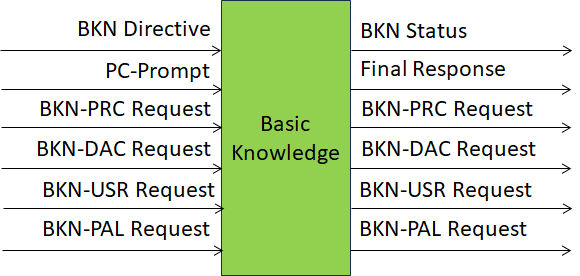
Figure 1 – Reference Model of the Basic Knowledge (PGM‑BKN) AIM
A conforming Basic Knowledge implementation SHALL observe the following behavioural requirements:
- SHALL pursue the goal stated in the BKN Directive; the stated goal is binding.
- MAY give a proposed correction carried in the BKN Directive a weight proportional to the Weight value provided; Basic Knowledge decides its own conclusion.
- SHALL abandon the referenced unmet need and conclude with available information when the BKN Directive carries an abandon instruction for that need.
- SHALL produce a Final Response when deliberation reaches a conclusion, whether by success, by forced abandonment, or by exhaustion of all partner interactions without resolution. SHALL NOT produce a Final Response during ongoing deliberation.
- SHALL emit BKN Status when deliberation concludes, when an unmet need persists and cannot be satisfied through partners, and when instructed by BKN Directive to abandon a line of deliberation.
- SHALL NOT expose partner interaction content in BKN Status; routine partner traffic is internal to deliberation and SHALL NOT be reported to A‑User Control.
- SHALL NOT acquire information through any channel other than the four normative MCP partner interfaces.
3. Input/Output Data
Table 1 specifies the Input and Output Data of the Basic Knowledge (PGM‑BKN) AIM. The four MCP interaction Data Types each carry both directions (BKNToX and XToBKN) and so appear once as input and once as output.
Table 1 – Input/Output Data of the Basic Knowledge (PGM‑BKN) AIM
| Input | Description |
| BKN Directive | Goal and, optionally, a weighted proposed correction or an instruction to abandon a referenced unmet need, from A‑User Control. |
| PC‑Prompt | The BKN‑compatible representation of the A‑User’s understanding, from Prompt Creation. |
| BKN‑PRC Response | PRC‑BKN exchange with Prompt Creation via MCP. |
| BKN‑DAC Response | DAC‑BKN exchange with Domain Access via MCP. |
| BKN‑USR Response | USR‑BKN exchange with User State Refinement via MCP. |
| BKN‑PAL Response | PAL‑BKN exchange with Personality Alignment via MCP. |
| Output | Description |
| Final Response | The deliberated content, a Text Object, sent to A‑User Formation to be rendered and to A‑User Control for information. |
| BKN Status | Decision report to A‑User Control: deliberation state, headline conclusion, and unmet needs that could not be satisfied through partners. |
| BKN‑PRC Request | BKN‑PRC exchange with Prompt Creation via MCP. |
| BKN‑DAC Request | BKN‑DAC exchange with Domain Access via MCP. |
| BKN‑USR Request | BKN‑USR exchange with User State Refinement via MCP. |
| BKN‑PAL Request | BKN‑PAL exchange with Personality Alignment via MCP. |
4. SubAIMs
No SubAIMs.
5. JSON Metadata
https://schemas.mpai.community/PGM1/V1.0/AIMs/BasicKnowledge.json
6. Profiles
No Profiles.
7. Reference Software
Not part of this specification.
8. Conformance Testing
Table 2 provides the Conformance Testing Method for the Basic Knowledge (PGM‑BKN) AIM.
If a schema contains references to other schemas, conformance of data for the primary schema implies that any data referencing a secondary schema shall also validate against the relevant schema, if present, and conform with the Qualifier, if present.
Table 2 – Conformance Testing Method for the Basic Knowledge (PGM‑BKN) AIM
| Receives | BKN Directive | Shall validate against BKN Directive schema. |
| PC‑Prompt | Shall validate against PC‑Prompt schema. | |
| BKN‑PRC Response | Shall validate against BKN‑PRC Interaction schema. | |
| BKN‑DAC Response | Shall validate against BKN‑DAC Interaction schema. | |
| BKN‑USR Response | Shall validate against BKN‑USR Interaction schema. | |
| BKN‑PAL Response | Shall validate against BKN‑PAL Interaction schema. | |
| Produces | Final Response | Shall validate against Text Object schema. |
| BKN Status | Shall validate against BKN Status schema. | |
| BKN‑PRC Request | Shall validate against BKN‑PRC Interaction schema. | |
| BKN‑DAC Request | Shall validate against BKN‑DAC Interaction schema. | |
| BKN‑USR Request | Shall validate against BKN‑USR Interaction schema. | |
| BKN‑PAL Request | Shall validate against BKN‑PAL Interaction schema. |
9. Performance Assessment
Not part of this specification.