
Function
Ref. Model
I/O Data
SubAIMs
JSON MData
Profiles
Ref. Software
Conformance
Performance
1 Functions
The Behavioural and Expressive Analysis (PGM‑BEA) AI Module derives the indicators carried by Entity actions and bodily expressions. For this purpose, it uses the bodily evidence of the Harmonised Multimodal Context. It produces the Behavioural and Expressive Indicators by
- Deriving the expressive indicators carried by the face, the gaze, and the head.
- Deriving the behavioural indicators carried by posture, gesture, and movement in the Space.
- Determining what the Entity attends to and its attitude towards the A‑User.
- Recording where the bodily evidence agrees with the Linguistic‑Paralinguistic Evidence and where it does not.
The module is analytical. It derives indicators about the conduct of an Entity; it should not construct a state of that Entity, as this is the function of User State Creation.
The Entity’s identifier and measure of confidence is conveyed along with the Harmonised Multimodal Context. An indicator derived while the Entity was occluded, out of frame, or otherwise imperfectly observed is qualified by the Enhanced Visual Scene Descriptors.
2 Reference Model
Figure 1 depicts the Reference Model of the Behavioural and Expressive Analysis (PGM‑BEA) AIM.
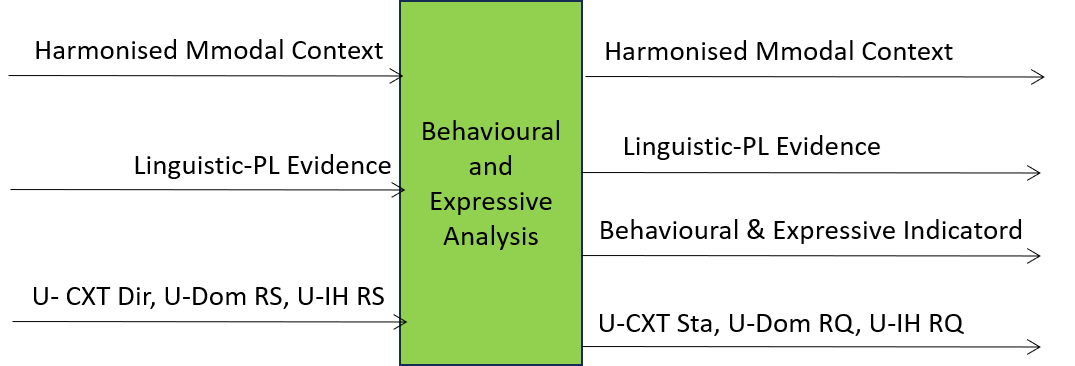
Figure 1 – The Behavioural and Expressive Analysis (PGM‑BEA) AIM
The Behavioural and Expressive Analysis (PGM‑BEA) AI Module operates as follows:
- Receives the Harmonised Multimodal Context and the Linguistic‑Paralinguistic Evidence
- Derives the expressive indicators:
- Facial expression and its intensity
- Gaze direction and fixation.
- Head pose, nodding, and shaking.
- Blink and eye‑opening behaviour.
- Derives the behavioural indicators:
- Posture and its orientation with respect to the A‑User and to the other Entities in the Space
- Gesture, including deictic gesture and its referent.
- Movement in the Space: approach, withdrawal, and stillness.
- Manipulation of the Objects in the Space, and the affordances thereby exercised.
- Rhythm of the exchange: turn‑taking, overlapping, and waiting.
- Determines:
- Attention Target, i.e., the Entity or Object the Entity attends to.
- Engagement, i.e., the degree of the Entity’s participation in the exchange.
- Interpersonal disposition, i.e., the Entity’s stance towards the A‑User.
- Compares the bodily evidence with the Linguistic‑Paralinguistic Evidence:
- Marks the intervals in which these elements reinforce each other.
- Marks the intervals in which they disagree.
- Marks the intervals for which one of the two is absent or unusable.
- Constructs consistent Behavioural and Expressive Indicators.
- Outputs the Behavioural and Expressive Indicators for use by downstream AI Modules.
The AIM operates in real time, without recourse to the reasoning capability of Basic Knowledge and without Model Context Protocol (MCP) interactions. The Sub-AIM obtain domain knowledge by query, and the Response to a query is in general received during a subsequent processing cycle.
The Domain Response supports the interpretation of conduct in the terms of the domain: the gestures and postures conventional within the setting, the proximity and gaze customary within it, and the conduct that the setting expects or forbids.
3 I/O Data
Table 1 specifies the Input and Output Data of the Behavioural and Expressive Analysis (PGM‑BEA) AIM.
| Input | Description |
|---|---|
| Harmonised Multimodal Context | Audio, visual, and textual evidence of the scene, placed on a common time base and attributed to harmonised Entities. |
| Linguistic‑Paralinguistic Evidence | Evidence provided by the content of an Entity’s utterances and by their manner of delivery. |
| User‑USD Directive | Control directive specifying scope, depth, or policy constraints for behavioural and expressive analysis. |
| User Domain Response | Domain‑specific knowledge supporting the interpretation of conduct in the context of the domain. |
| User Interaction History Response | Prior interaction‑history content supporting the assessment of conduct as compared with conduct observed in earlier captures. |
| Output | Description |
| Behavioural and Expressive Indicators | Indicators provided by the conduct of an Entity and by the expression of its body, including their agreement with the Linguistic‑Paralinguistic Evidence. |
| User‑USD Status | Status information describing the execution and outcome of Behavioural and Expressive Analysis. |
| User Domain Request | Query to Domain Access for domain‑specific knowledge. |
| User Interaction History Request | Query to A‑User Storage for prior interaction‑history content. |
4 SubAIMs
No SubAIMs.
5 JSON Metadata
https://schemas.mpai.community/PGM1/V1.0/AIMs/BehaviouralAndExpressiveAnalysis.json
6 Profiles
No Profiles.
7 Reference Software
Not part of this specification.
8 Conformance Testing
Table 2 provides the Conformance Testing Method for the Behavioural and Expressive Analysis (PGM‑BEA) AIM.
If a schema contains references to other schemas, conformance of data for the primary schema implies that any data referencing a secondary schema shall also validate against the relevant schema, if present, and conform with the Qualifier, if present.
| Receives | Harmonised Multimodal Context | Shall validate against Harmonised Multimodal Context schema. |
| Linguistic‑Paralinguistic Evidence | Shall validate against Linguistic‑Paralinguistic Evidence schema. | |
| User‑USD Directive | Shall validate against User‑USD Directive schema. | |
| User Domain Response | Shall validate against User Domain schema. | |
| User Interaction History Response | Shall validate against Interaction History schema. | |
| Produces | Behavioural and Expressive Indicators | Shall validate against Behavioural and Expressive Indicators schema. |
| User‑USD Status | Shall validate against User‑USD Status schema. | |
| User Domain Request | Shall validate against User Domain schema. | |
| User Interaction History Request | Shall validate against Interaction History schema. |
9 Performance Assessment
Not part of this specification.