
Artificial Intelligence Framework – Enabling Interoperable, Modular, and Secure AI
The Artificial Intelligence Framework (MPAI‑AIF) V3.0 is a standardised environment designed to support the creation, deployment, and execution of AI applications that are implemented as structured workflows composed of modular processing units with standard functions and interfaces.
Technology providers, developers, and system integrators building AI systems based on the AI Framework cooperate by creating flexible, portable, and scalable applications.
What MPAI‑AIF Does
MPAI‑AIF defines a framework orchestrating the execution of AI Modules (AIM), whether deployed locally or in distributed environments, either performing specific data processing or AI functions, and interacting via standard interfaces and APIs.
Thus, AI applications can be initialised, dynamically configured, executed, and controlled in a standardised way.
Key Features
- Interoperability by Design – MPAI‑AIF enables multiple implementations of the same functionality to coexist and compete, thanks to common interfaces and standard behaviours.
- Modular Architecture – AI systems are composed of interchangeable components, allowing rapid development, easier optimisation, and component reuse across applications.
- Technology Independence –The framework is independent of operating systems; implementable in software, hardware, or hybrid solutions; suitable in a variety of contexts from embedded systems to high‑performance computing.
- Scalable Deployment – MPAI‑AIF supports local execution, distributed architectures, Zero‑Trust environments for secure operation.
- Trusted Services – can be accessed via standard APIs to ensure secure AI operations, including cryptographic functions, secure storage, attestation mechanisms, certificate‑based communication.
These capabilities collectively enable the development of trustworthy AI applications suitable for critical environments.
MPAI Ecosystem Integration
An MPAI‑AIF implementation connects to the MPAI Store, where validated components can be accessed and deployed. This creates a marketplace in which: developers can provide optimised implementations, users can select the best components, innovation is accelerated through competition.
Why MPAI‑AIF Matters
Traditional AI systems are often monolithic, difficult to integrate, hard to reuse, but MPAI‑AIF introduces a different paradigm: AI as composable, interoperable, and using standardised workflows.
This approach increases efficiency and flexibility, promotes open innovation, enables AI deployment cross‑platform.
The Foundation of MPAI Standards
MPAI‑AIF is the foundation for a wide range of AI standards and applications, including audio, autonomous systems, finance, human‑machine interaction, online gaming, neural network traceability, immersive environments, and more. This common execution layer ensures that varied components can be assembled into a wide variety of applications.
A Standard for the Future of AI
MPAI‑AIF defines a practical, scalable, and secure framework for building next‑generation AI systems. It transforms AI from isolated solutions into a global ecosystem of interoperable components, enabling faster development, stronger interoperability, and sustainable innovation.
Who benefits from MPAI-AIF
Various actors benefit from the creation-composition-execution-update of AIM-based workflows, interconnecting multi-vendor AIMs trained to specific tasks, operating in the standard AI framework, and exchanging data in standard formats:
- Technology providers can offer standard-conforming AI technologies to an open market.
- Application developers can find the technologies they need on the market.
- Innovation is fuelled by demand for novel/better performing AI components.
- Consumers have a wider choice of AI applications from a competitive market.
- Society can lift the veil of opacity from large, monolithic AI-based applications.
Figure 1 depicts the MPAI-AIF Reference Model where an AIF Implementation executes AI Workflows (AIW), composed of basic processing elements called AI Modules (AIM).
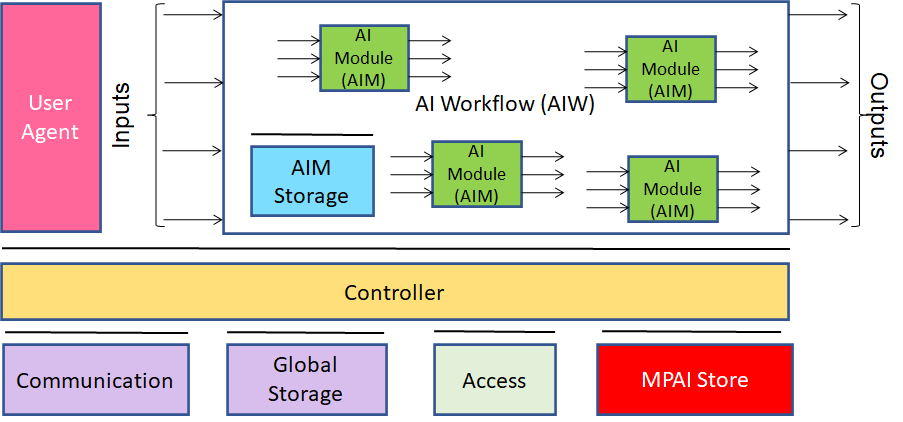
Figure 1 – Reference Model of MPAI-AIF V1
MPAI Application Standards normatively specify Syntax and Semantics of the input and output data and the Function of the AIMs, and the Connections between and among the AIMs.
In particular, an AIM is defined by its Function and data, but not by its internal architecture, which may be based on AI or data processing, and implemented in software, hardware or hybrid software and hardware technologies.
The MPAI AI Framework (MPAI-AIF) Technical Specification specifies architecture, interfaces, protocols and Application Programming Interfaces (API) of an AI Framework (AIF), especially designed for execution of AI-based implementations, but also suitable for mixed AI and traditional data processing workflows.
MPAI-AIF possesses the following main features:
- Independence from the Operating System.
- Component-based modular architecture with standard interfaces.
- Interfaces encapsulate Components to abstract them from the development environment.
- Interface with the MPAI Store enables access to validated Components.
- Component can be Implemented as:
- Software only, from MCUs to HPC.
- Hardware only.
- Hybrid hardware-software.
- The features of Component system are:
- Execution in local and distributed Zero-Trust architectures.
- Possibility to interact with other Implementations operating in proximity.
- Direct support to Machine Learning functionalities.
The MPAI-AIF Technical Specification and a Reference Software implementation are available for download.
Technical Specification: AI Framework (MPAI-AIF) V2 builds on Viersion 1 and specifies a set of trusted services enabling AIF Components to access trusted services via APIs overcoming the limitation of AIF V1 where the whole AI Framework was assumed to run in a Trusted Zone but no security service was provided.
Currently MPAI-AIF V2 supports:
- Trusted Communication Service
- Encryption Service
- Attestation Service.
Figure 2 represents the Reference Model of MPAI-AIF V2.
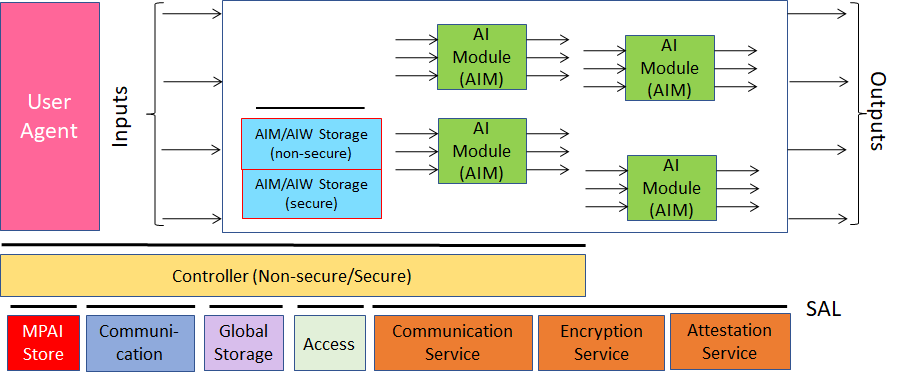
Figure 2 – Reference Model of MPAI-AIF V2
The functionalities of the Security Profile defined by MPAI-AIF V2 on top of the Basic Profile defined in MPAI-AIF V1 are:
- The Framework provides access to the following Trusted Services:
- A selected range of cyphering algorithms.
- A basic attestation function.
- Secure storage (RAM, internal/external flash, or internal/external/remote disk).
- Certificate-based secure communication.
- The AIF can execute only one AIM:
- The AIM may be a Composite AIM.
- The AIMs of the Composite AIM cannot access the Secure API.
- The AIF Trusted Services may rely on hardware and OS security features already existing in the hardware and software of the environment in which the AIF is implemented.
Read An overview of AI Framework (MPAI-AIF)
Download Technical Specification – AI Framework (MPAI-AIF) V2