
Functions
Ref. Model
I/O Data
SubAIMs
JSON MData
Profiles
Ref. Software
Conformance
Performance
1 Functions
The Visual Sensors (CAV-VIS) AIM:
| Receives | Visual Field | What the Visual sensors capture. |
| Produces | Basic Visual Object | To Basic Visual Scene Description. |
The Visual Sensors AIM is the set of Visual sensors of the CAV. Each sensor is served by an instance of the Visual Object Acquisition AIM, which receives what the sensor captures of the Visual Field and provides it as a Basic Visual Object: time-stamped on the CAV’s time base, its Qualifier stating the sensor, its intrinsic calibration and its mounting pose on the CAV.
An Implementation instantiates the Acquisition AIM once per sensor; the Basic Visual Objects of all sensors leave on one Port, each identifying its sensor.
2 Reference Model
Figure 1 depicts the Reference Model of the Visual Sensors (CAV-VIS) AIM.
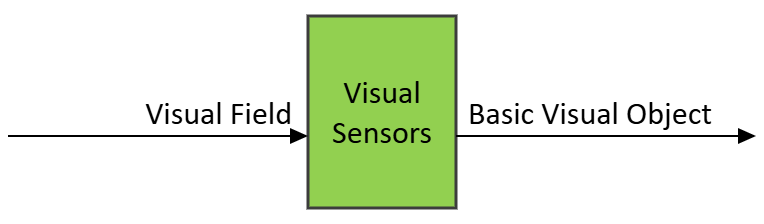
Figure 1 – The Visual Sensors (CAV-VIS) AIM
3 I/O Data
Table 1 specifies the Input and Output Data of the Visual Sensors (CAV-VIS) AIM.
| Input | Data Type | Description |
|---|---|---|
| Visual Field | Basic Visual Object | The Visual Field as each sensor captures it. |
| Output | Data Type | Description |
| Basic Visual Object | Basic Visual Object | One Basic Visual Object per capture, time-stamped on the CAV’s time base, its Qualifier stating the sensor, its intrinsic calibration and its mounting pose on the CAV. |
4 SubAIMs
One instance of the Visual Object Acquisition AIM per sensor.
5 JSON Metadata
https://schemas.mpai.community/CAV2/V2.0/AIMs/VisualSensors.json
6 Profiles
No Profiles.
7 Reference Software
In the reference software the camera frames are rendered by the simulation from where everything is, and given as Basic Visual Objects at the boundary of the CAV, time-stamped on its time base, with the camera’s calibration and mounting pose. It is part of the reference software of CAV-TEC V2.0 (see N4195, An introduction to the reference software): C# on .NET 10, released under the BSD 3-Clause licence, obtained from MPAI.
8 Conformance Testing
Table 2 provides the Conformance Testing Method for the Visual Sensors (CAV-VIS) AIM: the data it receives and produces. If a schema references other schemas, conformance of data for the primary schema implies that data referencing a secondary schema shall also validate against that schema, if present, and conform with the Qualifier, if present.
| Receives | Basic Visual Object | Shall validate against the Basic Visual Object schema. |
| Produces | Basic Visual Object | Shall validate against the Basic Visual Object schema. |