
Functions
Ref. Model
I/O Data
SubAIMs
JSON MData
Profiles
Ref. Software
Conformance
Performance
1 Functions
The Motion Selection Planning (CAV-MSP) AIM:
| Receives | Full Environment Descriptors | From Full Environment Description. |
| AMS Data | From AMS Memory. | |
| Path Response | From Path Selection Planning. | |
| Trajectory Request | From Traffic Obstacle Avoidance. | |
| Produces | Path Request | To Path Selection Planning. |
| Trajectory Response | To Traffic Obstacle Avoidance. | |
| Trajectory | To Traffic Obstacle Avoidance. |
For each Full Environment Descriptors instance, the AIM gives the Trajectory of the next seconds along the Path, by the Intelligent Driver Model: its desired speed the speed limit of the segment the CAV is on, following the object ahead in the CAV’s lane at a time gap and never nearer than a minimum gap, and stopping at the end of the Path as behind a vehicle stopped there. Before a Path is given – no Route executed – the Path is where the CAV stands, and the CAV holds.
A vehicle reported by a Remote CAV and hidden by the one the CAV follows lowers the acceleration too. Where the Path turns sharply, the desired speed is at most what the turn allows at a comfortable lateral acceleration, reached before the turn and held through it.
2 Reference Model
Figure 1 depicts the Reference Model of the Motion Selection Planning (CAV-MSP) AIM.
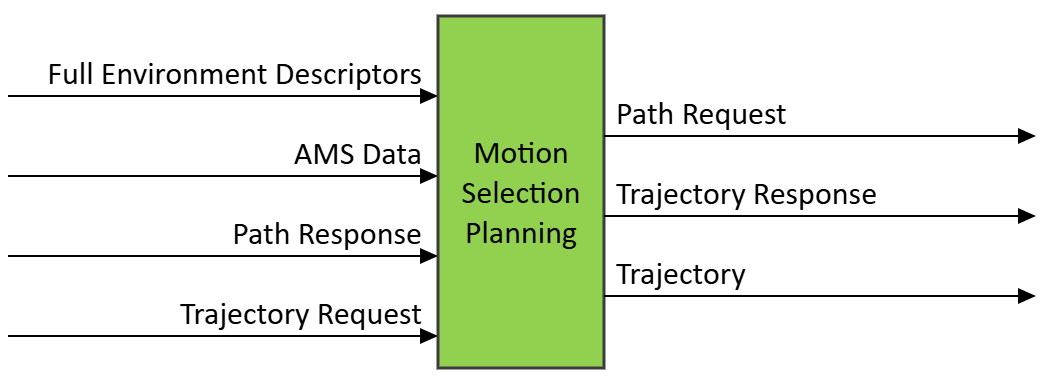
Figure 1 – The Motion Selection Planning (CAV-MSP) AIM
3 I/O Data
Table 1 specifies the Input and Output Data of the Motion Selection Planning (CAV-MSP) AIM.
| Input | Data Type | Description |
|---|---|---|
| Full Environment Descriptors | Full Environment Descriptors | The CAV and the objects around it on the map. |
| AMS Data (optional) | AMS Data | What the AMS has decided before. |
| Path Response | Interaction Response | The Path to follow. |
| Trajectory Request (optional) | Interaction Request | A request for a new Trajectory. |
| Output | Data Type | Description |
| Path Request (optional) | Interaction Request | A request for a new Path. |
| Trajectory Response (optional) | Interaction Response | The answer to a Trajectory Request. |
| Trajectory | Trajectory | The Trajectory of the next seconds. |
4 SubAIMs
No SubAIMs.
5 JSON Metadata
https://schemas.mpai.community/CAV2/V2.0/AIMs/MotionSelectionPlanning.json
6 Profiles
No Profiles.
7 Reference Software
The reference software plans the Trajectory of the next seconds by the Intelligent Driver Model, the desired speed the speed limit, following the object ahead at a time gap, slowing at corners and stopping at the end of the Path; settings DesiredSpeed, TimeGap, MinimumGap, Acceleration, Deceleration. It is part of the reference software of CAV-TEC V2.0 (see N4195, An introduction to the reference software): C# on .NET 10, released under the BSD 3-Clause licence, obtained from MPAI.
Tested with the Autonomous Motion Subsystem, Stage 1: Trajectories against the objects ahead, no collision.
8 Conformance Testing
Table 2 provides the Conformance Testing Method for the Motion Selection Planning (CAV-MSP) AIM: the data it receives and produces. If a schema references other schemas, conformance of data for the primary schema implies that data referencing a secondary schema shall also validate against that schema, if present, and conform with the Qualifier, if present.
| Receives | Full Environment Descriptors | Shall validate against the Full Environment Descriptors schema. |
| AMS Data | Shall validate against the AMS Data schema. | |
| Interaction Response | Shall validate against the Interaction schema. | |
| Interaction Request | Shall validate against the Interaction schema. | |
| Produces | Interaction Request | Shall validate against the Interaction schema. |
| Interaction Response | Shall validate against the Interaction schema. | |
| Trajectory | Shall validate against the Trajectory schema. |