
Functions
Ref. Model
I/O Data
SubAIMs
JSON MData
Profiles
Ref. Software
Conformance
Performance
1 Functions
The AMS-MAS Message Interpretation (CAV-AMI) AIM:
| Receives | AMS-MAS Message Request | From the Autonomous Motion Subsystem. |
| Produces | Brake Command | To the brakes. |
| Motor Command | To the motor. | |
| Wheel Command | To the steered wheels. | |
| AMS-MAS Message Response | To the Autonomous Motion Subsystem. |
The AIM follows the Trajectory of the latest AMS-MAS Message by the commands of the mechanical subsystems, from the CAV’s Spatial Attitude the Message carries: the Autonomous Motion Subsystem’s, which combines GNSS with the MAS’s own estimate. The MAS executes; where the CAV is, is known best upstream. A Message without a Spatial Attitude – a Suspend, a Resume – is followed from the last one received. The Responses of the devices are not its concern: what was executed is for MAS Response Analysis to judge.
Longitudinally: the acceleration the Trajectory asks a moment ahead, plus a correction of the speed error. The motor acts while that is above what the road and the air slow the CAV by, the brakes beyond it, never both. A deceleration beyond an emergency threshold is an Emergency Brake Command; a CAV at a standstill that is to stay there is held by the brakes.
Laterally, pure pursuit: the point of the Trajectory a look-ahead distance ahead, reached on the arc the bicycle model of the CAV drives. Execute and Change follow the Trajectory given; Suspend stops the CAV at once; Resume follows the Trajectory it held. A message with no Trajectory to follow is reported.
2 Reference Model
Figure 1 depicts the Reference Model of the AMS-MAS Message Interpretation (CAV-AMI) AIM.
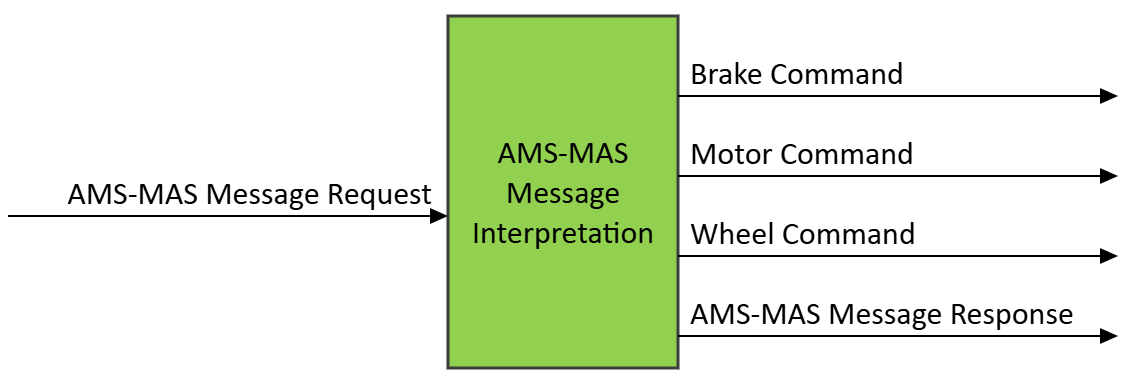
Figure 1 – The AMS-MAS Message Interpretation (CAV-AMI) AIM
3 I/O Data
Table 1 specifies the Input and Output Data of the AMS-MAS Message Interpretation (CAV-AMI) AIM.
| Input | Data Type | Description |
|---|---|---|
| AMS-MAS Message Request | AMS-MAS Message Request | The Trajectory to follow, the CAV’s Spatial Attitude as the AMS knows it, and the Command. |
| Output | Data Type | Description |
| Brake Command (optional) | Brake Command | The braking to apply, an Emergency Brake Command, or Hold. |
| Motor Command (optional) | Motor Command | The acceleration to give. |
| Wheel Command | Wheel Command | The angle to steer. |
| AMS-MAS Message Response (optional) | AMS-MAS Message Response | A message that cannot be executed, reported. |
4 SubAIMs
No SubAIMs.
5 JSON Metadata
https://schemas.mpai.community/CAV2/V2.0/AIMs/AMSMASMessageInterpretation.json
6 Profiles
No Profiles.
7 Reference Software
The reference software follows the Trajectory longitudinally by the acceleration it asks a moment ahead plus a correction of the speed error – motor or brakes, never both, an Emergency Brake Command beyond a threshold, Hold at a standstill – and laterally by pure pursuit on the bicycle model of the CAV. It is part of the reference software of CAV-TEC V2.0 (see N4195, An introduction to the reference software): C# on .NET 10, released under the BSD 3-Clause licence, obtained from MPAI.
Tested with the Motion Actuation Subsystem, Stage 1, on the simulated mechanical subsystems, open and closed loop.
8 Conformance Testing
Table 2 provides the Conformance Testing Method for the AMS-MAS Message Interpretation (CAV-AMI) AIM: the data it receives and produces. If a schema references other schemas, conformance of data for the primary schema implies that data referencing a secondary schema shall also validate against that schema, if present, and conform with the Qualifier, if present.
| Receives | AMS-MAS Message Request | Shall validate against the AMS-MAS Message schema. |
| Produces | Brake Command | Shall validate against the Brake Command schema. |
| Motor Command | Shall validate against the Motor Command schema. | |
| Wheel Command | Shall validate against the Wheel Command schema. | |
| AMS-MAS Message Response | Shall validate against the AMS-MAS Message schema. |