
| Function | Ref. Model | I/O Data | SubAIMs | JSON MData | Profiles | Ref. Software | Conformance | Performance |
1. Function
The Behaviour Planning (PGM‑BPL) AIM is a Sub-AIM of A‑User Formation (PGM‑AUF). It turns the Communicative Functions of the Final Response (what the A‑User means to do with its body, towards whom or what and with which words) into Behaviours of the Persona of the A‑User, timed on the Machine Speech. PGM‑BPL:
- Receives the Communicative Functions from Final Response Demultiplexing, the Text of the Final Response, the Machine Speech from Text-To-Speech, the Avatar Model and the AUC-AUF Request.
- Chooses, for each function that carries no Behaviour (Level 1), the Behaviour that realises it on the Persona, from the closed list of its Function and among the Behaviours that the Persona can perform; for a function that carries a Behaviour (Level 2), it checks that the Persona can perform it and, if not, realises the function with another Behaviour of its list or leaves it out.
- Times each Behaviour on the words of its Anchor: it computes the times of the words of the Text in the Machine Speech and gives each Behaviour its start, its peak and its end, in seconds from the start of the Machine Speech; a function anchored before or after the utterance is timed before or after the speech.
- Produces the Communicative Functions, each with its Behaviour and its times, which go to Animation Object Generation.
- Reports with an AUC-AUF Response, for each function (FunctionID), Realised, Modified or Not Realised, with the reason.
2. Reference Model
Figure 1 depicts the Reference Model of the Behaviour Planning (PGM‑BPL) AIM. 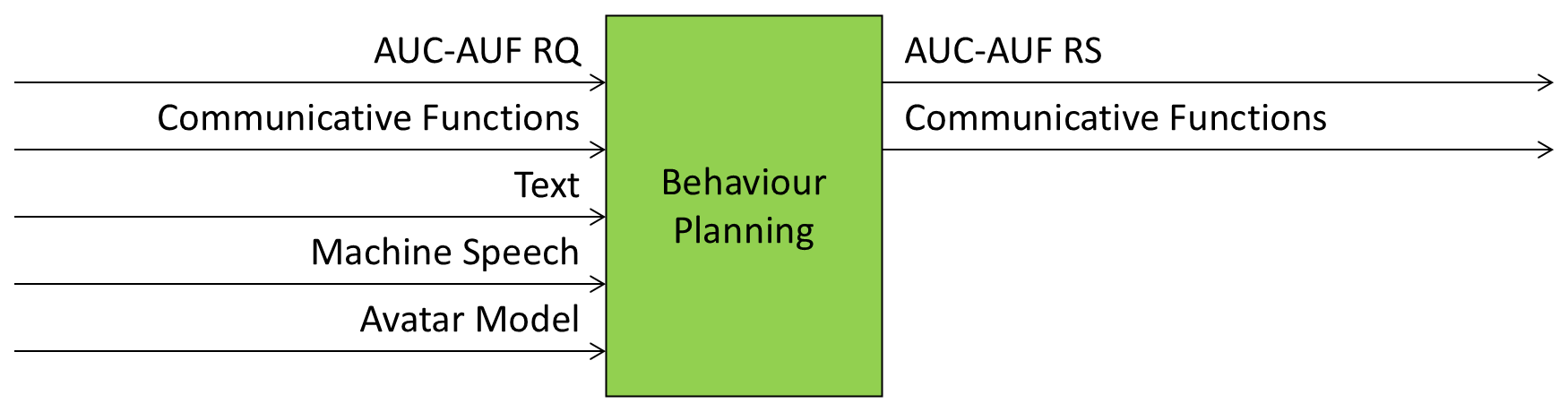
Figure 1 – The Behaviour Planning (PGM‑BPL) AIM
The AUF Reference Model figure is in the A‑User Formation page.
3. Input/Output Data
Table 1 specifies the Input and Output Data of the Behaviour Planning (PGM‑BPL) AIM.
Table 1 – I/O Data of the Behaviour Planning (PGM‑BPL) AIM
| Input | Description |
| Communicative Functions | The Communicative Functions of the Final Response, with its Level, from Final Response Demultiplexing. |
| Text | The Text of the Final Response, whose words the Anchors of the functions name. |
| Machine Speech | The speech synthesised from the Text by Text-To-Speech, on which the Behaviours are timed. |
| Avatar Model | The model of the Persona of the A-User, which determines the Behaviours it can perform. |
| AUC-AUF Request | Request from A-User Control that controls the formation. |
| Output | Description |
| Communicative Functions | The Communicative Functions, each with the Behaviour that realises it and its times (start, peak, end), sent to Animation Object Generation. A function that is not realised is left out. |
| AUC-AUF Response | Report to the AUF Status Multiplexing (PGM-FSM) AIM, with, for each function, Realised, Modified or Not Realised and the reason. |
4. Sub-AIMs
No Sub-AIMs.
5. JSON Metadata
https://schemas.mpai.community/PGM1/V1.0/AIMs/BehaviourPlanning.json
6. Profiles
No Profiles.
7. Reference Software
Not part of this specification.
8. Conformance Testing
Table 2 provides the Conformance Testing Method for the Behaviour Planning (PGM‑BPL) AIM.
If a schema contains references to other schemas, conformance of data for the primary schema implies that any data referencing a secondary schema shall also validate against the relevant schema, if present, and conform with the Qualifier, if present.
Table 2 – Conformance Testing Method for the Behaviour Planning (PGM‑BPL) AIM
| Receives | Communicative Functions | Shall validate against the Communicative Functions schema. |
| Text | Shall validate against the Basic Text Object schema. | |
| Machine Speech | Shall validate against the Basic Speech Object schema and conform with its Speech Qualifier. | |
| Avatar Model | Shall validate against the Basic 3D Model Object schema. | |
| AUC-AUF Request | Shall validate against the AUC-AUF Request schema. | |
| Produces | Communicative Functions | Shall validate against the Communicative Functions schema; every function shall carry a Behaviour from the closed list of its Function and its Times; the Behaviour given at Level 2 shall be kept unless the AUC-AUF Response reports the function as Modified. |
| AUC-AUF Response | Shall validate against the AUC-AUF Response schema and report, for each FunctionID received, Realised, Modified or Not Realised, with the reason when it is not Realised. |
9. Performance Assessment
Not part of this specification.
