
<-AI Modules Go to ToC Communication ->
1 Reference Model
Figure 1 depicts the Reference Model of the Controller.
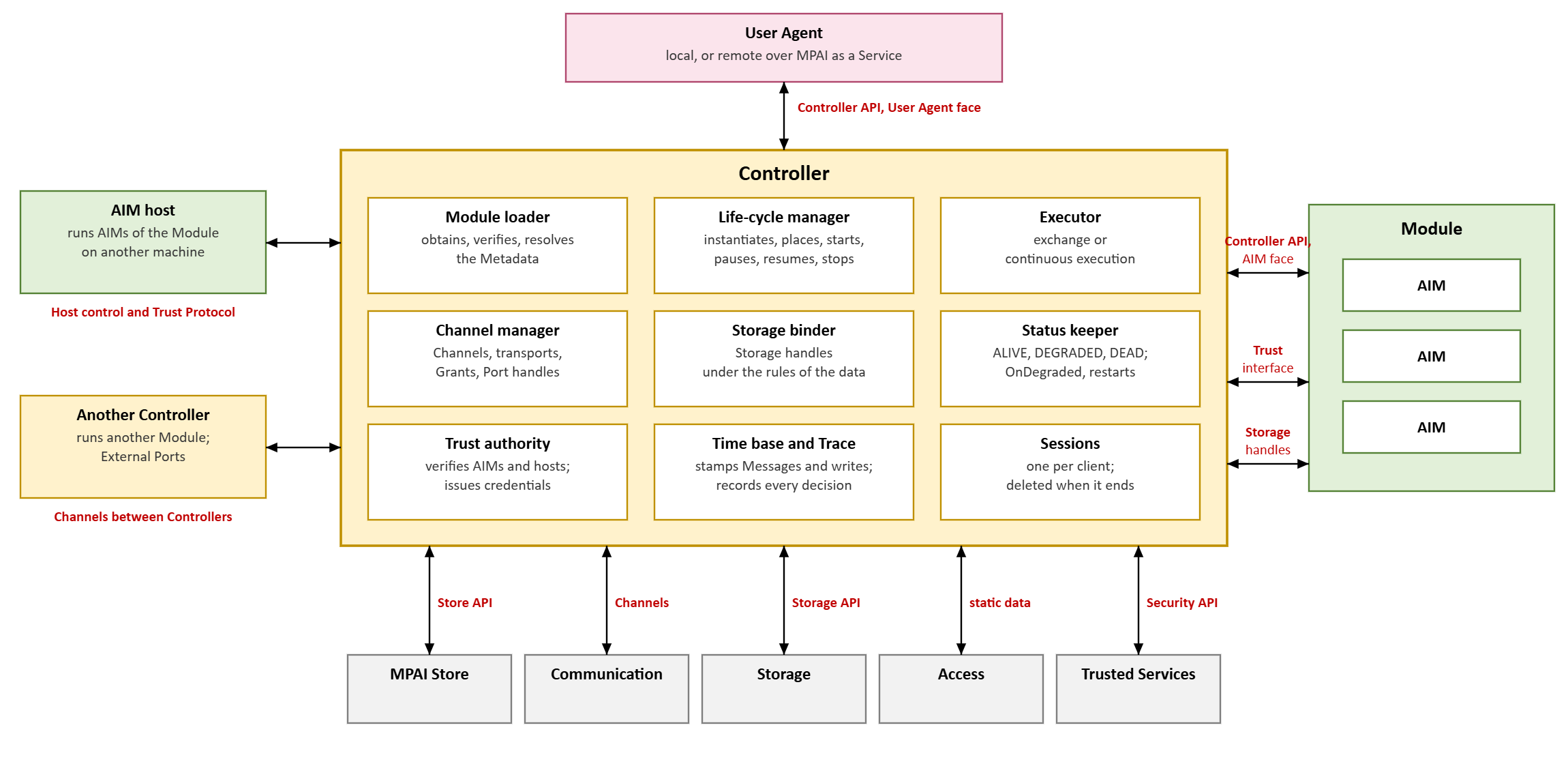
Figure 1 – Reference Model of the Controller
The Controller is responsible for the life cycle of a Module. One Controller runs one Module. The Controller is driven by a User Agent; controls the AIMs of the Module, with it or apart from it; is the trust authority of the Module; and uses the MPAI Store, Communication, Storage, Access and Trusted Services. The Controller decides; it need not carry the data it decides about.
2 Functions
The Controller:
- obtains the Metadata of a Module and the Implementations it names from the MPAI Store or from local storage, and verifies them;
- keeps what it obtained in its AIM repository (3), and obtains from the MPAI Store only what the repository does not hold;
- asks the MPAI Store, when it chooses, whether a newer version of an AIM it holds exists, and follows it or not as its policy says;
- builds the Module from its Metadata, resolving the Topology once, at load time, into connections of AIM, Data Type and Port Number. Metadata the Controller cannot resolve does not load, and the Controller says why;
- verifies each AIM before it runs, as trust authority of the Module (6);
- instantiates the AIMs, placing each as its Relation states: with the Controller, or apart from it (8);
- establishes every Channel the Topology declares, chooses its transport, issues its Grants and binds each AIM’s Port handles (Communication). An AIM cannot open a Channel of its own;
- binds each AIM’s Storage handles (Storage);
- executes the Module in the model its Metadata declares – by exchange or continuously (Execution) – and starts, pauses, resumes and stops it and its AIMs;
- keeps the status of each AIM and applies the Module’s policy when one degrades (7);
- keeps one time base, and stamps every Message and every Storage write;
- keeps the sessions of its clients, and deletes what a session kept when it ends;
- records every Channel creation, Grant, life-cycle change, Storage write and trust decision.
3 Components
Table 1 – Components of the Controller
| Component | Function |
| Module loader | Obtains the Metadata of the Module and the Implementations it names, verifies them against the MPAI Store, and resolves the Topology into typed connections. |
| AIM repository | Keeps the AIM Instance Metadata the Controller obtained from the MPAI Store, the Implementations and models it obtained from the locations the Metadata gives (the MPAI Store does not hold them), the version, and the AIM Licence it was given. It is consulted before the MPAI Store and written only by the Controller. One repository may serve all the Modules of a Controller. |
| Life-cycle manager | Instantiates and places the AIMs; starts, pauses, resumes and stops the Module and its AIMs; restarts an AIM that fails, at most its RestartLimit times; releases what was placed when a Module is refused or stops. |
| Executor | Runs the Module by exchange or continuously, as its Metadata declares. One executor serves both models, an exchange being a special case of continuous execution. |
| Channel manager | Establishes the Channels the Topology declares, chooses their transports, issues a Grant for each Channel end and binds the AIMs’ Port handles. |
| Storage binder | Binds the handles through which each AIM reaches its Private Storage, the Private Storage of the Module and Shared Storage, under the rules of the data. |
| Status keeper | Keeps the status of each AIM – ALIVE, DEGRADED, DEAD – with what it reported, and applies the Module’s OnDegraded policy. |
| Trust authority | Verifies each AIM before it executes, wherever it executes, issues its credentials and Grants, and decides every trust question of the Module. |
| Time base and Trace | Keeps one time base; stamps every Message and Storage write; keeps the Trace of the Module, signed and hash-chained so that a gap or an alteration is evident. |
| Sessions | Keeps one session per client of a Service, and deletes what the Module kept for it when the session ends. |
4 Interfaces
Table 2 – Interfaces of the Controller
| Interface | Between | Function |
| Controller API, User Agent face | User Agent and Controller | Initialise and destroy the Controller; start, pause, resume and stop the Module; stop one of its AIMs; inquire the status of its AIMs with what they reported; write to a boundary Input Port and read from a boundary Output Port by Data Type and Port Number, with a timeout; place and collect large payloads by reference; initialise a Shared Storage scope and reach Storage as its rules allow; start and stop the record of the boundary; manage resources (Basic API). |
| Controller API, AIM face | AIMs and Controller | Read and write the AIM’s own Ports by Data Type and Port Number, with a timeout; select among Ports with pending Messages; count pending and dropped Messages; place, fetch and release payloads; read the time; report; where allowed, send life-cycle requests to other AIMs of the Module and use External Ports (Basic API). |
| Trust interface | AIMs and Controller | An AIM presents its identity, credentials and the attestation of what it runs, and receives its admission (6). |
| AIM control and Trust Protocol | Controller and an AIM that executes apart from it | Mutual establishment of trust when the link is opened; then instantiate, start, pause, resume and stop an AIM wherever it executes, and obtain its status and reports (8). |
| Channels between Controllers | Controller and another Controller | Messages between External Ports of Modules run by different Controllers, each carrying its writer’s stamp and signed by its sender (9). |
| Store API | Controller and MPAI Store | Find and retrieve Metadata, have Implementations verified, and obtain AIM Licences (MPAI Store). |
| Communication and Storage | Controller and Communication, Storage | Create Channels and Storage scopes and the handles to them (Communication, Storage). |
| Security API | Controller and Trusted Services | Cryptography, attestation, secure storage and secure communication (Security API). |
Each call of the Controller API returns a named outcome (Table 3). A User Agent can therefore tell apart what did not happen from what went wrong.
Table 3 – Outcomes of the Controller API
| Outcome | Meaning |
| OK | The call succeeded. |
| NOT_PRODUCED | The Output Port produced nothing in this exchange. This is not an error. |
| TIMEOUT | Nothing arrived within the timeout of the call. |
| NO_SUCH_PORT | No Port of that Data Type and Port Number exists. |
| TYPE_NOT_ACCEPTED | The Port does not accept the Data Type of the datum. |
| NOT_STARTED | The Module or the AIM is not running. |
| NOT_AUTHORISED | The caller has no Grant for the operation. |
| NOT_TRUSTED | The Module was refused: an Implementation or a model is not what the MPAI Store approved, or an AIM has no AIM Licence that allows the use. |
| FAILED | The operation failed for another reason, which the Controller states. |
5 Life cycle of a Module
Table 4 – Life cycle of a Module
| # | Step | What the Controller does |
| 1 | Load | Uses the AIM Instance Metadata and the Implementations its AIM repository holds; obtains the Metadata it does not hold from the MPAI Store and the Implementations from the locations the Metadata gives, and keeps them in the repository; validates the Metadata. |
| 2 | Verify | Measures each Implementation and each model. Sends the fingerprints to the MPAI Store, which says whether they are those it approved (MPAI_AIFS_VerifyImplementation), and checks the models against what the settings declare. Does so for what it builds from the repository as for what it has just obtained. Refuses the Module, NOT_TRUSTED, where they differ. |
| 3 | Build | Resolves the Topology into connections of AIM, Data Type and Port Number. Metadata that cannot be resolved does not load. |
| 4 | Place and instantiate | Instantiates each AIM with the Controller or apart from it, as its Relation states; admits each AIM through the Trust interface and the Trust Protocol. |
| 5 | Bind | Establishes the Channels, issues the Grants, binds the Port and Storage handles. |
| 6 | Execute | Runs the Module by exchange or continuously; pauses and resumes it when requested. |
| 7 | Stop | Stops the AIMs, revokes the Grants – the handles of a stopped Module are dead – and releases what was placed. The outputs already delivered stand. |
A Controller may keep the Implementations it built after a Module stops, so that returning to an Application does not load its models again. This is safe because an AIM keeps no state of an interaction between executions, and requires that an AIM serving several Modules or clients at once be safe to call concurrently.
A newer version of the Metadata of a Module takes effect when the Module is started again; the Controller adds no AIM to a running Module (CTR-1).
Steps 1 (Load) and 2 (Verify) belong to the workflow from the submission of an Implementation to a Module that runs, described in Section 7 of the MPAI Store page.
6 Trust authority
The Controller is the trust authority of its Module:
- Policy decision. The Controller alone decides which AIM may reach which Port, Storage key or payload, from the Module’s Metadata as approved by the MPAI Store. It issues a Grant for each Channel end – a credential that admits exactly that end, for that Module instance.
- Policy enforcement is by the transports and the Storage: every read and write passes through a handle the Controller bound, and the Grant is checked at every operation, not once at opening.
- Identity. Every AIM Instance has an identity – Implementer ID, Implementation ID and the fingerprint of its Implementation. The Controller and every AIM that executes apart from it are Trust Anchors. Every Module instance has an identifier assigned by its Controller.
- Verification. As the Verifier of MPAI-PTF, the Controller checks identity, credential, life-cycle state, evidence of what the AIM runs, and policy before an AIM runs. Each decision is recorded in the Trace.
A Controller is the trust authority of its Module, not of other Controllers. Controllers that exchange Messages are admitted by a Trust Authority: a party their Users decided to trust – the Authority of a city a vehicle enters, the server of a videoconference a person joins – which may itself be a Controller (Communication 9; Basic API 3.9).
A Controller runs only code it has verified. Trust within one process is established once, before its code runs; everything that crosses the boundary of a verified process is verified at every interaction (Zero Trust and Profiles).
7 Status and degradation
An AIM is ALIVE, DEGRADED or DEAD. An error on a Channel, the loss of the link to an AIM that executes apart, an exception thrown by an AIM, a required Port that delivers nothing within its MaxAge, a persistent Deadline miss, or a report by which an AIM says it fell back makes the AIM DEGRADED. The Controller starts again an AIM that fails, at most its RestartLimit times; beyond that, the Module’s policy applies (Table 5).
Table 5 – OnDegraded policies
| Policy | What the Controller does |
| StopModule | The default. The run ends and the Module is stopped; the outputs already delivered stand and the others are not produced. |
| StopAIM | The degraded AIM is stopped and the others go on without it. |
| Continue | The others go on, and the degraded AIM runs again at the next exchange. |
A report does not trigger the policy. The User Agent learns what happened from the outcome of its calls and from the status, and may retry, inform its user, stop an AIM or stop the Module. Anything richer – a fallback, bringing a vehicle to a safe stop – is not the Controller’s to decide: it is written into the Module as AIMs.
8 AIMs that execute apart from the Controller
An AIM of a Module may execute apart from the Controller, as its Relation states. The Controller controls it with the same operations as any other AIM – instantiate, start, pause, resume, stop, status – and verifies it by the same means before it executes (6). Nothing that executes apart from the Controller runs a graph, decides anything or keeps a Module: the Module remains the Controller’s. What its execution needs – the Implementation, its models and the AIM Licence – is what its Metadata names and the MPAI Store approved, wherever it executes; it is obtained, measured and kept where the AIM executes (CTR-9, CTR-10). If the Controller loses control of the AIM, the AIM is DEGRADED and the Module’s policy applies.
9 Several Controllers
One Controller runs one Module. A system of several Modules is run by several Controllers – for example, each Application of a Service under a Controller Instance of its own. Modules run by different Controllers exchange Messages through their External Ports over Channels between Controllers, each Message signed by its sender and carrying its writer’s stamp. A Sub-AIM on another machine does not call for a second Controller: the Module’s Controller controls it where it executes.
The Basic API supports interaction between Controllers: a Controller joins the Controllers admitted by a Trust Authority its User trusts – or is itself that Authority – and its Module exchanges Messages through its External Ports with theirs, as the Authority’s policy allows (Communication). The Controllers may so implement a collective behaviour of their choice – a main Controller to whose information the others react, as the server of a videoconference, or no main Controller and a collective logic in all of them, as the vehicles of a city.
A Controller does not manage other Controllers: Controllers running Modules of the same type deal with each other as peers, through External Ports (Communication).
10 Implementations
A Controller can be tailored to its execution environment: a process on a High-Performance Computing system, a library function on a resource-constrained board. There is always a Controller, even in a lightweight Implementation. The Controller API is a control plane: it governs which AIM may reach which Port, when an AIM runs and what it may obtain, and does not prescribe how the bytes of a Message travel. An Implementation in which the Controller hands a Message to an AIM and takes one back conforms, as does one in which an AIM reads and writes its own Ports through handles the Controller bound.
11 Requirements
Table 6 – Requirements of the Controller
| # | Requirement |
| CTR-1 | A Controller shall run one Module, built from its Metadata. The Metadata is authoritative: no AIM, Channel or Port that it does not declare shall exist. |
| CTR-2 | A Controller shall run only Implementations and models it has verified against the MPAI Store. |
| CTR-3 | A Controller shall admit an AIM, wherever it executes, only after verifying it, and shall record every trust decision. |
| CTR-4 | A Controller shall address Ports by Data Type and Port Number, never by name. |
| CTR-5 | A Controller shall stamp every Message and every Storage write with its time base. |
| CTR-6 | A Controller shall return a named outcome for every call of the Controller API. |
| CTR-7 | A Controller shall apply the OnDegraded policy the Module’s Metadata declares, and shall not otherwise alter the behaviour of the Module. |
| CTR-8 | A Controller shall delete what a session kept when the session ends. |
| CTR-9 | A Controller may keep in an AIM repository the Metadata it obtained from the MPAI Store and the Implementations and models it obtained from the locations the Metadata gives, and shall not obtain again what the repository holds, except to follow a newer version. |
| CTR-10 | A Controller shall verify what it builds from its AIM repository with the MPAI Store, as it verifies what it has just obtained, and shall refuse it, NOT_TRUSTED, where the Store does not say that it is what it approved. |
| CTR-11 | A Controller shall keep its AIM repository within the Trusted Zone where the API Profile is Basic, and in Secure Storage where it is Secure. |
| CTR-12 | A Controller shall not use an AIM beyond the AIM Licence it holds for it, and shall hold one only if it is under the AIMLicence of the AIM Instance Metadata it obtained (ParentLicence). |