
Function
Ref. Model
I/O Data
SubAIMs
JSON MData
Profiles
Ref. Software
Conformance
Performance
1 Functions
The Audio Salience Mapping (PGM‑ASM) AI Module determines the perceptual importance of audio objects within a scene by
- Computing salience scores based on perceptual features
- Identifying dominant or attention‑relevant audio components
- Supporting prioritisation in rendering and enhancement
The ASM AI Module operates as follows:
- Receives the per‑object enrichment signals — Motion Flags, Proximity Class, Acoustic Profile, and Audio Object Type — together with the Audio CXT Directive and the Audio Domain Response
- Associates the incoming signals with candidate audio objects and contextual cues
- Integrates salience‑relevant descriptors across physical (motion, proximity, acoustic prominence and clarity), semantic (audio object type), and contextual (directive, domain) dimensions
- Computes a salience score for each candidate audio object
- Establishes a ranked ordering of audio objects and filters out low‑relevance objects according to adaptive thresholds
The module does not generate new audio descriptors; it operates on existing inputs to produce a prioritised, context‑aware selection of salient audio objects.
2 Reference Model
Figure 1 depicts the Reference Model of the Audio Salience Mapping (PGM‑ASM) AIM.
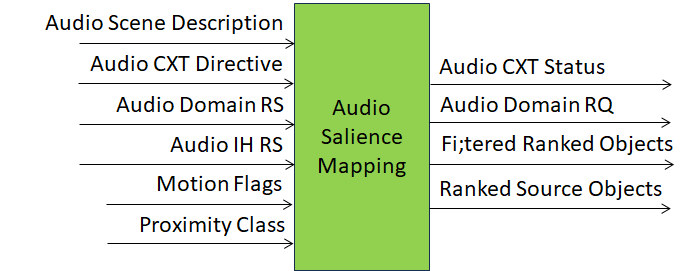
Figure 1 – The Audio Salience Mapping (PGM‑ASM) AIM
3 I/O Data
Table 1 specifies the Input and Output Data of the Audio Salience Mapping (PGM‑ASM) AIM.
| Input | Description |
|---|---|
| Motion Flags | Per‑object motion indicators contributing to physical salience. |
| Proximity Class | Per‑object proximity classification contributing to physical salience. |
| Acoustic Profile | Environmental acoustic characterisation contributing acoustic prominence. |
| Audio Object Type | Semantic object‑type label contributing semantic salience. |
| Audio CXT Directive | Control directive specifying scope, depth, or policy constraints, including contextual priorities for salience. |
| Audio Domain Response | Domain‑specific constraints and feedback for salience evaluation. |
| Audio Interaction History Response | Prior interaction‑history content supporting temporal consistency across captures. |
| Output | Description |
| Ranked Audio Objects | Audio objects ordered by computed salience score. |
| Filtered Salient Audio Objects | Subset of audio objects retained after adaptive salience thresholding. |
| Audio CXT Status | Status information describing the execution and outcome of Audio Salience Mapping processing. |
| Audio Domain Request | Query to Domain Access for domain‑specific knowledge. |
| Audio CXT Interaction History |
4 SubAIMs
No SubAIMs.
5 JSON Metadata
https://schemas.mpai.community/PGM1/V1.0/AIMs/AudioSalienceMapping.json
6 Profiles
No Profiles.
7 Reference Software
Not part of this specification.
8 Conformance Testing
Table 2 provides the Conformance Testing Method for the Audio Salience Mapping (PGM‑ASM) AIM.
If a schema contains references to other schemas, conformance of data for the primary schema implies that any data referencing a secondary schema shall also validate against the relevant schema, if present, and conform with the Qualifier, if present.
| Receives | Motion Flags | Shall validate against Motion Flags schema. |
| Proximity Class | Shall validate against Proximity Class schema. | |
| Acoustic Profile | Shall validate against Acoustic Profile schema. | |
| Audio Object Type | Shall validate against Audio Object Type schema. | |
| Audio CXT Directive | Shall validate against Audio CXT Directive schema. | |
| Audio Domain Response | Shall validate against Audio Domain schema. | |
| Audio Interaction History Response | Shall validate against Interaction History schema. | |
| Produces | Ranked Audio Objects | Shall validate against Ranked Audio Objects schema. |
| Filtered Salient Audio Objects | Shall validate against Filtered Salient Audio Objects schema. | |
| Audio CXT Status | Shall validate against Audio CXT Status schema. | |
| Audio Domain Request | Shall validate against Audio Domain schema. |
9 Performance Assessment
Not part of this specification.