
| 1 Function | 2 Reference Model | 3 Input/Output Data |
| 4 SubAIMs | 5 JSON Metadata | 6 Profiles |
| 7 Reference Software | 8 Conformance Texting | 9 Performance Assessment |
1 Functions
The Television Splitting (OSD-TVS) AIM receives a video file with associated auxiliary text and produces the audio and video file and the text:
| Receives | Multimodal Object (OSD-MMO) | As a file. |
| Text Object (OSD-TXO) | Auxiliary Text. Optional. | |
| Demultiplexes | Multimodal Object (OSD-MMO) | |
| Produces | Text Object (OSD-TXO) | The Text. |
| Basic Speech Object (OSD-BSO) | The speech. | |
| Basic Visual Object (OSD-BVO) | The video. |
2 Reference Model
The Reference Model is specified in Figure 1.
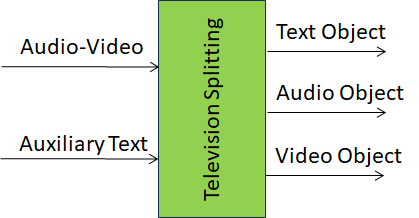
Figure 1 – The Television Splitting (OSD-TVS) AIM Reference Model
3 Input/Output Data
Table 1 specifies the Input and Output Data of the Television Splitting (OSD-TVS) AIM. Links are to the Data Type specifications.
Table 1 – I/O Data of the Television Splitting (OSD-TVS) AIM
| Input | Description |
| Multimodal Object (OSD-MMO) | The Audio-Video file. |
| Text Object (OSD-TXO) | Text provided to facilitate operation. Optional. |
| Output | Description |
| Text Object (OSD-TXO) | The Text component of the input. |
| Basic Speech Object (OSD-BSO) | The speech of the Audio component. |
| Basic Visual Object (OSD-BVO) | The Video component. |
4 SubAIMs
No SubAIMs
5 JSON Metadata
https://schemas.mpai.community/OSD/V1.5/AIMs/TelevisionSplitting.json
6 Profiles
No Profiles.
7 Reference Software
7.1 Disclaimers
- This OSD-TVS Reference Software Implementation is released with the BSD-3-Clause licence.
- The purpose of this Reference Software is to show a working Implementation of OSD-TVS, not to provide a ready-to-use product.
- MPAI disclaims the suitability of the Software for any other purposes and does not guarantee that it is secure.
- Users shall verify that they have the right to use any third-party software required by this Reference Software.
7.2 Guide to the code
Use of this AI Modules is for developers who are familiar with Python, Docker, RabbitMQ, and downloading models from HuggingFace.
OSD-TVS extracts a WAV (uncompressed audio) from an input video using FFMPEG. Therefore, any input Multimodal file that can be demultiplexed by FFMPEG can be used as input. The current OSD-TVS implementation does not support Auxiliary Text.
The OSD-TVS Reference Software is found at the MPAI gitlab site. It contains:
- src: a folder with the Python code implementing the AIM
- Dockerfile: a Docker file containing only the libraries required to build the Docker image and run the container
- requirements.txt: dependencies installed in the Docker image
Library: https://www.ffmpeg.org/
7.3 Acknowledgements
This version of the OSD-TVS Reference Software has been developed by the MPAI AI Framework Development Committee (AIF-DC).
8 Conformance Testing
Table 2 provides the Conformance Testing Method for OSD-TVS AIM.
If a schema contains references to other schemas, conformance of data for the primary schema implies that any data referencing a secondary schema shall also validate against the relevant schema, if present and conform with the Qualifier, if present.
Table 2 – Conformance Testing Method for OSD-TVS AIM
| Receives | Multimodal Object (OSD-MMO) | Shall validate against the schema of the Data Type. |
| Text Object (OSD-TXO) | Shall validate against the schema of the Data Type. | |
| Produces | Text Object (OSD-TXO) | Shall validate against the schema of the Data Type. |
| Basic Speech Object (OSD-BSO) | Shall validate against the schema of the Data Type. | |
| Basic Visual Object (OSD-BVO) | Shall validate against the schema of the Data Type. |
