
| Function | Ref. Model | I/O Data | SubAIMs | JSON MData | Profiles | Ref. Software | Conformance | Performance |
1. Function
The Deliberative Domain Access (PGM‑DDA) AIM is a Sub-AIM of Domain Access (PGM‑DAC). It serves the Basic Knowledge AIM (an LLM), which requires goal‑directed, multi‑turn semantic support during reasoning.
PGM‑DDA:
- Receives the AUC-DAC Request from A‑User Control and the BKN‑DAC Requests from the Basic Knowledge AIM via the Dialogic Semantic Query Interface, implemented using the Model Context Protocol (MCP).
- Maintains session continuity: semantic commitments may be preserved across successive exchanges within the same session.
- Resolves each BKN‑DAC Request using internal and external domain knowledge sources.
- Obtains Interaction History from the Private Storage of the Module by sending a DAC Interaction History Request and receiving the DAC Interaction History Response.
- Returns the BKN‑DAC Responses that support multi‑turn deliberative exchanges.
- Reports the outcome, including any failure of an external domain knowledge source, with an AUC-DAC Response.
PGM‑DDA does not perform perception or reasoning and does not maintain perception state or User State beyond that required for MCP session continuity.
2. Reference Model
Figure 1 depicts the Reference Model of the Deliberative Domain Access (PGM‑DDA) AIM.
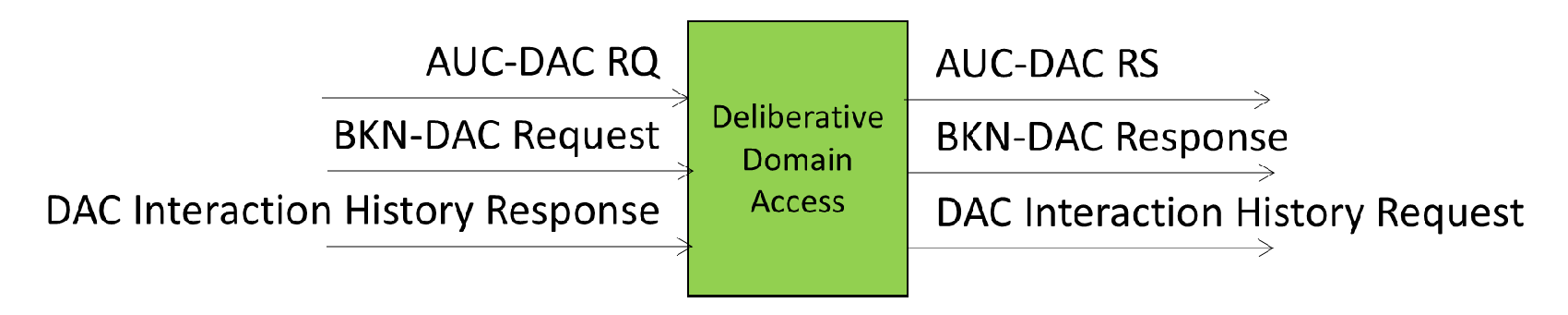
Figure 1 – The Deliberative Domain Access (PGM‑DDA) AIM
3. Input/Output Data
Table 1 specifies the Input and Output Data of the Deliberative Domain Access (PGM‑DDA) AIM.
Table 1 – I/O Data of the Deliberative Domain Access (PGM‑DDA) AIM
| Input | Description |
|---|---|
| AUC-DAC Request | Instructions from the A‑User Control AIM specifying the operational scope, access rights, and session constraints for domain knowledge retrieval. |
| BKN‑DAC Request | A multi‑turn domain knowledge request from the Basic Knowledge AIM via the Dialogic Semantic Query Interface. |
| DAC Interaction History Response | Interaction History elements returned by the Private Storage of the Module in reply to a DAC Interaction History Request. |
| Output | Description |
| BKN‑DAC Response | Domain knowledge returned to Basic Knowledge, supporting multi‑turn deliberative exchanges via the Dialogic Semantic Query Interface. |
| DAC Interaction History Request | Request to the Private Storage of the Module for Interaction History elements that support the deliberative exchanges. |
| AUC-DAC Response | Response describing the execution and outcome of the processing, including any external service access failures. AUC-DAC Response is reported to the A‑User Control AIM. |
4. Sub-AIMs
No Sub-AIMs.
5. JSON Metadata
https://schemas.mpai.community/PGM1/V1.0/AIMs/DeliberativeDomainAccess.json
6. Profiles
No Profiles.
7. Reference Software
Not part of this specification.
8. Conformance Testing
Table 2 provides the Conformance Testing Method for the Deliberative Domain Access (PGM‑DDA) AIM.
If a schema contains references to other schemas, conformance of data for the primary schema implies that any data referencing a secondary schema shall also validate against the relevant schema, if present, and conform with the Qualifier, if present.
| Receives | AUC-DAC Request | Shall validate against the AUC-DAC schema, with Mode RQ. |
| BKN‑DAC Request | Shall validate against the BKN‑DAC schema, with Mode RQ. | |
| DAC Interaction History Response | Shall validate against the Interaction History schema, with Mode RS. | |
| Produces | BKN‑DAC Response | Shall validate against the BKN‑DAC schema, with Mode RS. |
| DAC Interaction History Request | Shall validate against the Interaction History schema, with Mode RQ. | |
| AUC-DAC Response | Shall validate against the AUC-DAC schema, with Mode RS. |
9. Performance Assessment
Not part of this specification.
