
| Function | Ref. Model | I/O Data | SubAIMs | JSON MData | Profiles | Ref. Software | Conformance | Performance |
1. Function
The Entity Body Description (PGM‑EBD) AIM is a Sub-AIM of A‑User Formation (PGM‑AUF). It produces the description of the body of the Portable Avatar that utters the response. It uses the Body Motion Objects produced by Motion Object Generation, with the text and the Body Personal Status, to produce the Body Descriptors.
PGM‑EBD:
- Receives the AUC-AUF Request, the Final Response, the Body Motion Objects and the Body Personal Status.
- Describes the body behaviour (posture, gestures) that accompanies the response, in accordance with the Body Personal Status.
- Produces the Body Descriptors.
- Reports its processing with an AUC-AUF Response.
2. Reference Model
Figure 1 depicts the Reference Model of the Entity Body Description (PGM‑EBD) AIM.
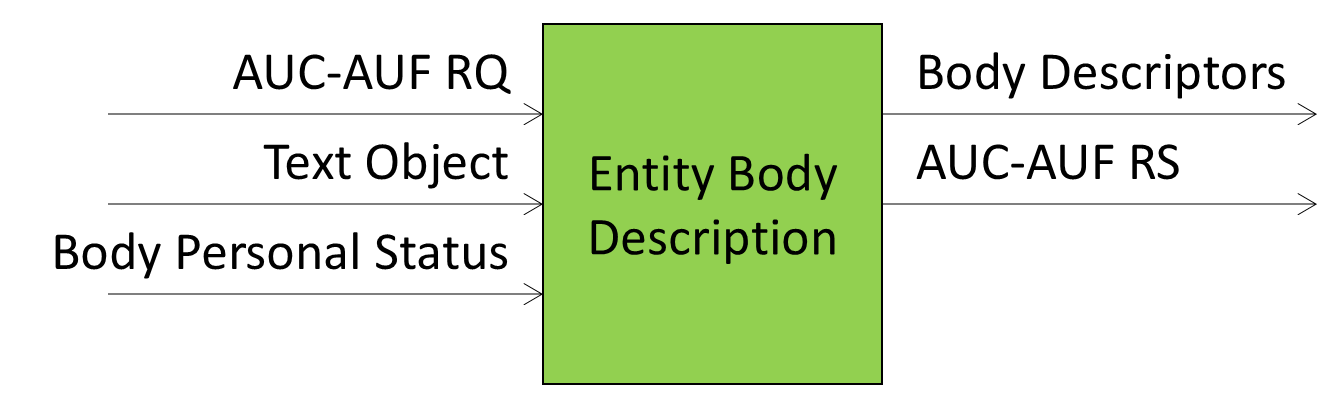
Figure 1 – The Entity Body Description (PGM‑EBD) AIM
3. Input/Output Data
Table 1 specifies the Input and Output Data of the Entity Body Description (PGM‑EBD) AIM.
Table 1 – I/O Data of the Entity Body Description (PGM‑EBD) AIM
| Input | Description |
|---|---|
| AUC-AUF Request | Guidance from A‑User Control on the delivery of the response. |
| Final Response | The deliberated content produced by Basic Knowledge: the text to be uttered and the Action Objects that carry the actions of the body that accompany it. |
| Body Motion Object | The motion of the body of the Persona of the A-User (e.g., moving to a place, a gesture) as a mini-Process Action, produced by Motion Object Generation (PGM-MOG). |
| Body Personal Status | Personal Status component for the body, from PGM-PSD. |
| Output | Description |
| Body Descriptors | Description of the body of the Portable Avatar, sent to Portable Avatar Multiplexing (PAF-PMX). |
| AUC-AUF Response | Report to the AUF Status Multiplexing (PGM-FSM) AIM. |
4. Sub-AIMs
No Sub-AIMs.
5. JSON Metadata
https://schemas.mpai.community/PGM1/V1.0/AIMs/EntityBodyDescription.json
6. Profiles
No Profiles.
7. Reference Software
Not part of this specification.
8. Conformance Testing
Table 2 provides the Conformance Testing Method for the Entity Body Description (PGM‑EBD) AIM.
If a schema contains references to other schemas, conformance of data for the primary schema implies that any data referencing a secondary schema shall also validate against the relevant schema, if present, and conform with the Qualifier, if present.
| Receives | AUC-AUF Request | Shall validate against the AUF‑Request schema. |
| Final Response | Shall validate against the Basic Final Response schema. | |
| Body Motion Object | Shall validate against Body Motion Object schema. | |
| Body Personal Status | Shall validate against the Body Personal Status schema. | |
| Produces | Body Descriptors | Shall validate against the Body Descriptors schema. |
| AUC-AUF Response | Shall validate against the AUC-AUF Response schema. |
9. Performance Assessment
Not part of this specification.
