
| Function | Ref. Model | I/O Data | SubAIMs | JSON MData | Profiles | Ref. Software | Conformance | Performance |
1. Function
The Intent and Referent Analysis (PGM‑IRA) AIM derives, from the Meaning (Text Descriptors, TXD) produced by Prompt Token Analysis, the goal-directed purpose of the utterance of the relevant User. It also resolves the expressions, contained in the Meaning or in the Interaction History, that refer to other Users in the scene.
PGM‑IRA:
- Infers the User’s Intent from the Meaning, determining its category (Informational, Procedural, Confirmational, Expressive, Spatial, or Meta-Interaction), specific action type, urgency, confidence level, temporal cues, and spatial anchors.
- Resolves expressions — pronouns, definite descriptions, demonstratives, and deictic gestures — referring to Users in the scene or originating from earlier interaction turns. It expresses this resolution as a Proposition (linking a subject to an object via a predicate), with spatial and temporal context where applicable.
- Draws on the scene context and the domain knowledge, obtained by Context Description from Domain Access, carried by the Context Descriptors when it is needed to disambiguate Intent or resolve a referent.
- Queries Private Storage via a PRC Interaction History Request when prior interaction context is needed to resolve a referent or confirm an Intent.
PGM‑IRA does not enrich the Intent with Goal constraints, scene context tags, or expressive configuration. Rather, it establishes the User’s Intent and the specific references of the referring expressions. Contextualisation and prompt planning are left to the downstream Sub-AIMs of Prompt Creation.
2. Reference Model
Figure 1 depicts the Reference Model of the Intent and Referent Analysis (PGM‑IRA) AIM.
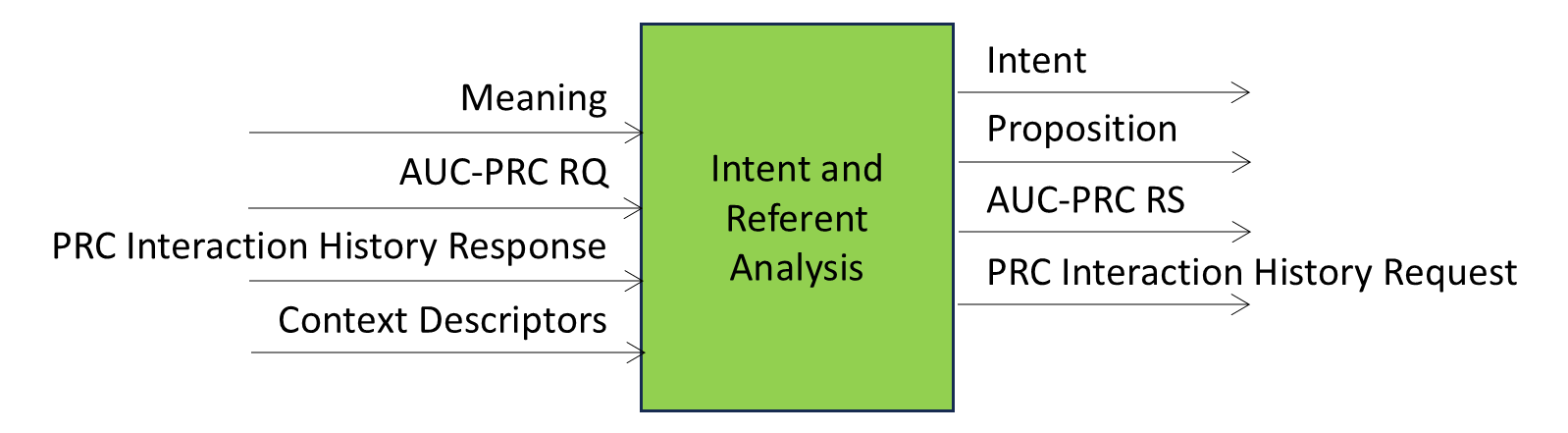
Figure 1 – The Intent and Referent Analysis (PGM‑IRA) AIM
3. Input/Output Data
Table 1 specifies the Input and Output Data of the Intent and Referent Analysis (PGM‑IRA) AIM.
Table 1 – I/O Data of the Intent and Referent Analysis (PGM‑IRA) AIM
| Input | Description |
|---|---|
| Text Descriptors | Data conveying structured linguistic analysis of the User’s Text Object that was produced by Prompt Token Analysis. |
| AUC-PRC Request | Request from A‑User Control specifying scope, depth, and policy constraints for prompt construction. |
| PRC Interaction History Response | Interaction History Response from Private Storage providing prior interaction context to support referent resolution and Intent disambiguation. |
| Context Descriptors | Structured descriptors of the current interaction context produced by Context Description, carrying the scene context and the domain knowledge that Context Description obtains from Domain Access, needed to resolve referents and infer Intent. |
| Output | Description |
| Intent | Structured representation of the User’s goal-directed purpose, carrying category, action type, parameters (urgency, confidence level, temporal cue, spatial anchor), and confidence score. |
| Proposition | Structured resolution of expressions referring to User, expressed as subject–predicate–object triples with spatial and temporal context. |
| AUC-PRC Response | Data reporting the processing outcome of this AIM, based on AUC-PRC Request. |
| PRC Interaction History Request | Request for Interaction History issued to Private Storage. |
4. Sub-AIMs
No Sub-AIMs.
5. JSON Metadata
https://schemas.mpai.community/PGM1/V1.0/AIMs/IntentAndReferentAnalysis.json
6. Profiles
No Profiles.
7. Reference Software
Not part of this specification.
8. Conformance Testing
Table 2 provides the Conformance Testing Method for the Intent and Referent Analysis (PGM‑IRA) AIM.
If a schema contains references to other schemas, conformance of data for the primary schema implies that any data referencing a secondary schema shall also validate against the relevant schema, if present, and conform with the Qualifier, if present.
| Receives | Text Descriptors | Shall validate against the Text Descriptors schema. |
| AUC-PRC Request | Shall validate against the AUC-PRC Request schema. | |
| PRC Interaction History Response | Shall validate against the PRC Interaction History schema. | |
| Context Descriptors | Shall validate against the Context Descriptors schema. | |
| Produces | Intent | Shall validate against the Intent schema. |
| Proposition | Shall validate against the Proposition schema. | |
| AUC-PRC Response | Shall validate against the AUC-PRC Response schema. | |
| PRC Interaction History Request | Shall validate against the PRC Interaction History schema. |
9. Performance Assessment
Not part of this specification.
