
| Function | Ref. Model | I/O Data | SubAIMs | JSON MData | Profiles | Ref. Software | Conformance | Performance |
1. Function
The Prompt Contextualisation (PGM‑PCX) AIM enriches the Intent and the Propositions produced by Intent and Referent Analysis with Goal constraints. These were identified by PGM-PCX, scene context, and User State adaptation, producing the planning inputs required by the Prompt Planning and Formatting AIM to assemble the PC Prompt.
PGM‑PCX:
- Derives a Goal from the Intent, specifying the objectives, action types, priorities, target Entities, predicate conditions, and constraints that govern how the Basic Knowledge AIM should respond.
- Determines the expressive configuration appropriate to the User States and the interaction context, producing a User Personality carrying tone, style, pacing, and narrative goal.
- Tags the scene context by producing additional Propositions representing contextual facts, timing guidance, and phrasing constraints relevant to the current interaction.
- Queries the Basic Knowledge AIM via BKN-PRC when world knowledge is needed to derive Goal constraints or determine appropriate expressive configuration.
- Queries the A‑User Storage AIM via PRC Interaction History when prior interaction context is needed to adapt the Goal or expressive configuration to the User’s history.
The PGM‑PCX AIM does not assemble or format the prompt. Rather, it produces the Goal, expressive, and contextual inputs that the Prompt Planning and Formatting AIM requires to construct the PC Prompt.
2. Reference Model
Figure 1 depicts the Reference Model of the Prompt Contextualisation (PGM‑PCX) AIM.
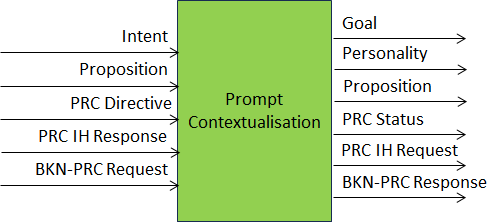
Figure 1 – The Prompt Contextualisation (PGM‑PCX) AIM
3. Input/Output Data
Table 1 specifies the Input and Output Data of the Prompt Contextualisation (PGM‑PCX) AIM.
Table 1 – I/O Data of the Prompt Contextualisation (PGM‑PCX) AIM
| Input | Description |
|---|---|
| Intent | Structured representation of the User’s goal-directed purpose produced by the Intent and Referent Analysis AIM, carrying category, action type, parameters, and confidence score. |
| Proposition | Fully resolved referential expressions produced by the Intent and Referent Analysis AIM, expressed as subject–predicate–object triples with spatial and temporal context. |
| PRC Directive | Directive from the A‑User Control AIM specifying scope, depth, and policy constraints for prompt construction. |
| PRC IH Response | Interaction History Response from the A‑User Storage AIM providing prior interaction context to support Goal derivation and User State adaptation. |
| BKN-PRC Request | Request from Basic Knowledge via BKN-PRC Request asking for additional world knowledge. |
| Output | Description |
| Goal | Structured representation of the objectives, action types, priorities, target Entities, predicate conditions, and constraints that govern how the Basic Knowledge AIM should respond to the User’s intent. |
| Personality | Expressive configuration appropriate to the current User State and interaction context, carrying User’s tone, style, pacing, and narrative goal. T the Prompt Planning and Formatting AIM uses this configuration to create PC Prompt. |
| Proposition | Additional scene context expressed as subject–predicate–object triples, carrying contextual facts, timing guidance, and phrasing constraints relevant to the current interaction. |
| PRC Status | Status signal reporting the processing outcome of this AIM. |
| PRC IH Request | Request for Interaction History issued to the A‑User Storage AIM. |
| BKN-PRC Response | Response to the Basic Knowledge AIM for additional world knowledge. |
4. Sub-AIMs
No Sub-AIMs.
5. JSON Metadata
https://schemas.mpai.community/PGM1/V1.0/AIMs/PromptContextualisation.json
6. Profiles
No Profiles.
7. Reference Software
Not part of this specification.
8. Conformance Testing
Table 2 provides the Conformance Testing Method for the Prompt Contextualisation (PGM‑PCX) AIM.
If a schema contains references to other schemas, conformance of data for the primary schema implies that any data referencing a secondary schema shall also validate against the relevant schema, if present, and conform with the Qualifier, if present.
| Receives | Intent | Shall validate against the Intent schema. |
| Proposition | Shall validate against the Proposition schema. | |
| PRC Directive | Shall validate against the PRC Directive schema. | |
| PRC IH Response | Shall validate against the PRC IH schema. | |
| BKN-PRC Response | Shall validate against the BKN-PRC schema. | |
| Produces | Goal | Shall validate against the Goal schema. |
| Personality | Shall validate against the Personality schema. | |
| Proposition | Shall validate against the Proposition schema. | |
| PRC Status | Shall validate against the PRC Status schema. | |
| PRC IH Request | Shall validate against the PRC IH schema. | |
| BKN-PRC Request | Shall validate against the BKN-PRC schema. |
9. Performance Assessment
Not part of this specification.