
| Function | Ref. Model | I/O Data | SubAIMs | JSON MData | Profiles | Ref. Software | Conformance | Performance |
1. Function
The Prompt Planning and Formatting (PGM‑PPF) AIM assembles all evidence produced by the upstream Sub-AIMs of the Prompt Creation AIM, forming a structured PC Prompt and managing the multi-turn MCP session with the Basic Knowledge AIM.
PGM‑PPF:
- Assembles the Intent, Propositions, Goal, and Personality received from the upstream Sub-AIMs into a PC Prompt and submits it to the Basic Knowledge AIM.
- Manages the multi-turn MCP session with the Basic Knowledge AIM, receiving BKN-PRC Requests and issuing BKN-PRC Responses as needed throughout the session. Multiple request–response exchanges may occur within a single session.
- Multiplexes the PRC Status signals received from the Prompt Token Analyser, Intent and Referent Analysis, and Prompt Contextualisation AIMs, forming the composite PRC Status output signal to be passed to the Basic Knowledge AIM.
- Multiplexes the PRC Interaction History Requests received from the Prompt Token Analyser, Intent and Referent Analysis, and Prompt Contextualisation AIMs, forming the composite PRC Interaction History Request output signal, with one field per Sub-AIM.
- Queries the A‑User Storage AIM via PRC Interaction History Requests when prior interaction context is needed to inform prompt assembly or session management.
PGM‑PPF does not perform linguistic analysis, intent inference, referent resolution, or goal and expressive configuration derivation. Rather, it receives fully derived evidence from the upstream Sub-AIMs and is responsible solely for prompt assembly, session management, and signal multiplexing.
2. Reference Model
Figure 1 depicts the Reference Model of the Prompt Planning and Formatting (PGM‑PPF) AIM.
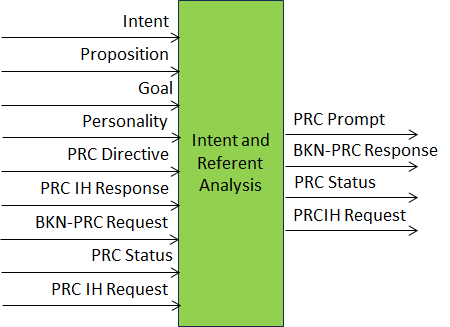
Figure 1 – The Prompt Planning and Formatting (PGM‑PPF) AIM
3. Input/Output Data
Table 1 specifies the Input and Output Data of the Prompt Planning and Formatting (PGM‑PPF) AIM.
Table 1 – I/O Data of the Prompt Planning and Formatting (PGM‑PPF) AIM
| Input | Description |
|---|---|
| Intent | Structured representation of the User’s goal-directed purpose, produced by the Intent and Referent Analysis AIM. |
| Proposition | Fully resolved referential expressions and scene context produced by the Intent and Referent Analysis and Prompt Contextualisation AIMs. |
| Goal | Structured representation of the objectives, priorities, and constraints produced by the Prompt Contextualisation AIM. |
| Personality | Expressive configuration carrying tone, style, pacing, and narrative goal produced by the Prompt Contextualisation AIM. |
| PRC Directive | Directive from the A‑User Control AIM specifying scope, depth, and policy constraints for prompt construction. |
| PRC IH Response | Interaction History Response from the A‑User Storage AIM providing prior interaction context to inform prompt assembly or session management. |
| BKN-PRC Request | Query issued by the Basic Knowledge AIM during an active MCP session, requesting additional context or clarification. May be received multiple times within a session. |
| PRC Status | Multiplexed status signals received from the Prompt Token Analyser, Intent and Referent Analysis, and Prompt Contextualisation AIMs. |
| PRC IH Response | Multiplexed Interaction History Requests received from the Prompt Token Analyser, Intent and Referent Analysis, and Prompt Contextualisation AIMs. |
| Output | Description |
| PC Prompt | Structured prompt submitted to the Basic Knowledge AIM to open the MCP session, assembling Intent, Propositions, Goal, and Personality into a single coherent prompt. |
| BKN-PRC Response | Response to a BKN-PRC Request received from the Basic Knowledge AIM during the session. May be sent multiple times within a session. |
| PRC Status | Composite status signal assembling the processing outcomes of all Sub-AIMs. |
| PRC IH Request | Composite Interaction History Request assembling the requests of all Sub-AIMs. |
4. Sub-AIMs
No Sub-AIMs.
5. JSON Metadata
https://schemas.mpai.community/PGM1/V1.0/AIMs/PromptPlanningAndFormatting.json
6. Profiles
No Profiles.
7. Reference Software
Not part of this specification.
8. Conformance Testing
Table 2 provides the Conformance Testing Method for the Prompt Planning and Formatting (PGM‑PPF) AIM.
If a schema contains references to other schemas, conformance of data for the primary schema implies that any data referencing a secondary schema shall also validate against the relevant schema, if present, and conform with the Qualifier, if present.
| Receives | Intent | Shall validate against the Intent schema. |
| Proposition | Shall validate against the Proposition schema. | |
| Goal | Shall validate against the Goal schema. | |
| Personality | Shall validate against the Personality schema. | |
| PRC Directive | Shall validate against the PRC Directive schema. | |
| PRC IH Response | Shall validate against the PRC IH schema. | |
| BKN-PRC Request | Shall validate against the BKN-PRC schema. | |
| PRC Status | Shall validate against the PRC Status schema. Each Sub-AIM field shall be present. | |
| PRC IH Request | Shall validate against the PRC IH schema. Each Sub-AIM field shall be present. | |
| Produces | PC Prompt | Shall validate against the PC Prompt schema. |
| BKN-PRC Response | Shall validate against the BKN-PRC schema. | |
| PRC Status | Shall validate against the PRC Status schema. All Sub-AIM fields and the PGM‑PPF field shall be populated. | |
| PRC IH Request | Shall validate against the PRC IH schema. All Sub-AIM fields shall be present. |
9. Performance Assessment
Not part of this specification.