
<-Security API Go to ToC Data Types ->
This chapter is informative. It explains how MPAI as a Service (MPAI-MAS) relates to MPAI-AIF. MPAI-MAS is specified in its own Technical Specification.
1 What MPAI-MAS does
Figure 1 depicts MPAI as a Service in the terms of MPAI-AIF.
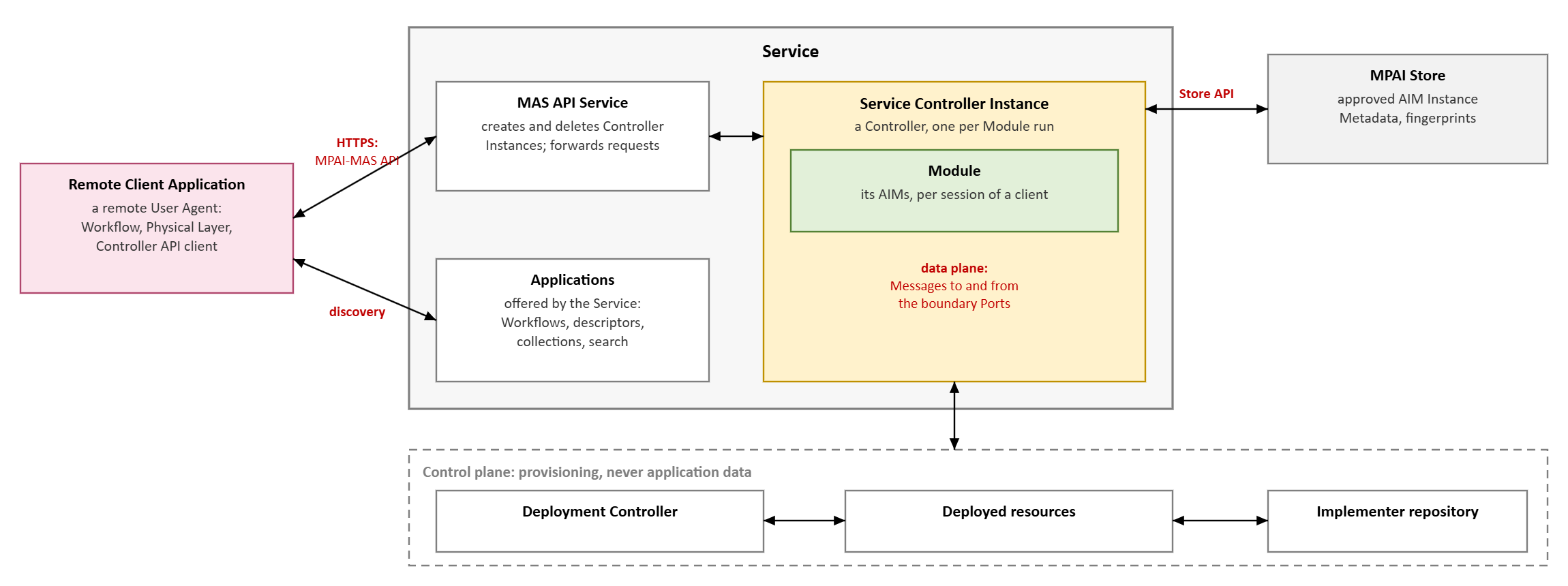
Figure 1 – MPAI as a Service in the terms of MPAI-AIF
MPAI-MAS lets a client run a Module of MPAI-AIF on a machine it does not own. A Service offers Applications; a client uses one of them from its device, and the AIMs run in the Service. Seen from MPAI-AIF, MPAI-MAS is the Controller API carried over HTTPS, together with what a network adds: the creation and deletion of Controllers, the discovery of what a Service offers, and the provisioning of the machines on which AIMs run.
Table 1 – MPAI-MAS in the terms of MPAI-AIF
| MPAI-MAS | MPAI-AIF |
| Remote Client Application | A remote User Agent: its Workflow, its Physical Layer and its Controller API client, on the device of the client. |
| MAS API Service | The endpoint of the Service. It creates and deletes Controller Instances and forwards to them the requests of the Controller API. |
| Service Controller Instance | A Controller, running one Module for a client. |
| MPAI Store | The MPAI Store, from which a Service obtains the approved AIM Instance Metadata of its Modules and the Implementations it names. |
| Deployment Controller and deployed resources | The machines a Service provisions for the AIMs of a Module. An AIM placed on another machine runs there on an AIM host, under the one Controller of its Module. |
2 A session, step by step
The life of a Service Controller Instance is: create it; start a Module; exchange Messages with the boundary Ports of the Module as often as needed; stop the Module; delete the Instance. Each step is one function of the Controller API (Basic API) carried over HTTPS (Table 2).
Table 2 – The life of a Service Controller Instance
| Step | MPAI-MAS request | Controller API function |
| Create the Instance | POST /MPAI/AIFU/Controller |
MPAI_AIFU_Controller_Initialize |
| Start a Module | POST /MPAI/AIFU/{cid}/MODULE/Start |
MPAI_AIFU_MODULE_Start |
| Pause, resume, status | .../MODULE/{mid}/Pause, /Resume, .../MODULE/{mid} |
MPAI_AIFU_MODULE_Pause, _Resume; MPAI_AIFU_AIM_GetStatus |
| Send an input | POST .../MODULE/{mid}/Input/{pid} |
MPAI_AIFU_MODULE_Input_Write |
| Receive an output | GET .../MODULE/{mid}/Output/{pid} |
MPAI_AIFU_MODULE_Output_Read |
| Stop the Module | .../MODULE/{mid}/Stop |
MPAI_AIFU_MODULE_Stop |
| Delete the Instance | DELETE /MPAI/AIFU/Controller/{cid} |
MPAI_AIFU_Controller_Destroy |
In these requests, {cid} identifies the Controller Instance, {mid} the Module, and {pid} a boundary Port, by its Data Type and, where needed, its Port Number – for example OSD-BTO-V1.5:2. The body of an input or an output is the JSON form of the Data Type. Over MPAI-MAS a Module runs by exchange: the first output read after one or more inputs are sent runs the Module on those inputs (Execution).
3 From an Implementer to a client
MPAI-MAS describes how an AIM made by an Implementer reaches a client. In the terms of MPAI-AIF:
- The Implementer registers with the MPAI Store and submits the AIM Instance Metadata of its Implementation, which names where the Implementation is.
- The Service offers Applications built on approved Metadata. A client discovers them – by search, by category, through their descriptors – and chooses one.
- The client asks the Service to create a Controller Instance and to start the Module of the Application.
- The Controller obtains the approved Metadata of the Module from the MPAI Store and has resources provisioned for its AIMs where their Relation places them elsewhere.
- The Implementation is obtained from the Implementer’s repository and verified against its fingerprint before it runs.
- The client exchanges Messages with the boundary Ports of the Module, as its Workflow states.
- The client stops the Module and deletes the Controller Instance.
4 Control plane and data plane
MPAI-MAS separates the creation and termination of infrastructure – the control plane – from the exchange of Messages – the data plane – so that application data is not exposed to the control plane. It is the distinction MPAI-AIF makes inside a Controller, which decides which AIM may reach which Port and need not carry the data. MPAI-MAS applies it between machines: whoever provisions and manages the infrastructure does not see what the Application exchanges.
5 Sessions and clients
One Service serves many clients at once. Each client has a session; what a Module keeps for a session – for example, what a person registers – belongs to that client, and is deleted when the session ends, when the client leaves or after a period of silence set by the Service (MPAI_AIFU_Session_Serve, MPAI_AIFU_Session_End). A Controller Instance, and a Module within it, answer only the client that created them.
6 Security
The crossing between a client and a Service is a crossing between machines, and Zero Trust applies to it in full: TLS on every request, with no exception for a loopback address, a private network or a tunnel; authentication of each client on every request, by an identity of that client rather than a secret shared by all; authorisation per request; the control plane authenticated to the Service Controller Instance and never given application data; and every Implementation verified before it runs.
7 An example
The Applications of the MPAI-MAS Reference Software include a conversation with a machine that has a face and a voice (MMC-MAD), a personal digital assistant that answers questions about pictures, and a newspaper reader. A browser on a phone or a desktop is the Remote Client Application: it acquires speech, text and pictures through its Physical Layer, sends them to the boundary Ports of the Module, and presents what the Module returns – speech and the face descriptors that animate an avatar. All the AIMs run in the Service.