
Functions
Ref. Architecture
I/O Data
SubAIMs
JSON Metadata
Profiles
Ref. Software
Conformance
Performance
1 Functions
The Audio Object Editing (CAE-AOE) AIM:
| Receives | User Command RQ (CAE-UCM) | From the User: one per User action. |
| Produces | Audio Object (OSD-AUO) | The open Audio Object, as edited. |
| User Command RS (CAE-UCM) | The User Command with its response: how each action was executed. |
One Audio Object is open at a time, so that a User Command need not name it: the Audio Object that the User Command gives, in full or by its identifier (AcquiredObject), is opened or, if it is new, created. A User Command acts on the open Audio Object. Every amount in it is a number that the User Command carries; an AIM that finds none reports it and does not guess one. An Audio Object is identified by the name the User gave it.
- Modified Objects – modifies what the Object is like: the Object part of its Acoustic Profile, and the loudness (LUFS), a number.
- User PoV – sets where the Object is heard from; the User Point of View is carried by the User Command (UserPoV).
- Changed Objects – changes the features of the Objects it keeps, each by a value. The features that can be changed are these and no others. Of an Audio Object: Name, Time, SpaceTime, UserPoV, ParentAudioObjectIDs, DescrMetadata, and Children (the SpaceTime of each child, named, inside the parent). Of a Basic Audio Object: Name, Time, UserPoV, DeviceID, Level, PerceptStatus, AcousticProfile, AudioQualifier and DescrMetadata. The sound itself is not a feature: it is not edited. A new Name is the new name of the same Object, and the name stays unique: a name that is taken becomes the name followed by the next free number (“violin 2”).
- Listed Objects – lists the Objects by Kind: the response gives, for each Object, its name, its Kind, its Duration, the number of its children and its Version.
- Deleted Objects – deletes, from where the Module keeps them, the Audio Objects named, by the name the User gave them, with all their versions. An Object that is a member of a Scene is not deleted: the response says so and names the Scene, and the Scene is deleted first. A name that is not known fails. Deleting is not removing: Removed Objects takes an Object out of the open Scene and leaves it kept.
Every edit is a new version, which has the name of the Object edited. The AIM receives and produces Audio Objects; it has no Basic Data Type at its Ports. The response (UserCommandRS) says how each action was executed.
2 Reference Model
Figure 1 depicts the Reference Model of the Audio Object Editing (CAE-AOE) AIM.
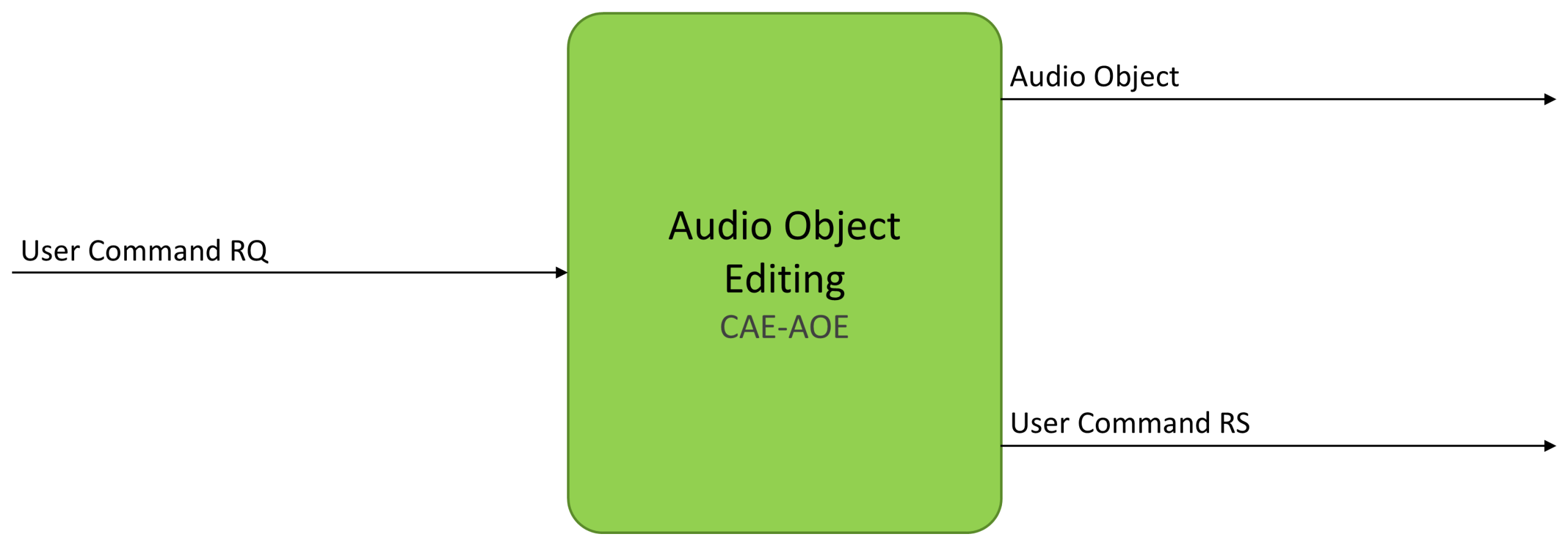
Figure 1 – The Reference Model of the Audio Object Editing (CAE-AOE) AIM
3 I/O Data
Table 1 specifies the Input and Output Data of the Audio Object Editing (CAE-AOE) AIM. A Port is addressed by its Data Type and its Port Number (#); where the metadata gives none, none is shown.
| Input | Description |
| User Command RQ (CAE-UCM) | Instruction directing the operation of the CAE-AOE AIM. It carries the Audio Object to open (AcquiredObject) and the User Point of View (UserPoV). |
| Output | Description |
| Audio Object (OSD-AUO) | The open Audio Object after the User Command. |
| User Command RS (CAE-UCM) | The response to the User Command. |
4 SubAIMs
No SubAIMs.
5 JSON Metadata
https://schemas.mpai.community/CAE3/V1.0/AIMs/AudioObjectEditing.json
6 Profiles
No Profiles.
7 Reference Software
See Reference Software.
8 Conformance Testing
Table 2 provides the Conformance Testing Method for the Audio Object Editing (CAE-AOE) AIM.
If a schema contains references to other schemas, conformance of data for the primary schema implies that any data referencing a secondary schema shall also validate against the relevant schema, if present, and conform with the Qualifier, if present.
| Receives | User Command RQ (CAE-UCM) | Shall validate against the User Command schema, and contain a UserCommandRQ. |
| Produces | Audio Object (OSD-AUO) | Shall validate against the Audio Object schema. |
| User Command RS (CAE-UCM) | Shall validate against the User Command schema, and contain a UserCommandRS. |
9 Performance Assessment
Not part of this specification.
