
<-Process Actions Go to ToC Profiles->
| 1. Inter-Process Protocol (same M-Instance) | 3. Inter-Process Protocol (multiple M-Instances) |
| 2. Inter-Process Protocol (different M-Instances) | 4. Inter-Process Protocol elements |
1. Inter-Process Protocol (same M-Instance)
As depicted in Figure 1, Process1 uses the simple form of the Inter-Process Protocol (IP Protocol or IPP) to request Process2 in the same M-Instance to perform a Process Action.
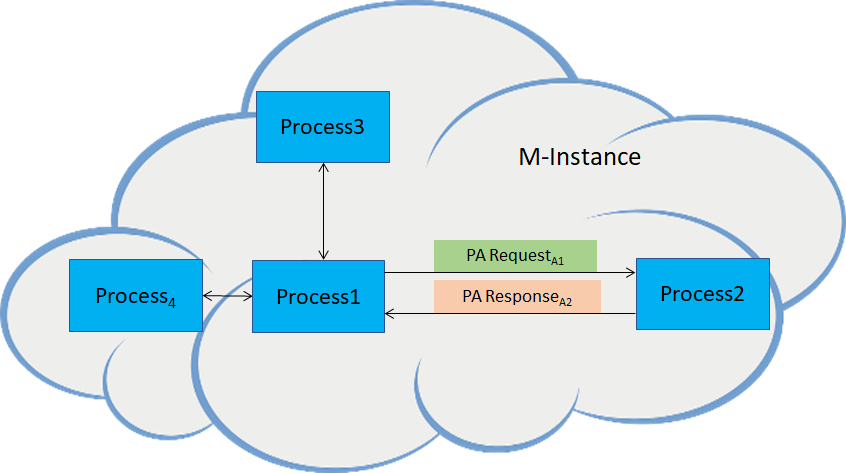
Figure 1 – Process1 requests Process2 to perform a Process Action (same M-Instance).
- Process1 sends a PA Request to Process2.
- If Process2 finds that the PA Request can be performed,
- Then Process2 performs the PA Request and sends a PA Response to Process1.
- Else, Process2, sends a PA Response with an error code to Process1.
Figure 2 is the sequence diagram.
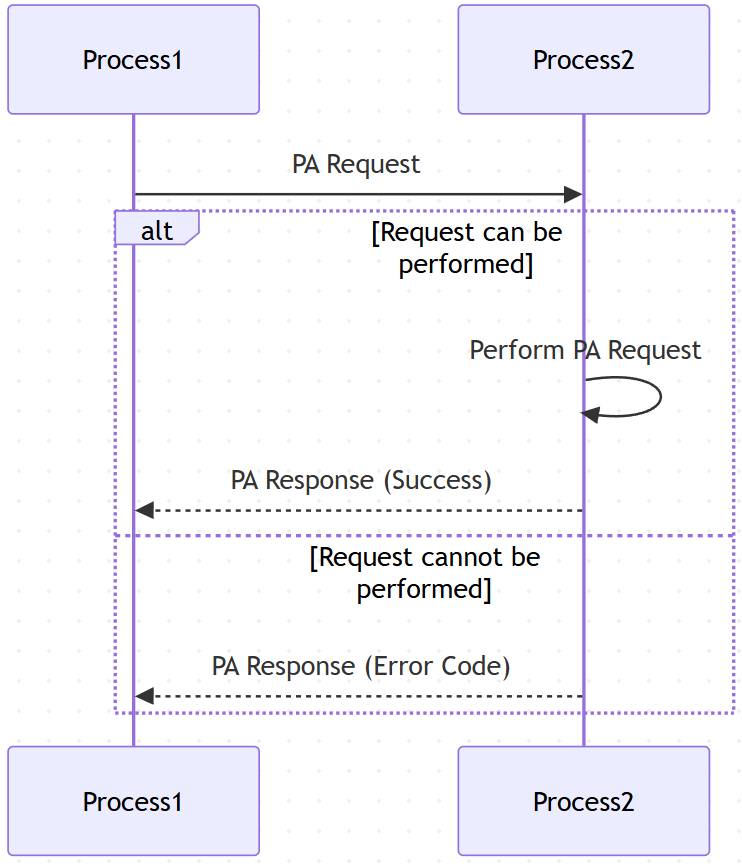
Figure 2 – IP Protocol Sequence Diagram when Processes are in the same M-Instance
2. Inter-Process Protocol (different M-Instances)
Figure 3 depicts the case of a ProcessA in an M-InstanceA requesting a ProcessB in a different M-InstanceB to perform a Process Action in M-InstanceB.
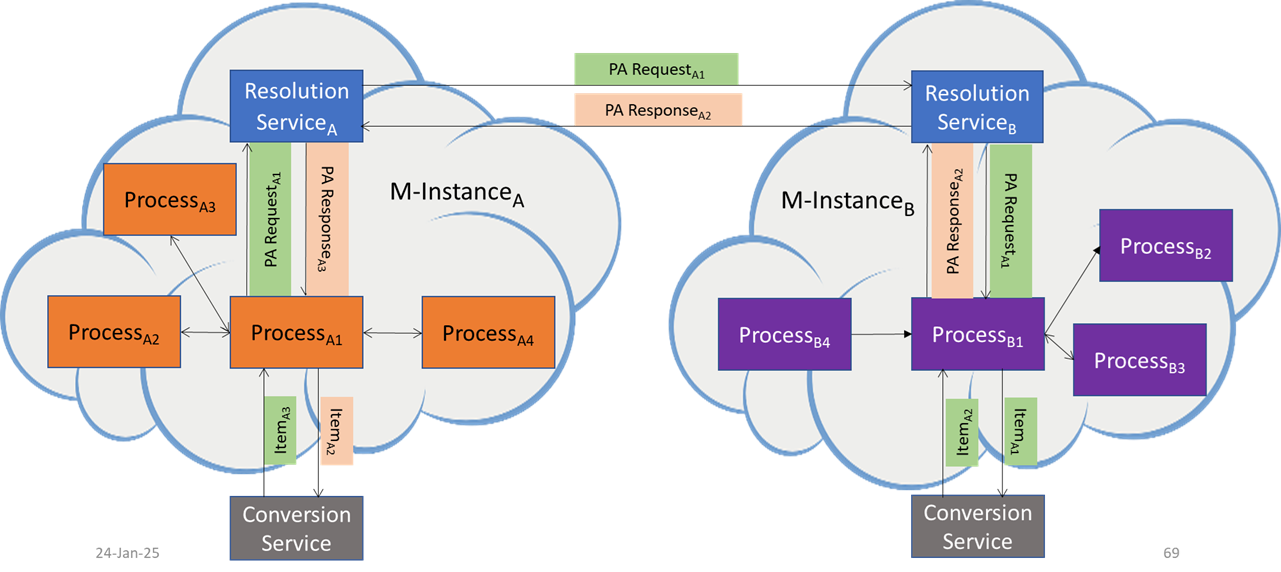 Figure 3 – ProcessA requests ProcessB to perform a Process Action (different M-Instances).
- ProcessA1 sends a PA Request to Resolution ServiceA.
- Resolution ServiceA determines the Resolution ServiceB it should forward the PA Request to.
- If the determination is not reached it sends an error to ProcessA1.
- Else it forwards the request to Resolution ServiceB1.
- Resolution ServiceB1 determines the Process it should send the PA Request to.
- If the determination is not reached, it send an error to Resolution ServiceA1.
- Else it forwards the PA Request to ProcessB1
- ProcessB1 analyses the PA Request and may find that the PA Request may be performed,
- Then
- May request a Conversion ServiceB to make appropriate conversion of the Formats of the Data in the Items it received.
- Performs the request.
- Else, ProcessB1 sends an error to Resolution ServiceB.
- Then
- If the execution of the PA Request fails, it sends an error to Resolution ServiceB.
- Resolution ServiceB sends error or PA Response to Resolution ServiceA.
- Resolution ServiceA sends error or PA Response to ProcessA1.
- ProcessA1 may request a Conversion ServiceA to make appropriate conversion of the Formats of the Data in the Items it received.
The Error Message generated by a receiving Process may be one of three types:
- “Unable to perform request”.
- “Transaction of Value required” (actual value provided).
- “Conversion Service failure”.
Figura 4 is the sequence diagram when there are two M-Instances
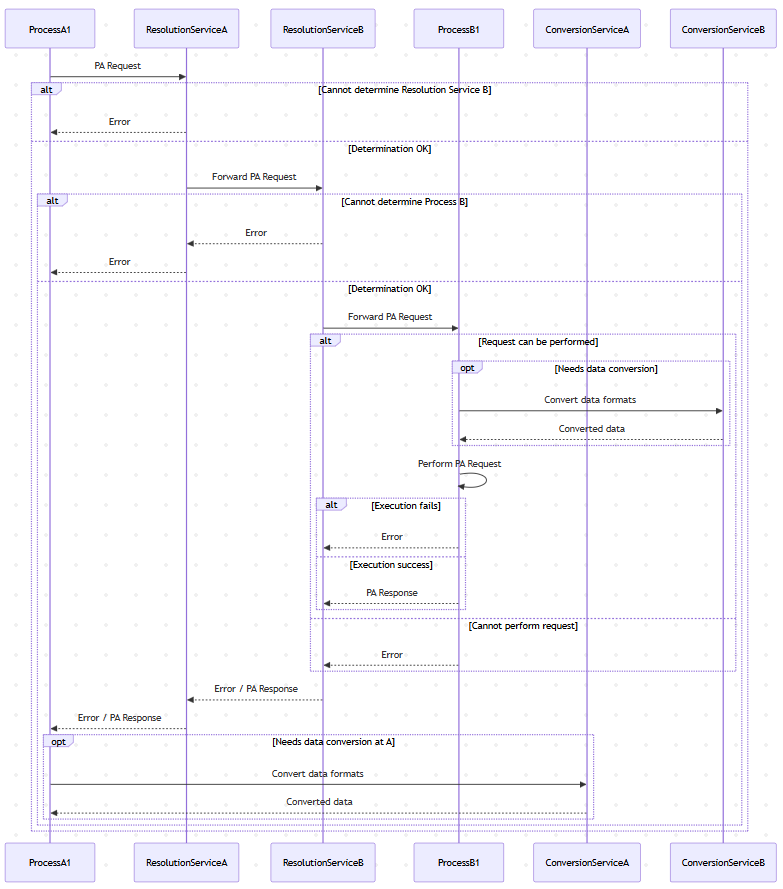
Figure 4 – IP Protocol Sequence Diagram when Processes are in different M-Instances
Note: MMM-TEC does not provide support to the establishment of business agreements based on which communication between different M-Instances becomes possible.
3. Inter-Process Protocol (multiple M-Instances)
In the case of a multi-M-Instance session (more than 2 M-Instances), an IPP session is set up in the following way:
- ProcessA1 requests Resolution ServiceA1 to open a session with the M-Instances that host at least one invited Process.
- Resolution ServiceA1 forwards the request to all relevant Resolution Services.
- A Resolution ServiceB1 forwards the request to each invited ProcessB‘s of its M-Instance.
- An invited ProcessB1 responds to Resolution ServiceB1 accepting or rejecting the invitation.
- A Resolution ServiceB1 forwards the response to Resolution ServiceA1.
- Resolution ServiceA1 forwards the responses to ProcessA1.
- If at least one invited Process accepts the invitation, the session is opened.
Figure 5 is the sequence diagram
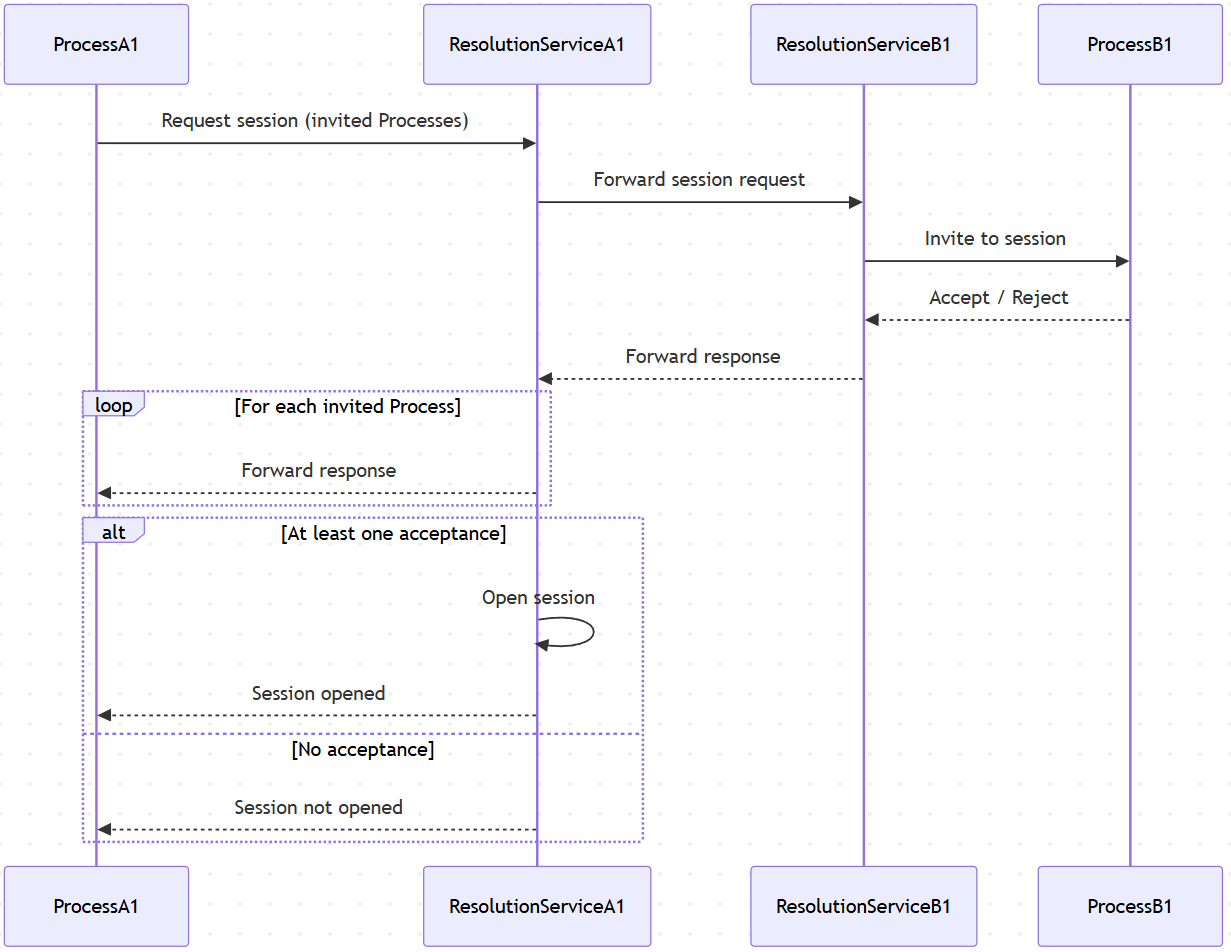
Figure 5 – Inter-Process Protocol (multiple M-Instances)
4. Inter-Process Protocol elements
Table 1 provides the elements of the IP Protocol (IPP).
Table 1 – IPP Message elements
| IPP Message Elements | Description |
| Time | Provided by communication infrastructure. |
| Message ID | ID of PA Request or PA Response. |
| Response ID | Absent/Present when the Message is a PA Request/PA Response. |
| Source Process ID | ID of Process issuing Message. |
| Process Action | Combination of Action, Items/Processes and Complement (see Process Action). |
| Resolution Service ID | Service that: 1. Receives a Message from a Process in its M-Instance and forwarding it to a peer Process in a different M-Instance, or 2. Sends a Message received from a peer Process in a different M-Instance to a Process in its M-Instance. (Absent if the two Processes are in the same M-Instance). |
| Destination Process ID | ID of Process to which the Message is intended to be sent. |
| Message Status | “Ack”, if delivery of payload successful, if delivery fails, “Error”. |
In case of multiple Destination Processes, the Source Process receives the Message Status for each Destination Process.
When an IPP message is conveyed between different M‑Instances, the message SHALL be transported within an active Resolve session whose establishment and continued operation are subject to a governance/trust agreement between the participating M‑Instances. In the absence of such an agreement, inter‑M‑Instance IPP messaging SHALL NOT be initiated or accepted.
Rationale: earlier versions describe that inter‑M‑Instance communication relies on a Resolution/Resolve session and do not themselves define business agreements. This Note records the precondition in the protocol context while leaving agreement structure to the appropriate specification page/profile.
For IPP messaging between different M‑Instances, the active governance/trust agreement SHALL specify with which Rules of which M‑Instance(s) a Process executing in a foreign M‑Instance is required to comply during the Resolve session; inter‑M‑Instance IPP messaging SHALL NOT proceed unless such Rule applicability is defined by the agreement.
The JSON Schema of the Inter-Process Protocol is here.