
Function
Ref. Model
I/O Data
SubAIMs
JSON MData
Profiles
Ref. Software
Conformance
Performance
1 Functions
Audio Source Localisation (CAE-ASL) receives Audio Objects, detects the Audio Objects in the Audio Scene, and determines and produces as output their Spatial Attitudes:
| Receives | Audio Objects | With associated Microphone Array information. |
| Detects | Audio Objects | In the Audio Scene. |
| Determines | Spatial Attitudes | Of Audio Objects. |
| Produces | Spatial Attitudes | Of input Audio Objects. |
2 Reference Model
Figure 1 depicts the Reference Architecture of the Audio Source Localisation (CAE-ASL) AIM.
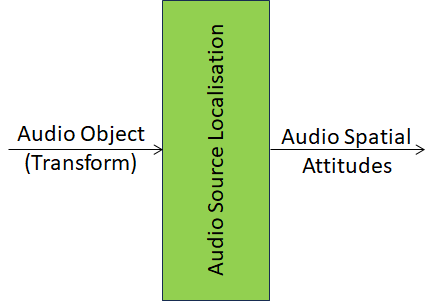
Figure 1 – Audio Source Localisation (CAE-ASL) AIM
3 I/O Data
| Input | Description |
|---|---|
| Audio Object | The result of the application of the Fast Fourier Transform to the Multichannel Audio (with associated Microphone Array info). |
| Output | Description |
| Audio Spatial Attitudes | The Orientations and Directions of Audio Objects. |
4 SubAIMs
No SubAIMs.
5 JSON Metadata
https://schemas.mpai.community/CAE1/V2.5/AIMs/AudioSourceLocalisation.json
6 Profiles
No Profiles.
7 Reference Software
8 Conformance Testing
The following procedure shall be followed when testing the Conformance of a CAE-ASL AIM instance.
- Use the following datasets:
- DS1: n Test files containing Audio Objects (Transform) .
- DS2: n Expected Spatial Attitudes.
- Feed the AIM under test with the Test files.
- Analyse the Spatial Attitudes produced by the CAE-ASL AIM instance.
- Calculate the angle difference (AD) in degrees between the output Spatial Attitudes with the Expected Spatial Attitudes.
| Input data (DS1) | Expected Output Data (DS2) | Data Format |
| Audio Object (Microphone Array) ID1 | Spatial Attitude ID1 | T/F |
| Audio Object (Microphone Array) ID2 | Spatial Attitude (Transform) ID2 | T/F |
| Audio Object (Microphone Array) ID3 | Spatial Attitude (Transform) ID3 | T/F |
| … | … | … |
| Audio Object (Microphone Array) IDn | Spatial Attitude (Transform) IDn | T/F |
