
Function
Ref. Model
I/O Data
SubAIMs
JSON MData
Profiles
Ref. Software
Conformance
Performance
1 Functions
The Motion Actuation Subsystem (CAV‑MAS) Composite AIM:
- Transmits spatial and weather information gathered from its sensors and mechanical subsystems to the Environment Sensing Subsystem (ESS).
- Receives AMS‑MAS Messages from the Autonomous Motion Subsystem (AMS).
- Translates AMS‑MAS Messages into specific Commands to its Brake, Motor, and Wheel mechanical subsystems.
- Receives Responses from its Brake, Motor, and Wheel mechanical subsystems.
- Packages Responses into and sends AMS‑MAS Messages to the Autonomous Motion Subsystem.
| Receives | Spatial Data | Collection of distance, velocity, acceleration, and inclination data. |
| Weather Data | Data such as humidity, pressure, temperature. | |
| AMS‑MAS Message | Message including motion information. | |
| Motor Response | Information on effects of applied motor force. | |
| Wheel Response | Information on effects of applied wheel rotation force. | |
| Brake Response | Information on effects of applied brake force. | |
| Produces | Spatial Attitude | Position, orientation and their velocity and acceleration vectors. |
| Weather Data | Data such as humidity, pressure, temperature, ice condition. | |
| Motor Command | Applied motor torque. | |
| Wheel Command | Applied wheel torque. | |
| Brake Command | Applied brake deceleration. | |
| AMS‑MAS Message | Message including results of MAS Response analysis. |
2 Reference Model
Figure 1 depicts the Reference Model of the Motion Actuation Subsystem (CAV‑MAS) AIM.
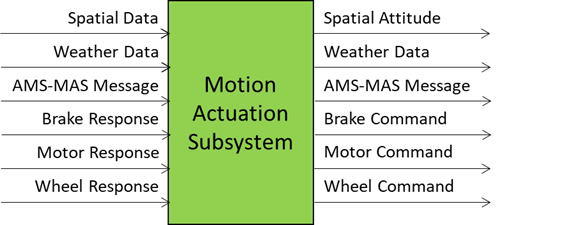
Figure 1 – Reference Model of the Motion Actuation Subsystem (CAV‑MAS) AIM
3 I/O Data
Table 1 specifies the Input and Output Data of the Motion Actuation Subsystem (CAV‑MAS) Composite AIM.
| Input | Description |
|---|---|
| Spatial Data | Collection of distance, velocity, acceleration, and inclination data. |
| Weather Data | Data such as humidity, pressure, temperature. |
| AMS‑MAS Message | Message including motion information. |
| Motor Response | Information on effects of applied motor force. |
| Wheel Response | Information on effects of applied wheel rotation force. |
| Brake Response | Information on effects of applied brake force. |
| Output | Description |
| Spatial Attitude | Position, orientation and their velocity and acceleration vectors. |
| Weather Data | Data such as humidity, pressure, temperature, ice condition. |
| Motor Command | Applied motor torque. |
| Wheel Command | Applied wheel torque. |
| Brake Command | Applied brake deceleration. |
| AMS‑MAS Message | Message including results of MAS Response analysis. |
4 SubAIMs
4.1 Reference Model
Figure 2 depicts the Reference Model of the Motion Actuation Subsystem (CAV‑MAS) Composite AIM.
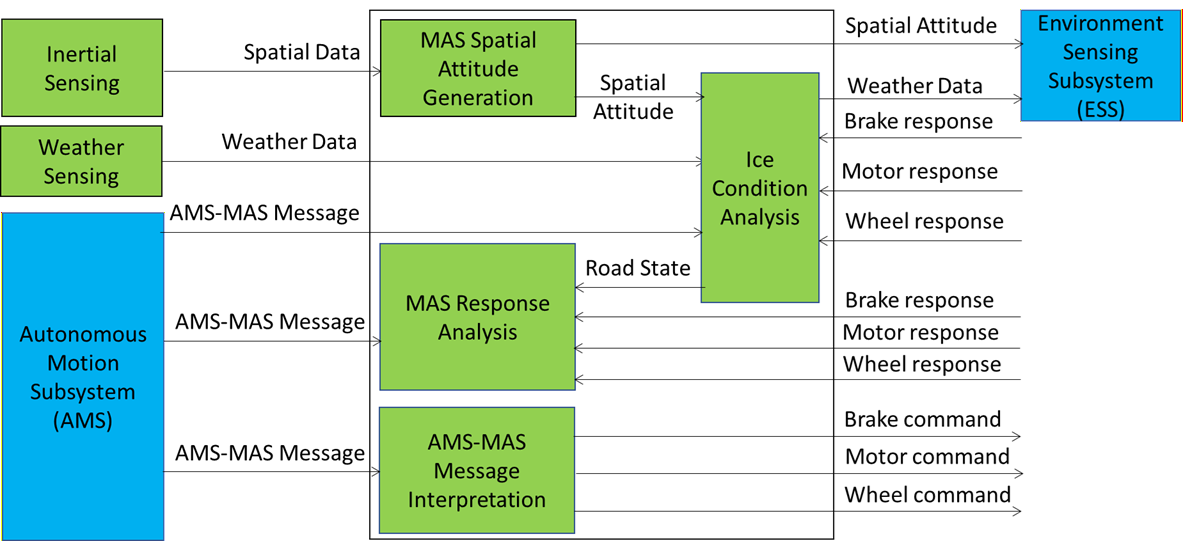
Figure 1 – Reference Model of Motion Actuation Subsystem (CAV‑MAS) Composite AIM
4.2 Operation
The operation of the Motion Actuation Subsystem unfolds as follows:
- AMS‑MAS Message Interpretation interprets the AMS‑MAS Messages received from AMS and issues commands to the Brake, Motor, and Wheel mechanical subsystems.
- MAS Response Analysis interprets the responses received from the Brake, Motor, and Wheel mechanical subsystems and sends AMS‑MAS Messages to AMS.
- MAS Spatial Attitude Generation computes the initial Ego CAV’s Spatial Attitude using Spatial Data (Odometer, Speedometer, Accelerometer, and Inclinometer) and sends the initial Spatial Attitude to the ESS.
- Ice Condition Analysis augments Weather Data by analysing the responses of the Brake, Motor, and Wheel mechanical subsystems and sends augmented Weather Data to ESS.
4.3 Functions of SubAIMs
Table 2 gives the functions of the Motion Actuation Subsystem (CAV‑MAS) SubAIMs.
Table 2 – Functions of the Motion Actuation Subsystem (CAV‑MAS) SubAIMs
| SubAIM | Function |
|---|---|
| MAS Spatial Attitude Generation | Computes Ego CAV’s Spatial Attitude using Spatial Data. |
| AMS‑MAS Message Interpretation | Receives, analyses, and actuates AMS‑MAS Message into specific commands to Brakes, Wheels, and Motors. |
| MAS Response Analysis | Receives and analyses responses from Brakes, Wheels, and Motors and sends the AMS‑MAS Message to AMS. |
| Ice Condition Analysis | Adds ice condition information to input Weather Data. |
4.4 I/O Data of SubAIMs
Table 3 gives the Input and Output Data of the Motion Actuation Subsystem (CAV‑MAS) SubAIMs.
4.5 AIMs and JSON Metadata
Table 4 provides the links to the AIM specifications and JSON schemas. AIM1 indicates the Composite AIM and AIM2 its SubAIMs.
| AIM1 | AIM2 | Name | JSON |
|---|---|---|---|
| CAV‑MAS | Motion Actuation Subsystem | X | |
| CAV‑MSA | MAS Spatial Attitude Generation | X | |
| CAV‑AMI | AMS‑MAS Message Interpretation | X | |
| CAV‑MRA | MAS Response Analysis | X | |
| CAV‑ICA | Ice Condition Analysis | X |
5 JSON Metadata
https://schemas.mpai.community/CAV2/V1.1/AIMs/MotionActuationSubsystem.json
6 Profiles
No Profiles.
7 Reference Software
Not part of this specification.
8 Conformance Testing
Table 5 provides the Conformance Testing Method for the Motion Actuation Subsystem (CAV‑MAS) Composite AIM. Conformance Testing of the individual SubAIMs is given by the individual AIM specifications.
If a schema contains references to other schemas, conformance of data for the primary schema implies that any data referencing a secondary schema shall also validate against the relevant schema, if present, and conform with the Qualifier, if present.
| Receives | Spatial Data | Shall validate against Spatial Data schema. |
| Weather Data | Shall validate against Weather Data schema. | |
| AMS‑MAS Message | Shall validate against AMS‑MAS Message schema. | |
| Motor Response | Shall validate against Motor Response schema. | |
| Wheel Response | Shall validate against Wheel Response schema. | |
| Brake Response | Shall validate against Brake Response schema. | |
| Produces | Spatial Attitude | Shall validate against Spatial Attitude schema. |
| Weather Data | Shall validate against Weather Data schema. | |
| Motor Command | Shall validate against Motor Command schema. | |
| Wheel Command | Shall validate against Wheel Command schema. | |
| Brake Command | Shall validate against Brake Command schema. | |
| AMS‑MAS Message | Shall validate against AMS‑MAS Message schema. |
9 Performance Assessment
Not part of this specification.