
IyGo to MPAI-MMC V2.5 AI Modules
Function
Ref. Model
I/O Data
SubAIMs
JSON MData
Profiles
Ref. Software
Conformance
Performance
1 Functions
The Voice Command Interface (MMC-VCI) is a Composite AIM that enables a person to issue vocal commands to an application Module and to hear its answers. The first application it serves is Audio Scene Management (CAE-ASM); others may follow. The AIM contains nothing specific to an application. It knows an application by its Application Context (MMC-APC), the standing description of the application, which JSON Interface receives on its Application Context Port or obtains from its Access:
- the schema of the commands of the application (CommandSchema), and the schema of its responses (ResponseSchema);
- the rest of what the two schemas do not say: the conventions the commands rely on (for CAE-ASM: the unit of distance, the axes, the meaning of “left”), which words need a number, the names the application has, and examples of requests with the commands they stand for.
The AIM receives the speech of the person and the responses of the application, which are User Command responses (User Command (CAE-UCM)). It produces the commands for the application, which are User Command requests, and the reply to the person as speech and as text. In order:
- The person speaks a request. Automatic Speech Recognition gives the Text of what was said.
- The request becomes a command. JSON Interface reads the Text with what it remembers of the state of the application – the names of its objects and their values, which it reads from the responses of the application – and forms the command that the person asks for: a User Command request that validates against the schema of the commands of the application. The objects it names are those of the state. Every amount in the command is a number that the person said or that follows from what the person said and from the state. JSON Interface shall output a command only if it validates against that schema.
- A request that cannot become a command gives no command. If the Text lacks what the schema requires – an amount (“a bit to the left”), or an object that the state does not contain – JSON Interface outputs no command and gives, as the Response Hint, what is missing.
- The command is issued. It is a User Command request (UserCommandRQ) with a UserCommandID. The application executes it.
- The application answers. Its response is a User Command response (UserCommandRS) that carries the UserCommandID of the command it answers; the response may come after some time.
- The answer becomes the Response Hint. JSON Interface turns the response, using the schema of the responses, into the Response Hint: a Text that states what the application did and with which values, or what it did not do and why. The same Response Hint states what is missing when step 3 gave no command. When the response carries the state of the application, such as the listing of a Scene, JSON Interface keeps it as the state.
- The reply is composed and spoken. Entity Dialogue Processing composes the reply to the person from the Text of what the person said and the Response Hint; Text-To-Speech speaks it.
How JSON Interface forms the command from the Text is left to the Implementer; the specification states what it receives and what it shall produce.
Example, with Audio Scene Management. The state says that the scene contains “violin” with position (1, 2, 0) and orientation (0, 0, 180).
- The person says “Move the violin to x 3, y 2, z 0”. The command is a User Command request with MovedObjects on “violin”, whose new Spatial Attitude states the position (3, 2, 0) and no orientation, so that the orientation keeps its value; JSON Interface completes it with the Header, the identifier and the time of the User Command.
- Audio Scene Management answers with a User Command response whose Outcome is Done, with the action MovedObjects on “violin”. JSON Interface gives the Response Hint “The violin was moved to x 3, y 2, z 0.”, and Entity Dialogue Processing the reply “The violin is now at x 3, y 2, z 0.”.
- The person says “Move the violin a bit to the left”. There is no amount: no command is issued. JSON Interface gives the Response Hint “No command was given: a movement needs a distance as a number.”, and the reply is “By how much? Please give me a distance in metres.”.
2 Reference Model
Figure 1 depicts the Reference Model of the Voice Command Interface (MMC‑VCI) AIM.
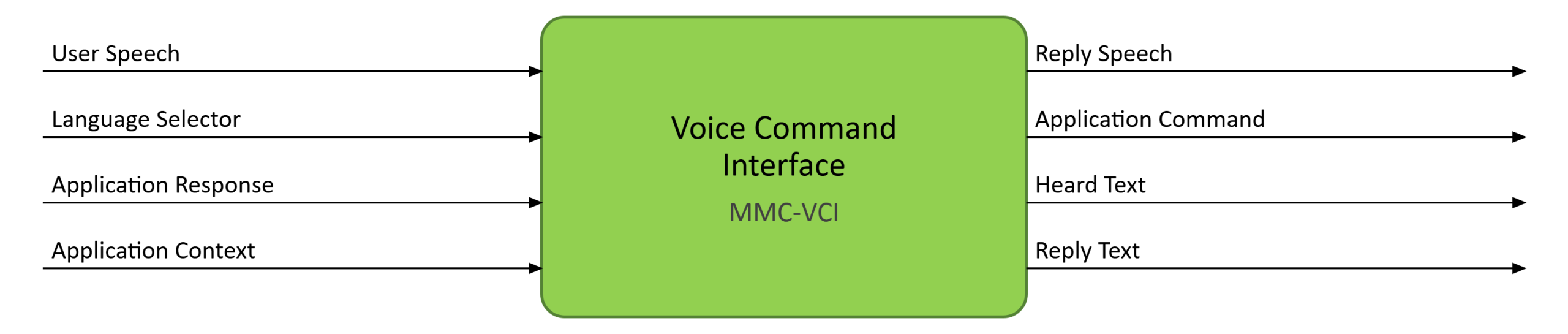
Figure 1 – Reference Model of the Voice Command Interface (MMC‑VCI) AIM
The operation of the Voice Command Interface (MMC‑VCI) AIM develops in the following way:
- The person speaks. The speech that carries commands is not the speech an application edits: they arrive on different Ports.
- The application provides the responses to the commands it received, each carrying the UserCommandID of the command it answers, and, when it supplies it, its Application Context. The state of the application is not a Port: the AIM reads it from the responses.
- The AIM provides the command for the application, as a User Command request, and the reply to the person, as speech and as text; it also provides the text of what it heard. A response is said when it arrives: the application may take time.
3 I/O Data
Table 1 specifies the Input and Output Data of the Voice Command Interface (MMC‑VCI) AIM. A Port is addressed by its Data Type and its Port Number (#); where the metadata gives none, none is shown.
| Input | Description |
|---|---|
| Basic Speech Object (OSD-BSO) #1 | The speech of the person. Optional. |
| Selector (OSD-SEL) | The language of the speech. Optional. |
| User Command RS (CAE-UCM) #1 | The response of the application, which carries the UserCommandID of the command it answers. Optional. |
| Application Context (MMC-APC) | The Application Context: the standing description of the application, when the application supplies it. Optional. |
| Output | Description |
| Basic Speech Object (OSD-BSO) #1 | The reply to the person, spoken. Optional. |
| User Command RQ (CAE-UCM) #1 | The command for the application, a User Command request that conforms to the schema of the commands of the application. Optional. |
| Basic Text Object (OSD-BTO) #1 | What the person said, as text. Optional. |
| Basic Text Object (OSD-BTO) #2 | The reply to the person, as text. Optional. |
4 SubAIMs
4.1 Reference Model
Figure 2 depicts the Reference Model of the Voice Command Interface (MMC‑VCI) Composite AIM.
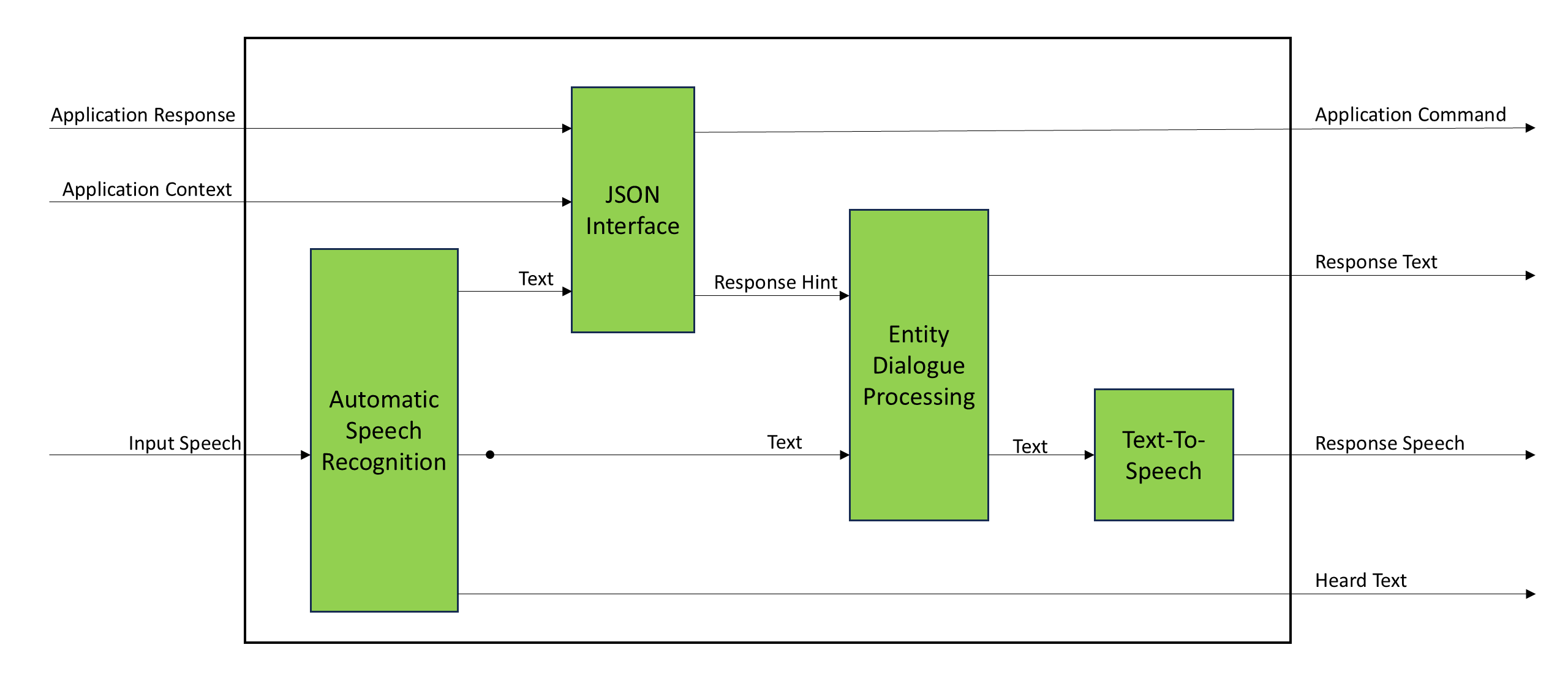
Figure 2 – Reference Model of the Voice Command Interface (MMC‑VCI) Composite AIM
4.2 Operation
The SubAIMs act in the order of Section 1. Automatic Speech Recognition gives the Text of the speech, to Entity Dialogue Processing and to JSON Interface, and as the Text of what was heard. JSON Interface forms the command, or gives, in the Response Hint, what is missing, and turns the response into the Response Hint. Entity Dialogue Processing composes the reply from the Text of what was said and the Response Hint and gives it to Text-To-Speech and as the Text of the reply. Acquisition and delivery of speech are the User Agent’s, not SubAIMs.
4.3 Functions of SubAIMs
Table 2 provides the functions of the Voice Command Interface (MMC‑VCI) SubAIMs.
| SubAIM | Function |
|---|---|
| Automatic Speech Recognition | Recognises as text the speech of the person. |
| JSON Interface | Turns the text of the request into a command for the application – a User Command request that conforms to the schema of the commands of the application, which it takes from the Application Context – knowing the state of the application; turns the response of the application into the Response Hint, a text. |
| Entity Dialogue Processing | Holds the dialogue: from the recognised Text and the Response Hint it says what is to be said – an answer, a question when the request is not clear, what was done or why not. |
| Text-To-Speech | Speaks the Text that Entity Dialogue Processing says. |
4.4 I/O Data of SubAIMs
Table 3 gives the Input and Output Data of the Voice Command Interface (MMC‑VCI) SubAIMs.
| SubAIM | Input | Output |
|---|---|---|
| Automatic Speech Recognition | Basic Speech Object (OSD-BSO) #1 Selector (OSD-SEL) |
Basic Text Object (OSD-BTO) #1 |
| JSON Interface | Basic Text Object (OSD-BTO) User Command RS (CAE-UCM) #1 Application Context (MMC-APC) |
User Command RQ (CAE-UCM) #1 Basic Text Object (OSD-BTO) (Response Hint) |
| Entity Dialogue Processing | Basic Text Object (OSD-BTO) #1 Basic Text Object (OSD-BTO) #3 (Response Hint) |
Basic Text Object (OSD-BTO) |
| Text-To-Speech | Basic Text Object (OSD-BTO) | Basic Speech Object (OSD-BSO) |
4.5 AIMs and JSON Metadata
Table 4 provides the links to the AIM specifications and JSON schemas. AIM1 indicates the Composite AIM and AIM2 its SubAIMs.
| AIM1 | AIM2 | Name | JSON |
|---|---|---|---|
| MMC‑VCI | Voice Command Interface | X | |
| MMC‑ASR | Automatic Speech Recognition | X | |
| MMC‑JSI | JSON Interface | X | |
| MMC‑EDP | Entity Dialogue Processing | X | |
| MMC‑TTS | Text-To-Speech | X |
5 JSON Metadata
https://schemas.mpai.community/MMC/V2.5/AIMs/VoiceCommandInterface.json
6 Profiles
No Profiles.
7 Reference Software
Under development.
8 Conformance Testing
Table 5 provides the Conformance Testing Method for the Voice Command Interface (MMC‑VCI) AIM. Conformance Testing of the individual SubAIMs is given by the individual AIM specifications.
If a schema contains references to other schemas, conformance of data for the primary schema implies that any data referencing a secondary schema shall also validate against the relevant schema, if present, and conform with the Qualifier, if present.
| Receives | Basic Speech Object (OSD-BSO) #1 | Shall validate against Basic Speech Object schema. Speech Data shall conform with Speech Qualifier. |
| Selector (OSD-SEL) | Shall validate against the Selector schema. | |
| User Command RS (CAE-UCM) #1 | Shall validate against the User Command schema, and contain a UserCommandRS. It shall carry the UserCommandID of the command answered. | |
| Application Context (MMC-APC) | Shall validate against the Application Context schema. | |
| Produces | Basic Speech Object (OSD-BSO) #1 | Shall validate against Basic Speech Object schema. |
| User Command RQ (CAE-UCM) #1 | Shall validate against the User Command schema, and contain a UserCommandRQ. It shall validate against the schema of the commands of the application. | |
| Basic Text Object (OSD-BTO) #1 | Shall validate against Basic Text Object schema. | |
| Basic Text Object (OSD-BTO) #2 | Shall validate against Basic Text Object schema. |
9 Performance Assessment
Not part of this specification.
