
Function
Ref. Model
I/O Data
SubAIMs
JSON MData
Profiles
Ref. Software
Conformance
Performance
1 Functions
The A‑User Formation (PGM‑AUF) AIM forms and renders the A‑User’s speaking avatar. It combines the deliberated communicative content (the Text Object produced by Basic Knowledge) with the A‑User Entity State (called A-User State) produced by Personality Alignment. The speaking avatar is synthesised as a Portable Avatar that expresses the A‑User’s Personal Status across speech, face, and gesture. A‑User Formation is driven by the Avatar Formation Directive of A‑User Control.
The A‑User Status conveys the full A‑User Entity State; the current A‑User Formation SubAIMs consume only its Personal Status component, since the speech, face, and body rendering SubAIMs operate on Personal Status. The interface carries the complete Entity State so that future SubAIMs may exploit more of it without an interface change.
A‑User Formation operates through a single operative interface:
Operative Interface — receives an AUF Directive from A‑User Control and returns an AUF Status. The AUF Directive instructs avatar formation, spatial output, and expressive delivery, and carries the A‑User Storage retrieval of the Avatar Model and Speech Model. A‑User Formation also receives the Text Object from Basic Knowledge and the A‑User Entity Status from User State Refinement, and produces the Portable Avatar.
The PGM‑AUF AIM:
| Receives | AUF Directive | Instructions from A‑User Control for avatar formation, spatial output, and expressive delivery, including A‑User Storage retrieval of the Avatar Model and Speech Model. |
| Avatar Model | The A‑User’s avatar model, retrieved from A‑User Storage. | |
| Speech Model | The A‑User’s speech (voice) model, retrieved from A‑User Storage. | |
| Text Object | The BKN Final Response — the deliberated communicative content to be rendered, conveyed as a Text Object. | |
| A‑User Entity Status | The consolidated A‑User Entity Status produced by User State Refinement; its Personal Status component drives expressive rendering. | |
| Produces | Portable Avatar | The synthesised Speaking Avatar expressing the A‑User’s Personal Status across speech, face, and gesture. |
| AUF Status | Status information describing the execution and outcome of avatar formation, reported to A‑User Control. |
2 Reference Model
Figure 1 depicts the Reference Model of the A‑User Formation (PGM‑AUF) AIM.
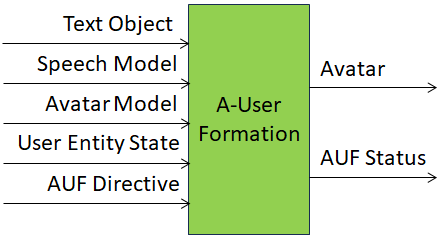
Figure 1 – Reference Model of the A‑User Formation (PGM‑AUF) AIM
3 I/O Data
Table 1 specifies the Input and Output Data of the A‑User Formation (PGM‑AUF) AIM.
| Input | Description |
|---|---|
| AUF Directive | Instructions from A‑User Control for avatar formation, spatial output, and expressive delivery, including A‑User Storage retrieval of the Avatar Model and Speech Model. |
| Avatar Model | The A‑User’s avatar model, retrieved from A‑User Storage. |
| Speech Model | The A‑User’s speech (voice) model, retrieved from A‑User Storage. |
| Text Object | The BKN Final Response — the deliberated communicative content to be rendered, conveyed as a Text Object. |
| A‑User Entity Status | The consolidated A‑User Entity Status produced by User State Refinement; its Personal Status component drives expressive rendering. |
| Output | Description |
| Portable Avatar | The synthesised Speaking Avatar expressing the A‑User’s Personal Status across speech, face, and gesture. |
| AUF Status | Status information describing the execution and outcome of avatar formation, reported to A‑User Control. |
4 SubAIMs (informative)
This section is informative. The decomposition into SubAIMs described below illustrates one conformant architecture for producing the normative outputs of PGM‑AUF. Implementations may adopt alternative internal structures provided they satisfy the conformance requirements of Section 8.
4.1 Functions of SubAIMs
Figure 2 depicts the Reference Model of the A‑User Formation (PGM‑AUF) Composite AIM.
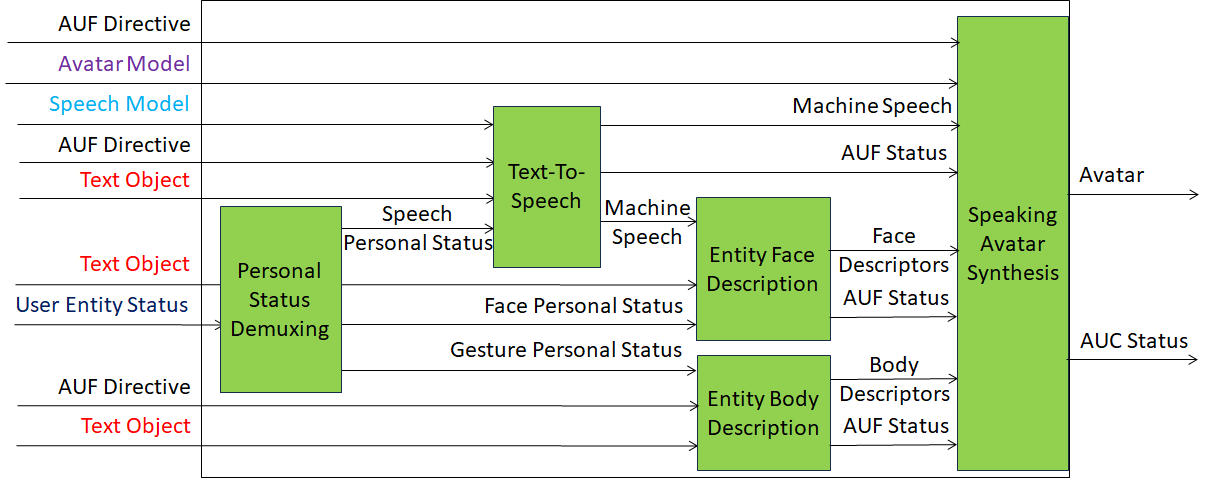
Figure 2 – Reference Model of the A‑User Formation (PGM‑AUF) Composite AIM
4.2 Operation
The AUF operation includes the following SubAIMs:
- Personal Status Demuxing
- Extracts the Personal Status component from the A‑User Entity Status and splits it into Speech, Face, and Gesture Personal Status.
- Text-To-Speech
- Synthesises Machine Speech from the Text Object and the Speech Personal Status, using the Speech Model.
- Entity Face Description
- Produces Face Descriptors from the Text Object, the Machine Speech, and the Face Personal Status.
- Entity Body Description
- Produces Body Descriptors from the Text Object and the Gesture Personal Status.
- Speaking Avatar Synthesis
- Synthesises the Portable Avatar from the Avatar Model, the Machine Speech, the Face Descriptors, and the Body Descriptors.
4.3 Functions of SubAIMs
Table 2 specifies the functions of the A‑User Formation (PGM‑AUF) SubAIMs.
| SubAIM | Function |
|---|---|
| Personal Status Demuxing | Extracts the Personal Status from the A‑User Entity Status and splits it into Speech, Face, and Gesture Personal Status. |
| Text-To-Speech | Synthesises Machine Speech from the Text Object and Speech Personal Status. |
| Entity Face Description | Produces Face Descriptors from the Text Object, Machine Speech, and Face Personal Status. |
| Entity Body Description | Produces Body Descriptors from the Text Object and Gesture Personal Status. |
| Speaking Avatar Synthesis | Synthesises the Portable Avatar from the Avatar Model, Machine Speech, Face Descriptors, and Body Descriptors. |
4.4 I/O Data of SubAIMs
Table 3 gives the Input and Output Data of the A‑User Formation (PGM‑AUF) SubAIMs.
| SubAIM | Input | Output |
|---|---|---|
| Personal Status Demuxing | A‑User Entity Status | Speech Personal Status Face Personal Status Gesture Personal Status |
| Text-To-Speech | Speech Model Text Object Speech Personal Status |
Machine Speech AUF Status |
| Entity Face Description | Text Object Machine Speech Face Personal Status |
Face Descriptors AUF Status |
| Entity Body Description | Text Object Gesture Personal Status |
Body Descriptors AUF Status |
| Speaking Avatar Synthesis | Avatar Model Machine Speech Face Descriptors Body Descriptors |
Portable Avatar AUF Status |
4.5 AIMs and JSON Metadata
Table 4 provides the links to the AIM specifications and JSON schemas. AIM1 indicates the Composite AIM and AIM2 its SubAIMs.
| AIM1 | AIM2 | Name | JSON |
|---|---|---|---|
| PGM‑AUF | A‑User Formation | X | |
| PGM‑PSD | Personal Status Demuxing | X | |
| PGM‑TTS | Text-To-Speech | X | |
| PGM‑EFD | Entity Face Description | X | |
| PGM‑EBD | Entity Body Description | X | |
| PGM‑SAS | Speaking Avatar Synthesis | X |
5 JSON Metadata
https://schemas.mpai.community/PGM1/V1.0/AIMs/AUserFormation.json
6 Profiles
No Profiles.
7 Reference Software
Not part of this specification.
8 Conformance Testing
Table 5 provides the Conformance Testing Method for the A‑User Formation (PGM‑AUF) AIM. Conformance Testing of the individual SubAIMs is given by the individual AIM specifications.
If a schema contains references to other schemas, conformance of data for the primary schema implies that any data referencing a secondary schema shall also validate against the relevant schema, if present, and conform with the Qualifier, if present.
| Receives | AUF Directive | Shall validate against AUF Directive schema. |
| Avatar Model | Shall validate against Avatar Model schema. | |