
| Function | Ref. Model | I/O Data | SubAIMs | JSON MData | Profiles | Ref. Software | Conformance | Performance |
1. Function
The Prompt Creation (PGM‑PRC) AIM constructs a structured prompt suitable for submission to the Basic Knowledge (BKN, an LLM) AIM by analysing the contextual descriptors of the current interaction at the A-User front end, inferring the User’s Intent, resolving referents, contextualising the prompt with scene and Goal constraints, and formatting the result into a PC Prompt that opens a multi-turn MCP session with Basic Knowledge.
Prompt Creation:
- Operates on the Context Descriptors produced by Context Description, which include the Text Object, if any, received from the environment as native text or converted into text by Context Description; the AUC-PRC Request received from A‑User Control; the PRC Interaction History Response resulting from queries made to Private Storage; and the BKN-PRC Request received from Basic Knowledge during an active session.
- Constructs a multi‑stage prompt, including token analysis, intent and referent analysis, prompt contextualisation, and prompt planning and formatting. It does so without performing deliberative reasoning or final response generation. When the AUC-PRC Request so requires, it also places in the PC Prompt the Action context that Basic Knowledge needs to produce Process Actions and Action Objects: the repertoire of Process Actions that the A-User may use, the vocabularies in which the actions of the Portable Avatar may be expressed, the Rights it holds, the Rules of the M-Instance and the affordances of the Space.
- Produces
- The PC Prompt sent to Basic Knowledge to open the MCP session.
- The BKN-PRC Response sent to Basic Knowledge in reply to the BKN-PRC Requests received during the session.
- The AUC-PRC Response sent to A‑User Control.
- The PRC Interaction History Request when querying interaction history from Private Storage.
The PC Prompt carries the structured representation of the scene context, User’s intent, resolved referents, goal constraints, and expressive configuration required by Basic Knowledge to generate a response. This is generated through interaction with Domain Access, User State Refinement, and Personality Alignment.
2. Reference Model
Figure 1 depicts the Reference Model of the Prompt Creation (PGM‑PRC) AIM.
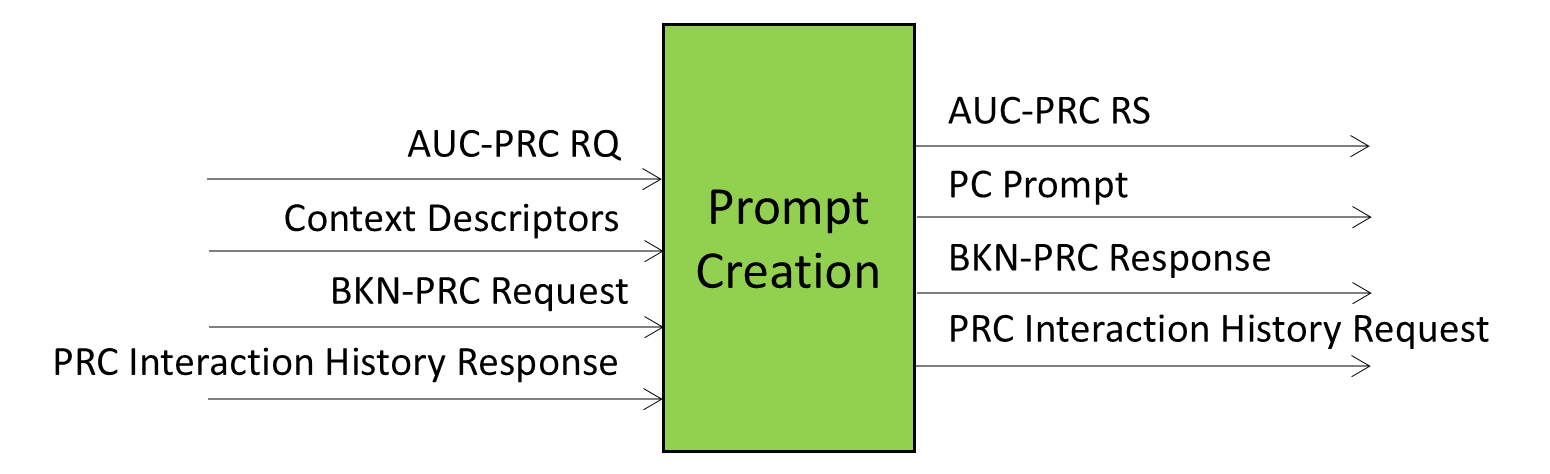
Figure 1 – Reference Model of the Prompt Creation (PGM‑PRC) AIM
3. Input/Output Data
Table 1 lists the Input and Output Data of the Prompt Creation (PGM‑PRC) AIM.
Table 1 – Input/Output Data of the Prompt Creation (PGM‑PRC) AIM
| Input | Description |
| Context Descriptors | Structured descriptors of the current interaction context as produced by Context Description. |
| AUC-PRC Request | Request from A-User Control that sets the goal and controls the construction of the PC Prompt element by element (Intent, Propositions, Goal, Personality, Action context), the use of the Interaction History and the framing. |
| PRC Interaction History Response | Interaction History response from Private Storage providing relevant past interaction context to support prompt construction. |
| BKN-PRC Request | Query received from Basic Knowledge during an active MCP session, requesting additional context or clarification. May be received multiple times within a session. |
| Output | Description |
| PC Prompt | Structured prompt submitted to Basic Knowledge to open the MCP session, carrying scene context, intent, resolved referents, goal constraints, and expressive configuration. |
| BKN-PRC Response | Response to a BKN-PRC Request received from Basic Knowledge during the session. May be sent multiple times within a session. |
| AUC-PRC Response | Multiplexed status signals from the Prompt Creation‘s internal Sub-AIMs reporting their results. |
| PRC Interaction History Request | Multiplexed Interaction History requests from the internal Sub-AIMs issued to Private Storage. |
4. Sub-AIMs (Informative)
This section is informative. The decomposition into Sub-AIMs described below illustrates one conforming architecture for producing the normative outputs of PGM‑PRC. Implementations may adopt alternative internal structures, provided that they satisfy the conformance requirements of Section 8.
4.1 Reference Model
Figure 2 depicts the Reference Model of the Prompt Creation (PGM‑PRC) Composite AIM.
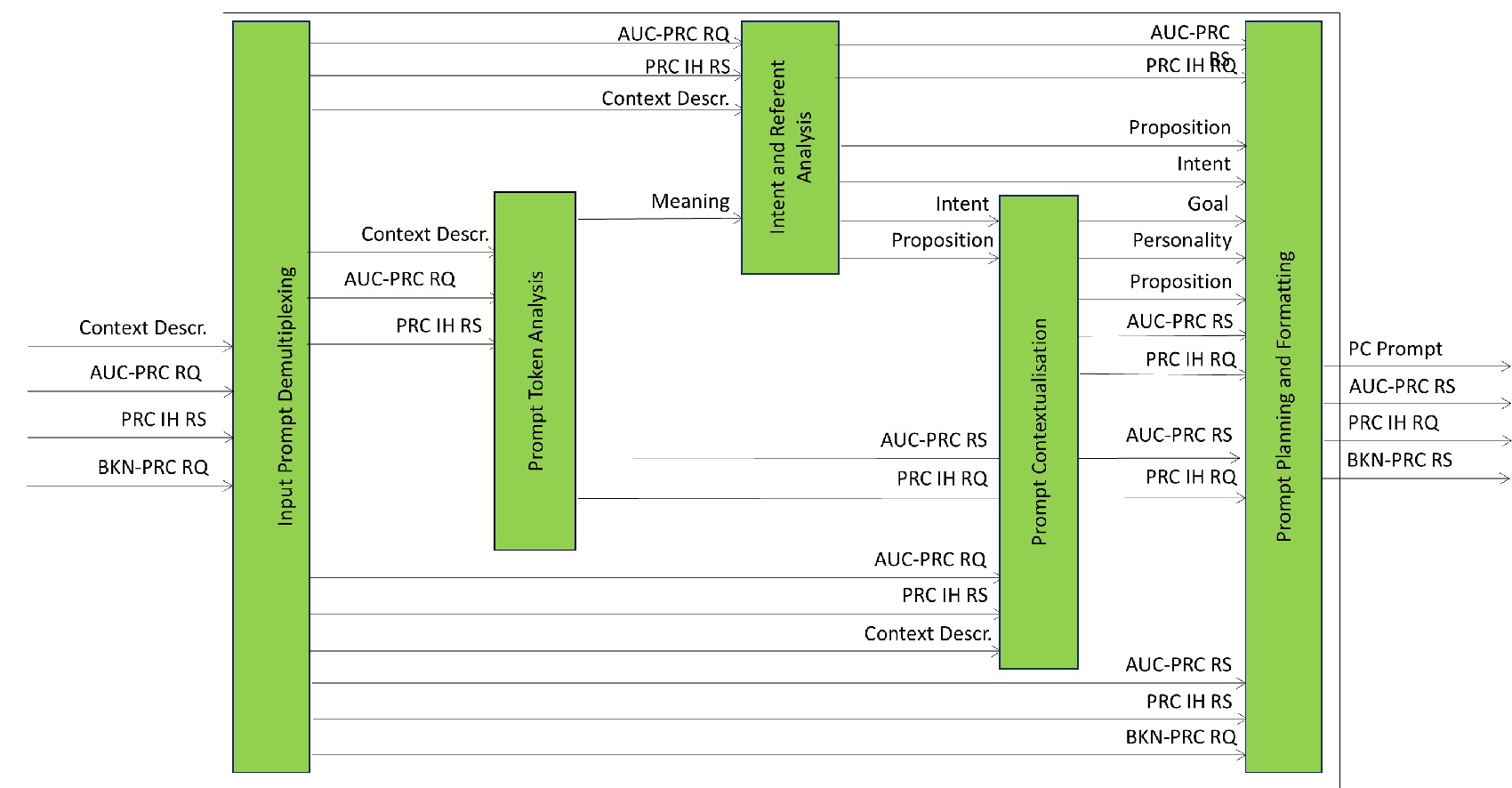
Figure 2 – Reference Model of the Prompt Creation (PGM‑PRC) Composite AIM
4.2 Operation
The Prompt Creation AIM receives Context Descriptors and the AUC-PRC Request and progressively transforms them into a structured PC Prompt through a sequence of specialised Sub-AIMs.
The external inputs and control signals are fed to the appropriate Sub-AIMs:
- The Input Prompt Demultiplexing (PGM‑IPD) Sub-AIM dispatches the Context Descriptors, the AUC-PRC Request, the PRC Interaction History Response and the BKN-PRC Request to the Sub-AIMs that use them.
- The Prompt Token Analysis Sub-AIM parses the Context Descriptors, which carry the Text Object, into the Meaning (Text Descriptors, TXD). It queries Private Storage via PRC Interaction History to retrieve relevant past interaction contexts.
- The Intent and Referent Analysis Sub-AIM operates on the Meaning to infer the User’s intent, producing an Intent carrying category, action type, spatial anchors, and confidence score. It simultaneously resolves referential expressions to scene Entities, expressing the result as Propositions linking subjects, predicates, and objects with their spatial and temporal context. It draws on the scene context and the domain knowledge carried by the Context Descriptors and queries Private Storage via PRC Interaction History as needed.
- The Prompt Contextualisation Sub-AIM enriches the Intent and Propositions with goal constraint derivation, scene context tagging, and Personality adaptation, producing a Goal carrying objectives, priorities, and trigger conditions, a Personality carrying the User’s expressive configuration (tone, style, pacing, narrative goal), and additional scene Propositions representing contextual tags and timing guidance. It draws on the scene context and the domain knowledge carried by the Context Descriptors and queries Private Storage via PRC Interaction History as needed.
- The Prompt Planning and Formatting Sub-AIM assembles all derived evidence — Intent, Propositions, Goal, and Personality — into a PC Prompt and submits it to Basic Knowledge. It manages the multi-turn MCP session with Basic Knowledge, receiving BKN-PRC Requests and issuing BKN-PRC Responses as needed throughout the session. It also multiplexes the AUC-PRC Response and PRC Interaction History Request signals from all Sub-AIMs into the corresponding external output signals.
Each of Intent and Referent Analysis, Prompt Contextualisation, and Prompt Planning and Formatting independently generates an AUC-PRC Response and a PRC Interaction History Request, which are multiplexed by Prompt Planning and Formatting into the corresponding external output signals.
4.3 Functions of Sub-AIMs
Table 2 specifies the functions of the Sub-AIMs of the Prompt Creation (PGM‑PRC) Composite AIM.
Table 2 – Functions of the Sub-AIMs of the Prompt Creation (PGM‑PRC) Composite AIM
| Name | Function |
| Input Prompt Demultiplexing | Dispatches the input components to the Sub-AIMs of the Prompt Creation AIM. |
| Prompt Token Analysis | Parses the Context Descriptors, which carry the Text Object, into the Meaning (Text Descriptors, TXD), queries Private Storage via PRC Interaction History to retrieve relevant past interaction context, and issues an AUC-PRC Response. |
| Intent and Referent Analysis | Infers the User’s Intent from the Meaning, and resolves referential expressions to scene Users, expressing results as Propositions, drawing on the scene context and domain knowledge of the Context Descriptors and querying Private Storage via PRC Interaction History as needed. |
| Prompt Contextualisation | Enriches the Intent and Propositions with goal constraint derivation and scene context tagging producing a Goal, a Personality carrying the expressive configuration, and additional scene Propositions, drawing on the scene context and domain knowledge of the Context Descriptors and querying Private Storage via PRC Interaction History as needed. |
| Prompt Planning and Formatting | Assembles Intent, Propositions, Goal, and Personality into a PC Prompt, manages the multi-turn MCP session with Basic Knowledge, and multiplexes the AUC-PRC Response and PRC Interaction History Requests from all Sub-AIMs into the corresponding external outputs. |
4.4 Input/Output Data of Sub-AIMs
Table 3 lists the Input and Output Data of the Sub-AIMs of the Prompt Creation (PGM‑PRC) Composite AIM.
Table 3 – Input/Output Data of the Sub-AIMs of the Prompt Creation (PGM‑PRC) Composite AIM
4.5 AIMs and JSON Metadata
Table 4 gives the Prompt Creation (AIM1) and its Sub-AIMs (AIM2).
Table 4 – Prompt Creation (AIM1) and its Sub-AIMs (AIM2)
| AIM1 | AIM2 | Name | JSON |
| PGM‑PRC | Prompt Creation | X | |
| PGM‑IPD | Input Prompt Demultiplexing | X | |
| PGM‑PTA | Prompt Token Analysis | X | |
| PGM‑IRA | Intent and Referent Analysis | X | |
| PGM‑PCX | Prompt Contextualisation | X | |
| PGM‑PPF | Prompt Planning and Formatting | X |
5. JSON Metadata
https://schemas.mpai.community/PGM1/V1.0/AIMs/PromptCreation.json
6. Profiles
No Profiles.
7. Reference Software
Not part of this specification.
8. Conformance Testing
A PRC implementation conforms with Prompt Creation (PGM‑PRC) if:
- The implementation includes all Sub-AIMs listed in Table 2.
- All I/O Data listed in Table 1 are present and conform with their respective Data Types.
- All Sub-AIM I/O Data listed in Table 3 conform with their respective Data Types.
- The implementation produces a PC Prompt that integrates the outputs of Intent and Referent Analysis and Prompt Contextualisation.
- The implementation correctly manages the multi-turn BKN-PRC session, issuing a BKN-PRC Response in reply to each BKN-PRC Request received from Basic Knowledge.
9. Performance Assessment
Not part of this specification.
