
Function
Ref. Model
I/O Data
SubAIMs
JSON MData
Profiles
Ref. Software
Conformance
Performance
1 Functions
The Context Description (PGM‑CXT) AIM is the A‑User’s perceptual front end to the spatial environment, integrating in a single Composite AIM the active capture of a multimodal scene and its interpretative enrichment. It receives raw Audio and Visual Objects, captures and structures the scene without LLM involvement and without MCP interactions, and then applies modality‑specific analysis (audio and visual), cross‑modal alignment, and optional domain knowledge to produce Enhanced Audio Scene Descriptors and Enhanced Visual Scene Descriptors together with an interpreted description of the User State.
The PGM‑CXT AIM supports runtime reorientation under CXT Directives issued by A‑User Control, which may reflect Human Commands. A single CXT Directive carries a SessionID and CaptureIndex identifying the capture’s spatial position within the current session. Also included are modality prioritisation and acquisition parameters for the scope of the capture, along with policy constraints for the enhancement stage. The Enhanced Audio Scene Descriptors (ASE) and Enhanced Visual Scene Descriptors (VSE) derived internally within the Audio and Visual Scene Enhancement SubAIMs are not exposed as AIM outputs; rather, the enhanced result is consolidated into a single set of Context Descriptors.
On the input side, the Context Description Demultiplexing AIM demultiplexes the three main inputs (CXT Directive, Domain Response, and Interaction History Response) into their modality components (Audio, Visual, User) and routes the Audio and Visual Objects to the corresponding enhancement SubAIMs. On the output side, Context Description Multiplexing recombines the results into Context Descriptors, Domain Request, Interaction History Request, and CXT Status. Domain knowledge is obtained from the Domain Access AIM (Request out, Response in) and Interaction History is exchanged with A‑User Storage (Request out, Response in).
| Receives | Audio Object | Audio signals from the scene including speech and environmental sounds. |
| Visual Object | Visual signals from the scene. | |
| CXT Directive | Control instructions from A‑User Control specifying modality prioritisation, acquisition parameters, framing rules, session identification, enhancement scope/depth/policy, domain policy, and A‑User Storage access instructions. | |
| Domain Response | Domain‑specific knowledge received from Domain Access. | |
| CXT IH Response | Prior session content read from A‑User Storage (prior descriptors, User State). | |
| Produces | Context Descriptors | Aggregated result combining Enhanced Audio and Visual Scene Descriptors and User State. |
| Domain Request | Request for domain‑specific knowledge sent to Domain Access. | |
| CXT IH Request | Request to A‑User Storage to read prior and write produced session content. | |
| CXT Status | Scene‑level metadata describing capture and enhancement outcomes, per-modality results, A‑User Storage and Domain operation outcomes, and confidence measures. |
2 Reference Model
Figure 1 depicts the Reference Model of the Context Description (PGM‑CXT) AIM.
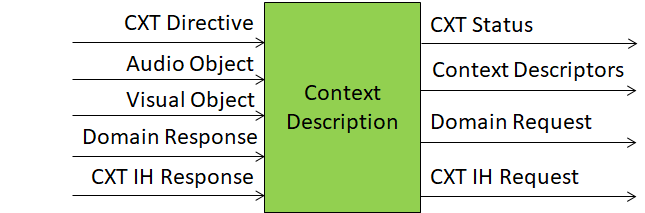
Figure 1 – The Context Description (PGM‑CXT) AIM
3 I/O Data
Table 1 specifies the Input and Output Data of the Context Description (PGM‑CXT) AIM.
| Input | Description |
|---|---|
| Audio Object | Audio signals captured from the scene, including speech, environmental sounds, and paralinguistic cues. |
| Visual Object | Visual signals from the scene, including gestures, facial expressions, and environmental imagery. |
| CXT Directive | Control instructions from A‑User Control including both capture (modality prioritisation, acquisition parameters, framing rules, session identification) and enhancement (scope, depth, policy constraints), together with domain policy and A‑User Storage access instructions. |
| Domain Response | Domain‑specific knowledge received from Domain Access. |
| CXT IH Response | Prior session content obtained from A‑User Storage (prior descriptors and User State). |
| Output | Description |
| Context Descriptors | Aggregated result combining Enhanced Audio Scene Descriptors, Enhanced Visual Scene Descriptors, and User State. |
| Domain Request | Request for domain‑specific knowledge that was previously sent to Domain Access. |
| CXT IH Request | Request to A‑User Storage to read and write content produced during the current or previous sessions. |
| CXT Status | Scene‑level metadata describing capture and enhancement outcomes. |
Note – The Audio Scene Descriptors (ASD) and Visual Scene Descriptors (VSD) derived internally within the Audio and Visual Scene Enhancement SubAIMs are internal to the PGM‑CXT AIM. They are not exposed as Input or Output Data.
4 Sub-AIMs (informative)
This section is informative. The decomposition into Sub-AIMs described below specifies one conformant architecture that produces the normative outputs of Context Description (PGM‑CXT). Implementations may adopt alternative internal structures, provided they satisfy the conformance requirements of Section 8. An implementer may develop a Composite CXT AIM as specified below and claim conformance to it, provided the individual Sub-AIMs conform with the respective specifications.
4.1 Reference Model
Figure 2 gives the Reference Model of the Context Description (PGM‑CXT) Composite AI Module. Two boundary Sub-AIMs isolate the composite from its surroundings. The Context Description Demultiplexing extracts each aggregate input — the CXT Directive, the Domain Response, and the CXT Interaction History Response — into its Audio, Visual, and User components, and routes the Audio and Visual Objects to the enhancement Sub-AIMs. The Context Description Multiplexing Sub-AIM performs the inverse, recombining the per‑modality results into the aggregate Context Descriptors, Domain Request, CXT Interaction History Request, and CXT Status. The central Sub-AIMs — Audio and Visual Scene Enhancement, Audio‑Visual Alignment, and User State Description — exchange data with the two boundary Sub-AIMs, with each other, and with A‑User Storage, Domain Access, or A‑User Control.
Legend: RQ=Request, RS=Response
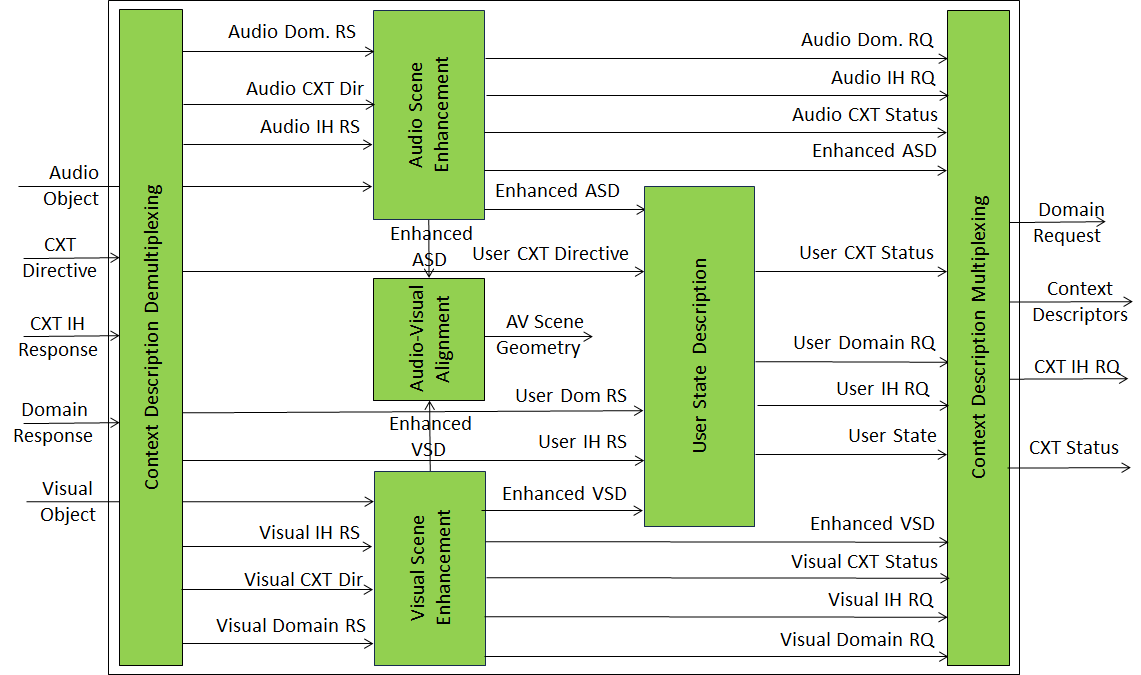
Figure 2 – Reference Model of the Context Description (PGM‑CXT) Composite AI Module
4.2 Operation
The Context Description AIM is activated by a CXT Directive issued by A‑User Control. The Context Description operation is carried out with the following steps:
- Reception and de-multiplexing: the Context Description Demultiplexing
- Receives multiplexed
- CXT Directive,
- Domain Response,
- CXT Interaction History Response (as read from A‑User Storage),
- Audio Object and Visual Object,
- Demultiplexes them into the
- Audio, Visual, and User CXT Directives,
- Domain Responses
- CXT Interaction History Responses,
- Routes the demultiplexed data to the appropriate enhancement Sub-AIM.
- Receives multiplexed
- Enhancement: the Audio Scene Enhancement (PGM-ASE) and Visual Scene Enhancement (PGM-VSE) Sub-AIMs
- Process the Audio Objects and Visual Objects in parallel under their modality‑specific CXT Directives,
- Produce the
- Enhanced Audio Scene Descriptors with their CXT Status
- Enhanced Visual Scene Descriptors CXT Status
- CXT Interaction History Request
- Domain Request.
- Alignment: Audio‑Visual Alignment, produces the Audio‑Visual Scene Geometry from the Enhanced Audio Scene Descriptors and Enhanced Visual Scene Descriptors.
- Production of the User State by User State Description from the
- Enhanced Scene Descriptors,
- Audio‑Visual Scene Geometry produced by Audio‑Visual Alignment
- The User‑side CXT Directives, Domain, and CXT Interaction History Responses.
- Multiplexing of the Audio‑Visual‑User Multiplexing Sub-AIM by recombining
- Context Descriptors (delivered to Prompt Creation) from
- Enhanced Audio Scene Descriptors,
- Enhanced Visual Scene Descriptors
- User State
- Composite CXT Status from per‑modality CXT Statuses,
- Domain Request (to Domain Access) from per‑modality Domain Requests,
- Interaction History Request (to A‑User Storage) from the per‑modality CXT Interaction History Requests.
- Context Descriptors (delivered to Prompt Creation) from
The reference model explicitly separates capture, modal enhancement, cross‑modal alignment, and user/entity interpretation by using specific Sub-AIMs, thus ensuring modularity, traceability, and reuse.
4.3 Functions of SubAIMs
Table 2 gives the functions of the Context Description (PGM‑CXT) SubAIMs.
| SubAIM | Function |
|---|---|
| Context Description Demultiplexing | Demultiplexes the CXT Directive, Domain Response, and Interaction History Response into their Audio, Visual, and User components and routes the Audio and Visual Objects to the enhancement Sub-AIMs. |
| Audio Scene Enhancement | Derives the Audio Scene Descriptors from the Audio Object and enhances the Descriptors, producing the Enhanced Audio Scene Descriptors. |
| Visual Scene Enhancement | Derives the Visual Scene Descriptors from the Visual Object and enhances the Descriptors, producing the Enhanced Visual Scene Descriptors. |
| Audio‑Visual Alignment | Performs a cross‑modal association between Audio Objects and Visual Objects that refer to the same source or entity. The output Audio‑Visual Scene Geometry expresses correspondence and spatial relations. |
| User State Description | Interprets enhanced descriptors and alignment information with respect to the User or other entities and derives User State under the control of CXT Directives. |
| Context Description Multiplexing | Multiplexes the per‑modality results into the aggregated Context Descriptors (to be delivered to Prompt Creation), Domain Request, Interaction History Request, and CXT Status. |
4.4 I/O Data of SubAIMs
Table 3 gives the Input and Output Data of the Context Description (PGM‑CXT) SubAIMs.
4.5 AIMs and JSON Metadata
Table 4 provides the links to the AIM specifications and JSON schemas. AIM1 indicates the Composite AIM and AIM2 its Sub-AIMs.
| AIM1 | AIM2 | Name | JSON |
|---|---|---|---|
| PGM‑CXT | Context Description | X | |
| PGM‑CAI | Context Description Demultiplexing | X | |
| PGM‑ASE | Audio Scene Enhancement | X | |
| PGM‑VSE | Visual Scene Enhancement | X | |
| OSD‑AVA | Audio‑Visual Alignment | X | |
| PGM‑USD | User State Description | X | |
| PGM‑AVU | Context Description Multiplexing | X |
5 JSON Metadata
https://schemas.mpai.community/PGM1/V1.0/AIMs/ContextDescription.json
6 Profiles
No Profiles.
7 Reference Software
Not part of this specification.
8 Conformance Testing
Table 5 provides the Conformance Testing Method for the Context Description (PGM‑CXT) Composite AIM. Conformance Testing of the individual Sub-AIMs is given by the individual AIM specifications.
If a schema contains references to other schemas, conformance of data for the primary schema implies that any data referencing a secondary schema shall also validate against the relevant schema, if present, and conform with the Qualifier, if present.
| Receives | Audio Object | Shall validate against Audio Object schema. Audio Data shall conform with Audio Qualifier. |
| Visual Object | Shall validate against Visual Object schema. Visual Data shall conform with Visual Qualifier. | |
| CXT Directive | Shall validate against CXT Directive schema. | |
| Domain Response | Shall validate against Domain Response schema. | |
| CXT Interaction History Response | Shall validate against Interaction History schema. | |
| Produces | Context Descriptors | Shall validate against Context Descriptors schema. |
| Domain Request | Shall validate against Domain Request schema. | |
| CXT Interaction History Request | Shall validate against Interaction History schema. | |
| CXT Status | Shall validate against CXT Status schema. |
9 Performance Assessment
Not part of this specification.