
| Function | Ref. Model | I/O Data | SubAIMs | JSON MData | Profiles | Ref. Software | Conformance | Performance |
1. Function
The User State Description (PGM‑USD) AIM derives a structured representation of the User State from multimodal perceptual and enhanced contextual inputs.
User State Description:
- Operates on the Enhanced Audio Scene Descriptors produced by Audio Scene Enhancement, the Enhanced Visual Scene Descriptors produced by Visual Scene Enhancement, the User CXT Directive received from A‑User Control, the User Domain Response resulting from queries made to Domain Access, and the User Interaction History Response resulting from queries made to A-User Storage.
- Performs a multi‑stage interpretative process including multimodal harmonisation, linguistic and paralinguistic analysis, behavioural and expressive inference, and cross‑modal interpretation, without performing deliberative reasoning or goal‑directed decision‑making.
- Produces the User State sent to Context Description Multiplexing, the User CXT Status, the User Domain Request when querying Domain Access, and the User Interaction History Request when querying Interaction History from A-User Storage.
The User State carries a structured representation of the cognitive, behavioural, expressive, and interactional aspects of the observed User, under User CXT Directive control.
2. Reference Model
Figure 1 depicts the Reference Model of the User State Description (PGM‑USD) AIM.
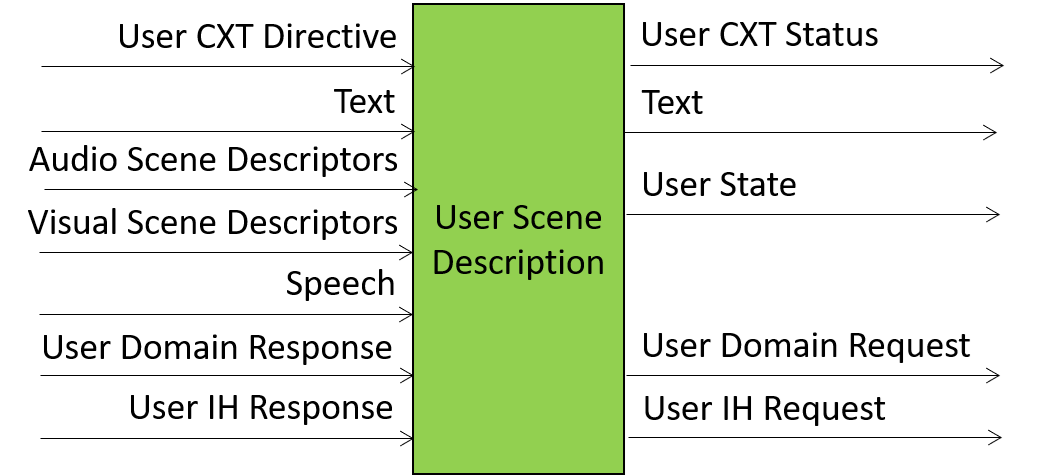
Figure 1 – Reference Model of the User State Description (PGM‑USD) AIM
3. Input/Output Data
Table 1 lists the Input and Output Data of the User State Description (PGM‑USD) AIM.
Table 1 – Input/Output Data of the User State Description (PGM‑USD) AIM
| Input | Description |
| Enhanced Audio Scene Descriptors | Audio descriptors enriched by Audio Scene Enhancement representing speech, paralinguistic cues, and environmental audio context. |
| Enhanced Visual Scene Descriptors | Visual descriptors enriched by Visual Scene Enhancement representing user posture, gestures, and visual interaction context. |
| User CXT Directive | Contextual directive specifying scope, depth, and policy constraints for user state derivation. |
| User Domain Response | Domain‑specific knowledge supporting interpretation and inference stages. |
| User IH Response | Interaction History response providing temporal context for user state derivation. |
| Output | Description |
| User State | Structured representation of the cognitive, behavioural, expressive, and interactional state of the observed User. |
| User CXT Status | Multiplexed status signals from the internal SubAIMs reporting their processing outcomes. |
| User Domain Request | Multiplexed domain requests from the internal SubAIMs. |
| User IH Request | Multiplexed Interaction History requests from the internal SubAIMs. |
4. Sub-AIMs (Informative)
This section is informative. The decomposition into Sub-AIMs described below illustrates one conformant architecture for producing the normative outputs of PGM‑USD. Implementations may adopt alternative internal structures provided they satisfy the conformance requirements of Section 8.
4.1 Reference Model
Figure 2 depicts the Reference Model of the User State Description (PGM‑USD) Composite AIM.
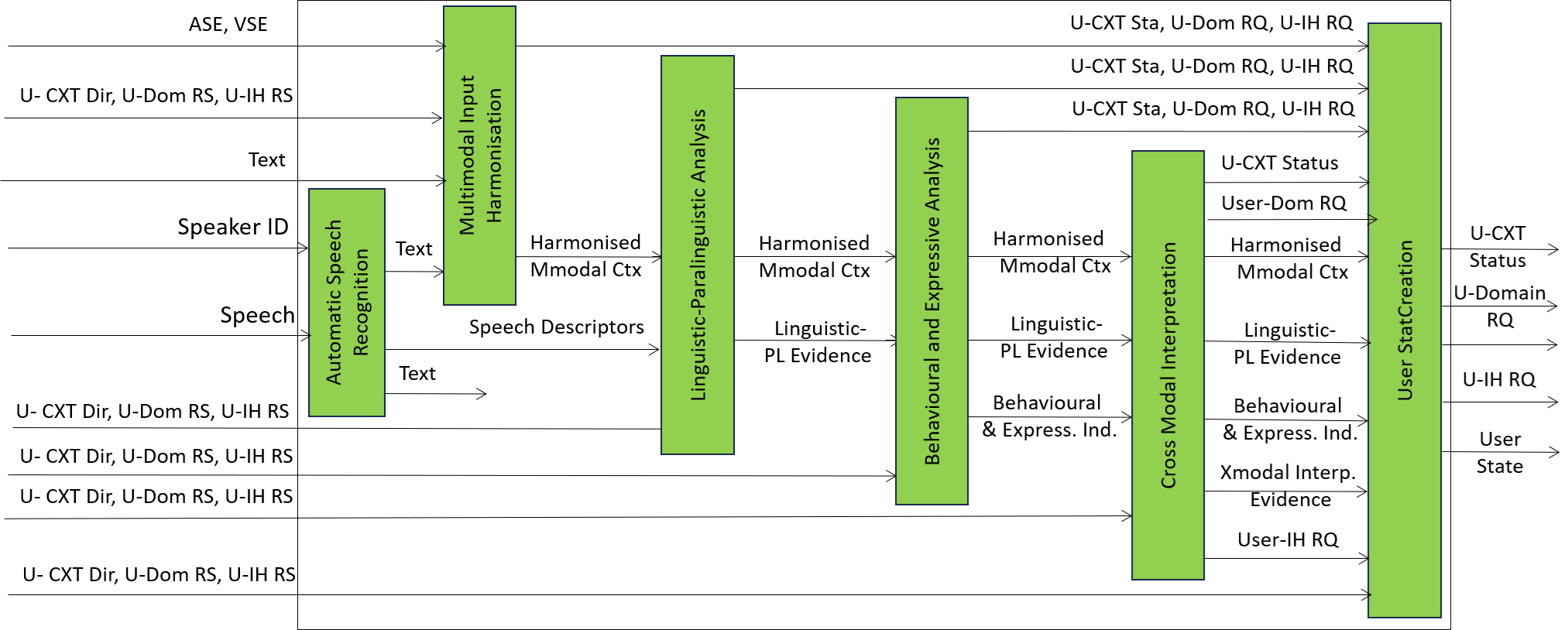
Figure 2 – Reference Model of the User State Description (PGM‑USD) Composite AIM
4.2 Operation
The User State Description receives Enhanced Audio Scene Descriptors, Enhanced Visual Scene Descriptors, and the CXT Directive, and progressively transforms them into a structured Entity State (User State) through a sequence of specialised Sub-AIMs.
The external inputs and control signals are fed to the appropriate Sub-AIMs:
- The Automatic Speech Recognition Sub-AIM converts speech from the Enhanced Audio Scene Descriptors into a Text Object and Speech Descriptors for use by subsequent Sub-AIMs.
- The Multimodal Input Harmonisation Sub-AIM aligns temporal, structural, and referential aspects of the multimodal inputs, producing a Harmonised Multimodal Context suitable for subsequent analysis.
- The Linguistic‑Paralinguistic Analysis Sub-AIM processes text and speech descriptors to derive linguistic content and paralinguistic features such as prosody, emphasis, and rhythm, producing Linguistic‑Paralinguistic Evidence.
- The Behavioural and Expressive Analysis Sub-AIM interprets linguistic evidence and multimodal context to derive behavioural and expressive indicators reflecting interaction patterns, communicative intent, and expressive signals.
- The Cross‑Modal Interpretation Sub-AIM integrates linguistic, behavioural, and multimodal evidence to produce a coherent cross‑modal interpretation of user behaviour and interaction context.
- The User State Creation Sub-AIM aggregates all derived evidence into a consistent User State and assembles the multiplexed status and request signals.
Each of Linguistic‑Paralinguistic Analysis, Behavioural and Expressive Analysis, and Cross‑Modal Interpretation independently generates a User CXT Status, a User Domain Request, and a User Interaction History Request, which are multiplexed by User State Creation into the corresponding external output signals.
4.3 Functions of Sub-AIMs
Table 2 specifies the functions of the Sub-AIMs of the User State Description (PGM‑USD) Composite AIM.
Table 2 – Functions of the Sub-AIMs of the User State Description (PGM‑USD) Composite AIM
| Name | Function |
| Automatic Speech Recognition | Converts speech from Enhanced Audio Scene Descriptors into a Text Object and Speech Descriptors, under User CXT Directive control, reporting processing outcome via User CXT Status. |
| Multimodal Input Harmonisation | Aligns temporal, structural, and referential aspects of multimodal inputs into a Harmonised Multimodal Context suitable for subsequent analysis. |
| Linguistic‑Paralinguistic Analysis | Extracts linguistic meaning and paralinguistic cues such as prosody, emphasis, and rhythm from speech and text, producing Linguistic‑Paralinguistic Evidence. |
| Behavioural and Expressive Analysis | Derives Behavioural and Expressive Indices including behavioural patterns and expressive indicators reflecting interaction patterns, communicative intent, and expressive signals from multimodal evidence. |
| Cross‑Modal Interpretation | Integrates linguistic, behavioural, and multimodal evidence into Cross-Modal Interpretation Evidence containing a coherent cross‑modal interpretation of User behaviour and interaction context. |
| User State Creation | Aggregates all derived evidence into a consistent User State and assembles the multiplexed User CXT Status, User Domain Request, and User Interaction History Request. |
4.4 Input/Output Data of Sub-AIMs
Table 3 lists the Input and Output Data of the Sub-AIMs of the User State Description (PGM‑USD) Composite AIM.
Table 3 – Input/Output Data of the Sub-AIMs of the User State Description (PGM‑USD) Composite AIM
4.5 AIMs and JSON Metadata
Table 4 gives the User State Description (AIM1) and its Sub-AIMs (AIM2).
Table 4 – User State Description (AIM1) and its Sub-AIMs (AIM2)
| AIM1 | AIM2 | Name | JSON |
| PGM‑USD | User State Description | X | |
| PGM‑ASR | Automatic Speech Recognition | X | |
| PGM‑MIH | Multimodal Input Harmonisation | X | |
| PGM‑LPA | Linguistic‑Paralinguistic Analysis | X | |
| PGM‑BEA | Behavioural and Expressive Analysis | X | |
| PGM‑CMI | Cross‑Modal Interpretation | X | |
| PGM‑USC | User State Creation | X |
5. JSON Metadata
https://schemas.mpai.community/PGM1/V1.0/AIMs/UserStateDescription.json
6. Profiles
No Profiles.
7. Reference Software
Not part of this specification.
8. Conformance Testing
A USD implementation conforms with User State Description (PGM‑USD) if:
- The implementation includes all Sub-AIMs listed in Table 2.
- All I/O Data listed in Table 1 are present and conform with their respective Data Types.
- All Sub-AIM I/O Data listed in Table 3 conform with their respective Data Types.
- The implementation produces a User State that integrates the outputs of Linguistic‑Paralinguistic Analysis, Behavioural and Expressive Analysis, and Cross‑Modal Interpretation.
9. Performance Assessment
Not part of this specification.